
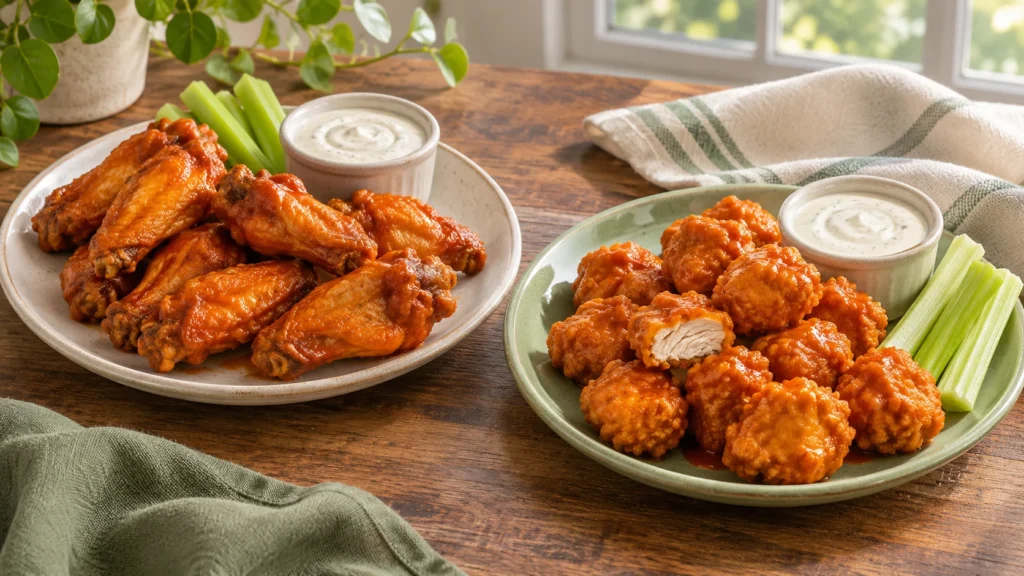
Bone-In or Boneless Wings: What Are You Actually Buying?
Compare bone-in and boneless wings by each cut, coating and raw or cooked status on packs. Use these details to choose a recipe and count portions.
Buy the cut, quantity and pack format that fit the meal.
Compare bone-in and boneless wings by each cut, coating and raw or cooked status on packs. Use these details to choose a recipe and count portions.
Compare pre-sliced chicken strips with unsliced breasts by usable cost and prep needed. Check thickness, added seasoning, and cooking status first.
Choose a hot or chilled rotisserie chicken, read the ingredients, and plan a safe journey and serving time before using it for dinner or leftovers.
Choose rotisserie or raw chicken by what the recipe asks you to do. Save prep on bowls and soups, or cook raw cutlets for browning and a pan sauce.
Choose a whole chicken by weight, cookware fit, and servings. Account for sides, bones, and planned leftovers before picking a well-matched recipe.
Learn why vacuum-packed chicken can smell different when opened, what a brief odor cannot tell you, and when to discard it or contact the retailer.
Review what sell-by, best-by, use-by, and freeze-by dates mean on chicken packages, and when to refrigerate, cook, or freeze fresh poultry at home.
Compare kosher and conventional chicken by checking certification, ingredients, and sodium, then adjust seasoning for the specific package you buy.
Compare pasture-raised and free-range chicken labels, check who verifies each claim, and choose the cut, ingredients, and price that fit your meal.