For U.S. chicken, free-range and pasture-raised are raising claims. Read the exact wording, check who verified it and see what kind of outdoor access the standard calls for. Then compare the cut, weight, ingredients and price separately. Those details tell you more about whether the chicken suits your dinner than either raising claim does on its own.
Read the claim that is actually on the package
Start with the words next to the product name and any nearby qualifying statement. USDA's Food Safety and Inspection Service, or FSIS, expects companies to substantiate animal-raising claims used on federally inspected meat and poultry. Free-range generally concerns outdoor access. Pasture-raised goes further in describing the type of outdoor area. The FSIS guidance recommends that a pasture claim describe access to land predominantly covered by living vegetation. Read the evidence for the product rather than assuming a photograph of a field tells the full story.
There can be several other statements on the same tray. A company might identify both a raising practice and a separate certification. An inspection mark is a different piece of information. It does not tell you the details of the pasture standard. An organic certification is governed by a separate set of requirements. If several terms appear together, give each of them its own question instead of treating them as synonyms.
Compare what each package detail can tell you
| What you notice | What it means | What to do |
|---|---|---|
| Pasture-raised language | Look for the kind of outdoor area and access described. | Review the producer or certifier's practices before paying a premium. |
| Free-range language | Look for the outdoor access conditions the claim covers. | Read the exact wording and check whether a standard is named. |
| Independent logo | Identify the organization and the specific standard it verifies. | Do not assume all logos address the same conditions. |
| Different cut or ingredients | The products may cook differently even with a similar claim. | Compare the piece, net weight and added ingredients separately. |
If shopping online, open the image showing the side or back of the pack, rather than relying only on a listing title. If you cannot see the exact product, ask before assuming that all the retailer's similarly named items carry an identical claim.
Look for a standard you can actually compare
Read the name of any independent certifier and look for its published poultry standard. Ask what it calls outdoor access, which ages or production stages it covers, how the area is maintained and what exceptions the rules allow. Look for information about weather restrictions and the difference between access being provided and how individual birds may use that access. Compare the exact standards when you are deciding whether a price difference is worth your money.
A producer may explain a claim on a website or through a package code. If you cannot find a clear answer, ask the producer what evidence supports the phrase and whether an outside organization audits the practice. A logo is useful when you can connect it to a current standard and to the product in your hand. If a store has several packs under one sign, check the claim on the pack you plan to take home.
Choose the food independently of the raising claim
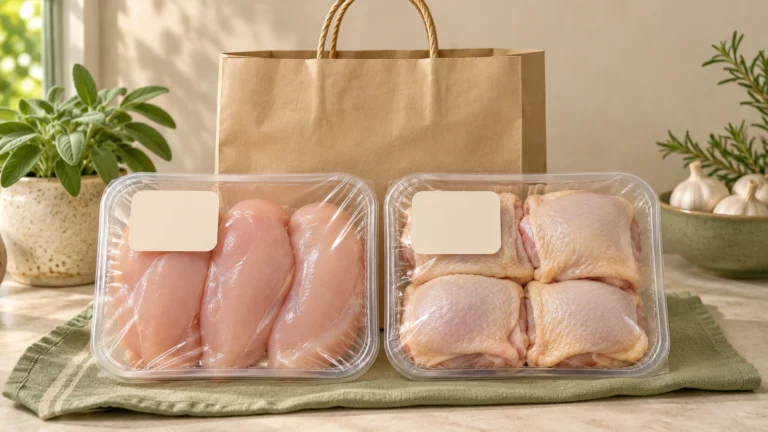
Compare bone-in with bone-in, or boneless with boneless. Note skin, cut size, net weight and any solution described in the product name or ingredient list. A skin-on thigh will behave differently from a skinless breast even if the two share the same label claim. The thickness and starting condition of the meat affect how it cooks. If your dish relies on browning a dry surface, note added solution and follow the recipe's preparation instructions.
A raising claim alone cannot predict that one tray will be juicier in your skillet. If you want to compare flavor, buy the same cut in similar sizes, check for added ingredients and cook both using the same method. Use a food thermometer and verify 165°F (74°C) in the thickest part, away from bone. Taste them with the same seasoning and side. That is a useful kitchen comparison of two products, regardless of what drove the result.
Work out what a premium buys for this meal
Imagine two plain, boneless breast packs at hypothetical prices of $5 and $7 per pound. If sizes, trim and usable raw portions are comparable, the raising premium is $2 for every pound you buy. If one pack includes skin or bone and the other does not, that comparison answers a different question. Compare the cut you need and any yield difference before deciding which tray is more economical.
If the label claim is central to your purchase, choose the standard you can verify and then find the right cut within your budget. If you are also buying for a specific dietary requirement, read the ingredient and allergen information independently. Outdoor-access wording does not answer what was added during processing. A plain cut can fit a recipe that adds its own seasoning, while a marinated cut can change salt and flavor.
Put the information into a dinner choice
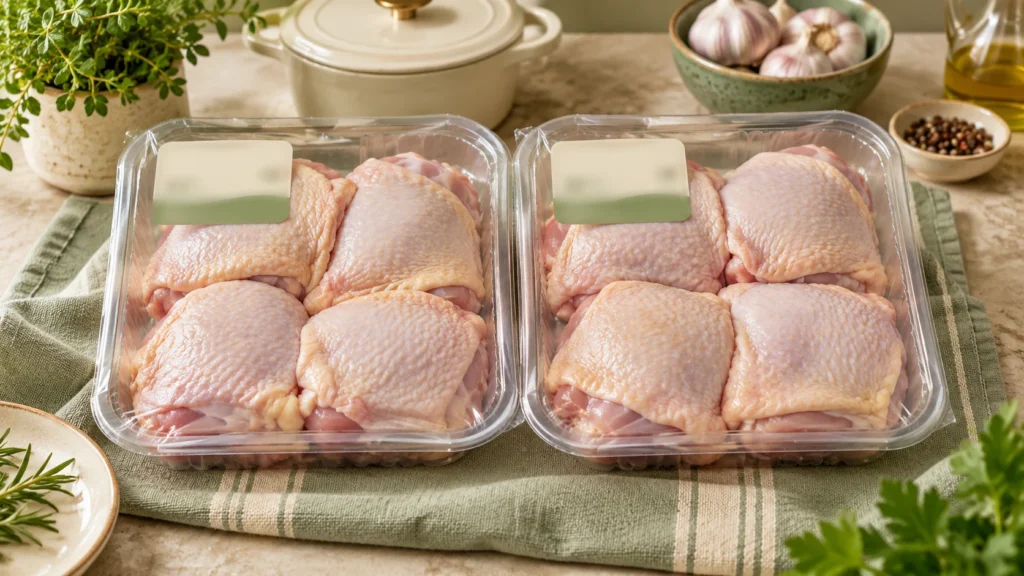
For a bone-in thigh dinner, start with a recipe written for that cut and purchase similar-size pieces. HCCR's paprika-rubbed thigh recipe uses a rack and checks temperature away from the bone. Use those cooking steps for the thighs you bought and record package differences if you want to compare brands later. A package claim comparison is more useful when the food on both plates was prepared alike.
Compare two real shopping decisions
For the first meal, you want skin-on thighs to roast and your budget leaves room for the higher-priced pack. Look at the pasture or free-range wording, then read any named standard. Ask the company what it verifies about the outdoor area and which stage of raising it covers. Next, compare both thigh packs for size and whether they have added seasoning. The answer to the raising question may matter just as much to you as the cooking result, but keeping a separate note for each makes it clear what you are paying for.
For the second meal, you need plain chicken for one of HCCR's recipes designed around a particular ingredient list. A prominently marketed raising claim has no bearing on whether the added marinade fits. Read the ingredients and any relevant dietary declarations. If the product fits those needs and the cut is right, compare with the other options on a common weight basis. Treat the label's claims and your meal requirements as separate filters.
For a useful online comparison, record the certifier, product and date from the actual listing or package photo. If a brand offers several poultry lines, ask which product the standard covers. Look for a qualifying description you can trace rather than assuming the website statement applies to every store package. A person who prefers pasture access can use that information even if there is no clear taste difference when the two cuts are cooked alike.
Read the qualifiers once you find the claim
Some packages use more than one phrase around farm practices, feeding and processing. Alternate between front and back of the package and connect each phrase with any explanation that belongs to it. If a word applies only to a defined phase or production practice, note that before comparing with another standard. If a producer sends you a general company policy, ask whether all the meat in the exact product follows it. The cut, brand and package identifier can help avoid an answer about the wrong item.
Keep the final purchase decision practical. If a pantry recipe calls for evenly sized breasts and only irregular large cuts are in your preferred line, choose a recipe that accommodates those pieces or adjust the cut as its directions allow. If you buy two products for a comparison, cook similar servings on the same day, avoid giving either extra seasoning and check each finished temperature. Record texture and flavor as your own observations. The label comparison tells you more about what was promised, while the tasting comparison tells you more about what you liked in that preparation.
Sources and references
Frequently asked questions
Does free-range say how much time each bird spent outdoors?
The claim concerns raising conditions and access. Look at the producer's or certifier's standard for the actual conditions and any exceptions.
Is pasture-raised the same as organic?
These are different claims with different standards. Check for the certification or wording of each on the specific product.
Does a certification tell me how the chicken will taste?
It can tell you about the practices it verifies. Compare the same cut and preparation if you want to judge flavor.
What if one pack contains a solution?
Read the product name and ingredient information. Treat added ingredients as a recipe and price comparison issue in their own right.
How should I compare the price?
Use a common unit and similar cuts. Check net weight and account for skin, bone or other material you will not use.
Is the cooking temperature different?
Use the same safe minimum of 165°F (74°C) for poultry, regardless of its raising claim.