Raw chicken can vary in color without being spoiled. Normal-looking pink, cream or yellowish areas cannot prove the pack was kept safely cold. At the store, pay closer attention to refrigeration, a sound seal and the product's handling instructions. Skip leaking or damaged packages and do not use color to judge doneness later.
Start with variation you can see
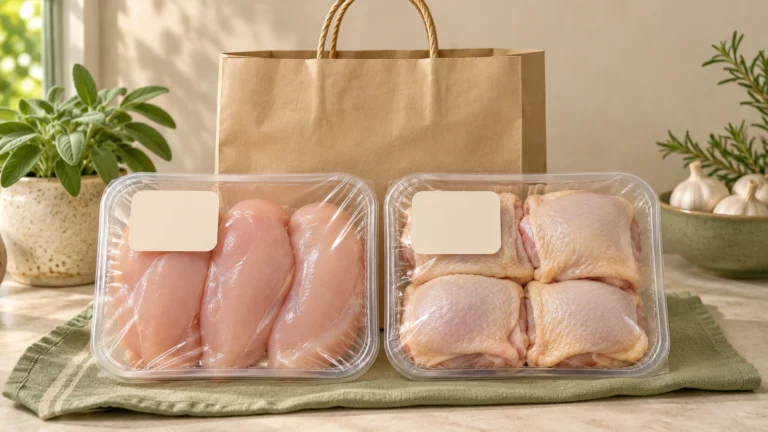
Raw meat and skin do not always have one shade. The cut, the bird and other factors can affect appearance. Skin color and the color of the meat under it may differ. A breast and a thigh can look different in the same pack. Lighting and packaging can make the difference seem larger. Compare like cuts under the same light if you are looking at two purchase options.
USDA notes that a change in color by itself does not establish spoilage. A darker or lighter surface is a clue that needs context. It gives no dependable information about how long the pack was warm. Foodborne bacteria can also be present when a product looks and smells normal. Use the package, cold case and safe history rather than interpreting one shade as a verdict.
Choose a package by more than color
| Situation | What to do |
|---|---|
| Pink or pale intact cold pack | Compare the cut, seal and handling directions. |
| Leaking or damaged package | Choose another intact pack. |
| At home or cooking | Check storage history and verify 165°F with a thermometer. |
Inspect the package before choosing it
Check that the film or seal is intact and the package is not leaking. Look for cracks or tears, and avoid an obviously damaged container. If you find raw juices on nearby items or see a compromised pack, choose another and let store staff know. Do not try to lift film, smell or handle exposed raw meat at the store. Check the label's storage and preparation information and buy only what you can keep cold and use.
A date on a label helps you manage shopping and storage but does not document how the chicken was held. If the cooler seems warm or products that should be frozen are soft and leaking, choose a properly held pack from a reliable case. Appearance cannot restore a broken cold chain. If a particular product seems unusual and you cannot resolve the concern, choose something else.
Treat visible spoilage concerns seriously
Unusual color combined with signs such as an off odor or sticky or slimy texture can point to spoilage. If you notice those after opening at home, discard the chicken. Never taste raw chicken. A normal smell is also insufficient when the time and temperature history is unsafe or unknown. Follow applicable discard guidance for food that spent too long outside safe temperatures.
If discoloration appears as a dry pale patch on frozen chicken, consider freezer burn as a quality issue when the food otherwise has a safe record. A frost pattern is also a limited clue. A thawed pack in poor condition needs the same time and temperature decision as any other suspect product. Do not try to correct unsafe chicken by cooking it longer or by rinsing it.
Bring the pack home safely
Choose raw poultry near the end of your shop and place it in a separate bag away from ready-to-eat items. Take it directly home and use a suitable cooler when necessary. Store raw chicken at 40°F (4°C) or below and generally use within one to two days or freeze. Keep it on a low shelf in a leakproof container. Keep your hands and shopping surfaces clean. Wash anything raw juices touched before using it for other foods.
If you bought more than you will use, freeze eligible portions promptly in proper freezer packaging. Mark the original date and thaw in the refrigerator or another safe method as USDA directs. A short clear record does more for your later decision than remembering roughly how pink the chicken looked at the store. For products with additional instructions, follow those that apply.
Use a thermometer when cooking
Cook raw poultry to 165°F (74°C). Check the thickest meat without touching bone. For a whole chicken, check the thickest part of the breast and innermost thigh and wing. Dark color near bone or a pink hue in cooked chicken can occur even when it has reached the safe temperature. Conversely, pale cooked meat can be below the endpoint. The reading, rather than color, determines the safety check.
If you are cooking several pieces, measure the thickest parts on the pieces that differ substantially. Use clean tools for transfer and serve promptly or hold at safe temperatures. Refrigerate eligible leftovers promptly. Keep raw poultry and ready-to-eat sides separate all the way from the store to the table.
Make the shelf decision with two examples
Suppose one intact cold pack has slightly paler breast meat and another intact cold pack looks pinker. If there are no other problems, choose the cut and size that fit your meal. Suppose another package has a broken seam and liquid leaking into its tray. Pick an intact pack. If a chilled package later sat in a hot car beyond the safe window, discard it even if the chicken still looks ordinary. Each decision uses evidence that actually addresses the purchase or safety concern.
Use storage facts to make the decision at home
After purchase, make a short note if you will not cook the chicken immediately. Record the date and whether the product was fresh or frozen, and thaw it in a way that keeps raw juices contained. If opening a chilled pack reveals a problem, keep the poultry away from other food, discard it as needed and clean the surfaces. Do not rely on the label date to override an unsafe delay in the car or forgotten storage. A properly held dark-meat pack can look different from a tray of breasts and still be the better cut for your dinner.
Give the inspection a simple order
First check the cold case and whether the product is held as directed. Then view the seal and look for obvious leakage. Next use the product information to decide how quickly you can use it. Color can help identify what you are looking at or show an unexpected change, but it belongs late in the safety decision. If you notice a quality problem in an otherwise properly stored pack, choose another by size or form. Once you open the package, prepare it on clean raw-designated equipment and let the thermometer tell you when the cooking stage is complete.
Sources
Frequently asked questions
Is yellowish skin always a problem?
Skin color can vary. Check packaging and the cold chain and look for other signs of spoilage.
Does pink mean the chicken is fresh?
No. Color alone cannot establish freshness or safe handling.
Is a sell-by date enough to determine safety?
Use it as part of shopping and storage, and check how the chicken was kept cold.
What if the pack is leaking?
Choose another intact pack and keep raw juices away from ready-to-eat food.
Should I cook it if I notice slime or off odor?
Discard chicken with spoilage signs or unsafe handling.
Can cooked chicken be pink at 165°F?
Yes. Verify the temperature in the appropriate locations rather than relying on color.