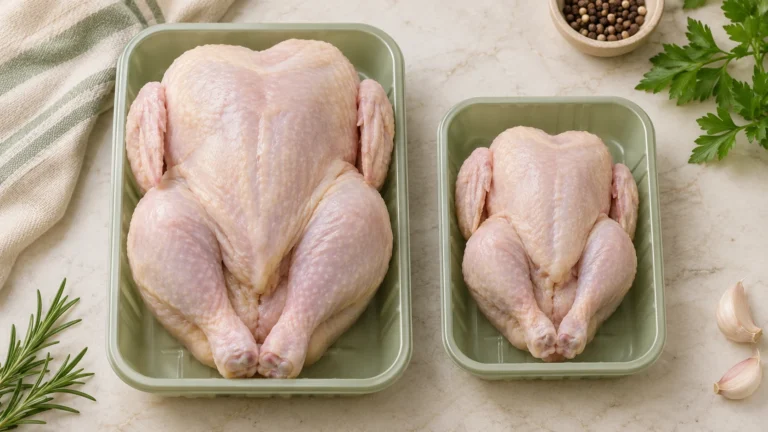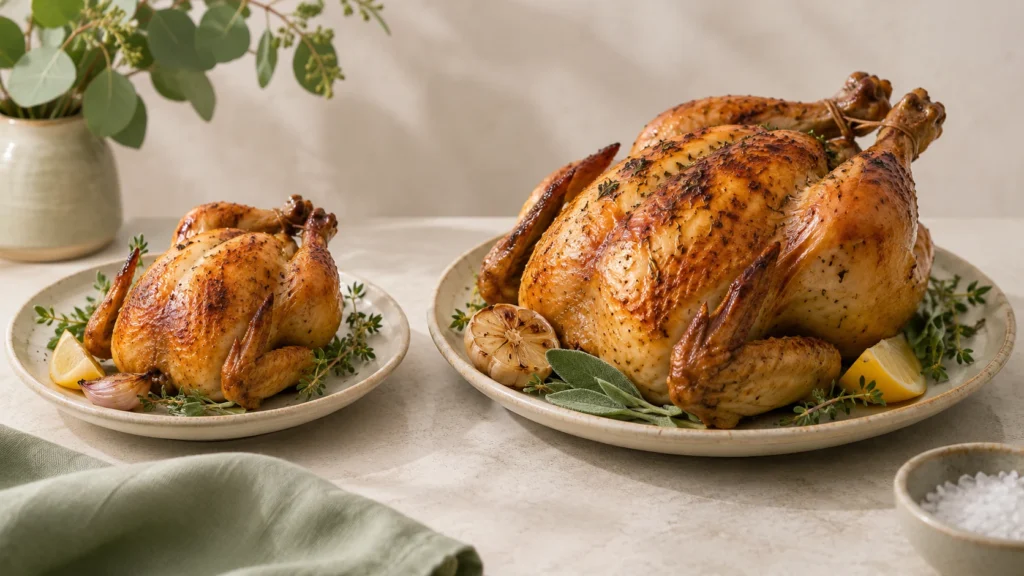
Choose a Cornish hen if you want a compact whole-bird presentation for two and its usable portions fit your appetites. Choose a small chicken if you prefer more carveable meat or planned leftovers. Compare actual package weights and whether you will split a bird or serve one each, then check that the pan fits your oven.
Read what Cornish hen means on a U.S. package
The U.S. poultry class for Cornish game hen or Rock Cornish game hen specifies an immature chicken under five weeks old, of either sex, with a ready-to-cook carcass weight of no more than two pounds. The word hen in that class name does not mean every bird is female. The chicken displayed as a small whole bird may belong to another class. Check the product name and actual sale weight rather than judging by a picture.
A Cornish hen can be convenient when you want smaller bones and a compact roast. A small chicken commonly gives you more meat to carve and more flexibility for leftovers. A smaller overall size does not make each person's usable portion obvious. The weight includes bone, and some parts may be trimmed. Compare the two actual packs and what else is on the dinner table.
Choose a bird for two
| Situation | What to do |
|---|---|
| One shared Cornish hen | Use the actual size and plan which sides will complete the meal. |
| Two individual hens | Compare the combined price, weight and oven fit. |
| One small chicken | Choose it when you want more carving options or planned leftovers. |
Decide whether you want halves, individual birds or carved servings
Splitting a cooked Cornish hen between two gives each person a portion with light and dark meat if you divide it evenly. It may work with generous sides and modest appetites. An individual hen for each diner can create a different presentation, and its total purchased weight may approach or exceed that of one small chicken. Decide how much usable meat you want before committing to the look of a whole bird on each plate.
A small chicken can make sense if one person prefers breast and the other takes more dark meat. Carve and divide the pieces as preferred. If you plan a second meal, count that value in the comparison. If you do not want leftovers and both people prefer small portions, use a smaller bird and an appropriate side so the dish matches how you actually eat.
Compare prices using real package weights
Imagine one hen weighs 1.75 pounds and a small chicken weighs 3.5 pounds. If you buy two of those hens, the combined raw weight is also 3.5 pounds, but the bones and edible portion can differ. If the hen costs $5 and the chicken costs $8, one hen has the lowest checkout total. Two hens cost $10. These are illustrative shelf prices. Apply them to your plan for serving one shared bird, two individual birds or one larger bird with leftovers.
Compare the cost per meal you will actually make. If the small chicken gives you two dinners, put that in the calculation. If half a hen will feel too small for one person, the single-hen price does not represent the dinner you want. If a side dish supplies much of the meal, you may be happy with modest portions. There is no need to assign an exact edible percentage when comparing known household preferences, but use an appropriate yield estimate if the meat amount matters.
Check the oven, pan and timing
Measure the usable pan space and oven clearance with the appliance cool. Two hens need enough room for both and to catch drips. One small chicken may need a taller setup. Check the recipe's specified size, intended pan and rack position. A recipe for an intact bird will have a different schedule from one written for split portions. Keep raw prep separate from the serving plate.
Thaw safely in the refrigerator in a leakproof container or use a suitable USDA method. Make time for the size of the package. Do not leave poultry on the counter to thaw. Store at 40°F (4°C) or below, generally using raw chicken within one to two days or freezing. Cook whole poultry to 165°F (74°C) in the thickest breast and innermost thigh and wing, away from bone. Check both birds if roasting two.
Pick sides and a carving plan before you cook
For a shared hen, hot potatoes, a vegetable or a substantial grain can help complete the dinner. Use a clean carving board and give the halves a clear serving plate. For a small roast chicken, plan whether to serve slices or separate pieces, and set aside a suitable shallow container for leftovers. If the oven is small, choose sides you can finish on the stove.
A whole chicken or one larger hen does not have to be displayed intact at dinner. Carve into manageable pieces using the recipe's resting and carving instructions. Transfer to a clean plate and serve promptly. Refrigerate eligible leftovers quickly, then reheat hot portions to 165°F.
Compare two plates and two future meals
Think about whether dinner for two means two nearly equal portions or a meal with deliberately different cuts. One person may want slices of breast while the other prefers a leg. A small chicken lets you carve those choices in a familiar way. If both people want a half-bird presentation, a shared hen may be easier to divide. If you want two intact servings, count the full cost of two hens and check their side-by-side fit. The value depends on which meal you will serve, rather than the smallest total weight.
Finish the sides without crowding the chicken
Check whether the pan leaves room for a second dish before planning oven vegetables. A small bird can fit a compact pan and leave some room, but two birds may use that space. For a one-rack setup, choose one side that can be prepared on the stovetop or served cold. Plan the clean carving surface in advance. If the side is ready early, hold it safely as appropriate and check the birds separately. When both meet the endpoint, portion them and serve promptly.
Save only useful leftovers
If you chose a small chicken for an extra lunch, decide which portion is intended for that meal and chill it promptly in a shallow container. Keep the original date and reheat hot leftovers to 165°F. Store it in a way that keeps wet sides or sauce separate if that is useful for serving. If you chose two hens and typically leave some pieces, count that in your next price comparison. A smaller shared bird with filling sides might match the dinner better. Use a note of the actual portions eaten to make the next shelf decision easier.
Sources
Frequently asked questions
Is a Cornish game hen a different kind of meat?
It is a small class of young chicken under the U.S. standard.
Is one hen enough for two?
It can be with modest appetites and suitable sides. Use the actual bird size and expected portions.
Should I buy two hens instead of one small chicken?
Compare total weight, cost and desired presentation. Two hens may use as much oven space as one small chicken.
Is the cooking time the same?
No. Use a recipe written for the actual size and verify the temperature in the appropriate locations.
What if I want another meal from leftovers?
A small chicken can leave more usable meat, depending on its size and what you serve.
How do I check two birds for doneness?
Check the required sites of each bird separately with a thermometer.