Choose ground chicken by its ingredients, stated fat or lean information, and the kind of burger you plan to make. Ground breast can suit a lean recipe. A ground chicken blend may give more fat and a different texture, depending on the product. Shape even patties, keep them cold until cooking and verify 165°F (74°C).
Read the product name and ingredients together
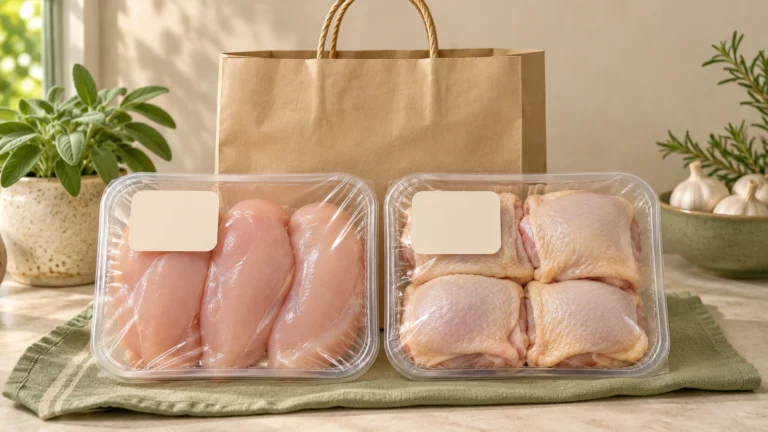
A package may say ground chicken, ground chicken breast or identify another cut. USDA notes that ground poultry can contain meat and skin with attached fat as allowed by the product standard. A breast-specific product is a different purchase from a mixed grind. Look at any declared fat or lean percentages and read the actual ingredient statement if there is one. Do not infer the grind or moisture from the image on the pack.
A leaner product can work in a recipe designed around it, particularly when patties stay even and the cook checks temperature on time. A blend with more fat can feel different, but its exact balance depends on the label. If you compare nutrition panels, put them on the same serving-size basis. A heavier listed serving can make two similar products look different.
Choose a ground chicken product
| Situation | What to do |
|---|---|
| Ground breast | Check lean or fat information and use a recipe suited to the cut. |
| Ground chicken blend | Review the actual label instead of assuming its cut mix. |
| Thin or thick patty | Use the recipe’s shape and verify 165°F in the center. |
Choose a patty format before buying
A thin griddled patty needs a grind and recipe that can hold together without a deep center. A thicker grilled burger may need a firmer shape and setup where you can reach the center with a thermometer. For sliders, count how many small even portions you want. Use the package weight and the recipe's patty weight as a starting point, rather than dividing a pound into whatever sizes happen to come off the spoon.
Think about what the burger will carry. A thick bun can dominate a very small patty, while a very thick patty takes longer to heat through. If you are switching from one thickness to another, choose a recipe suited to that size. Do not assume a thin-patty schedule will cook a thicker burger or a grill-ready frozen prepared burger.
Mix only in the way the recipe needs
Keep ground chicken refrigerated until preparation. Use a clean bowl and designated raw tools. Follow the amount and type of binder, salt and wet ingredients the recipe specifies. Too much added liquid can make a patty difficult to turn. Heavy mixing can make mince feel more compact or sticky, especially with salt. For a looser bite, handle it gently and shape as directed.
Prepare buns, vegetables and sauces away from the raw work area. Keep waiting patties at 40°F (4°C) or below until cooking. Store raw ground poultry for one to two days in the refrigerator or freeze it promptly. If the pack is marked as a seasoned or ready-formed product, follow its own directions. A preformed burger may need a method different from a loose grind.
Check the center with a thermometer
Cook ground poultry to 165°F. In a thin patty, insert the probe sideways so the thermometer's sensing area stays in the center. For a thicker burger, check the thickest part and avoid putting the probe against a hot skillet or grate. Check patties individually when their sizes differ. The outer color and juices do not tell you the exact center temperature.
Use clean utensils and a fresh plate for finished burgers. Wash hands and anything that touched raw ground chicken before assembling the buns. If the outside colors well before the center is ready, adjust heat as the recipe permits and continue cooking immediately. Choose a more even size next time instead of relying on a longer high-heat finish.
Compare two packages with one useful test
Suppose you can buy a ground breast package and a ground chicken blend that gives a stated fat amount. Pick a recipe suitable for the product you want, make comparable patties and record the measured weights. Cook to the same safe endpoint and taste with the same bun and toppings. Notice moisture, shape and whether the flavor is still apparent. If the lean patties turn dry, look at thickness and time before adding a lot of liquid on the next attempt.
If the mix is too soft to hold, check whether the package already contained extra ingredients or whether the recipe called for a different cut. A cooler preparation and a suitable binder may be part of a tested recipe. Choose that version rather than changing multiple proportions without a plan. To see which change helped, keep the thickness and toppings consistent.
Buy only what you can cook or store safely
Check your grill or skillet capacity and the number of patties you can handle. If several batches are needed, keep the uncooked ones chilled. Refrigerate eligible cooked leftovers promptly and reheat hot portions to 165°F. When planning another meal, freeze suitable raw portions with a clear date and note whether they are plain or already seasoned.
Calculate portions without guessing at the package
If a recipe uses four equal raw patties from one pound, that is 4 ounces raw per patty before additions. An eight-patty plan would need two pounds on the same assumptions. If you're buying prepared patties, check actual piece counts and storage directions rather than dividing a net weight you will never re-portion. Allow for cooking changes when you choose buns or decide whether to add a substantial side. A ground breast burger and a blend of the same raw weight may not have the same cooked size or mouthfeel. Check the labels and compare equal finished portions for a useful decision.
Choose a test for a dry or uneven burger
If a batch feels dry, look for an overcooked outer layer or an unusually thick patty before changing the ingredients. On a repeat, pick a suitable grind and keep patties the same thickness, then watch when they reach 165°F. If the flavor is good but the burger pulls apart, compare a recipe with a tested binder and a cleaner shaping routine. Do not rely on raw tasting to evaluate seasoning. Cook a separate test patty to the safe temperature and taste it with the bun and sauce. Chill the waiting raw portions promptly while you cook the sample.
Keep the information from the label
If one product gives a lean percentage and the other only identifies the cut, record the quantities in the nutrition panels for the same serving weight. The numbers may help you choose the product for the recipe without guessing which tastes richer. Keep the original package or label photo if you plan to repeat the comparison later.
Sources
Frequently asked questions
Is ground chicken breast always best for burgers?
Choose a recipe suited to the grind. Breast can work well in a lean patty, while blends can have a different texture.
Does plain ground chicken always include thigh meat?
The cut mix depends on the product. Check the package rather than assuming.
Should I add more liquid to very lean meat?
Use a recipe with a suitable measured amount. Excess liquid may make it hard to form patties.
How should I check thin burgers?
Insert the thermometer from the side where possible and verify 165°F in the center.
How long can I store raw ground chicken?
Use it within one to two days at 40°F or below, or freeze it.
Can I use color for doneness?
Use a thermometer rather than appearance.