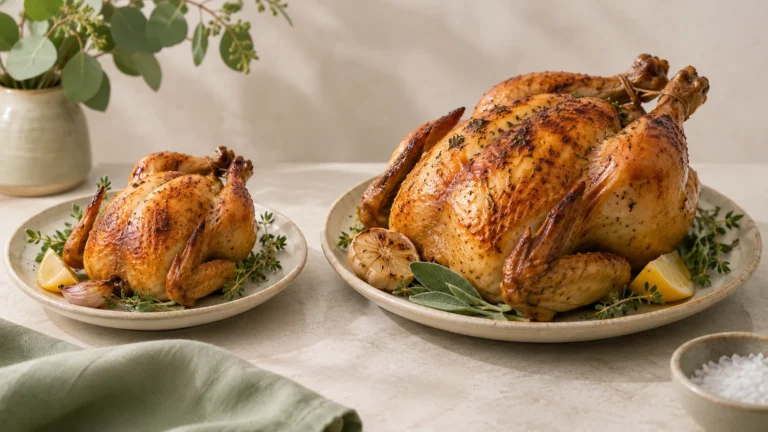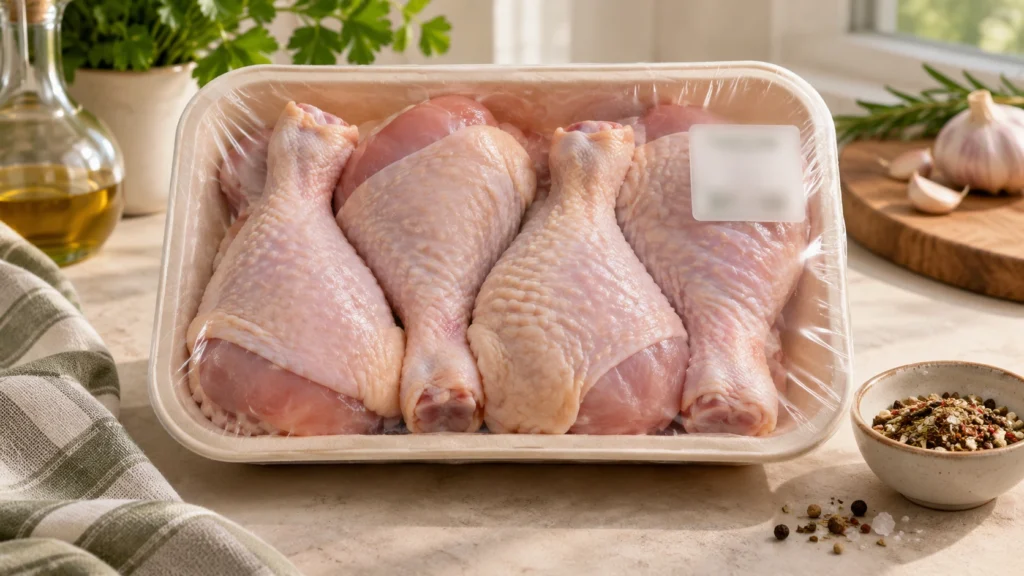
An added solution statement means the chicken contains a separately added mixture, which can include water, salt, broth or flavorings. Read the specific ingredients and the sodium line before deciding how much extra seasoning to use. A retained-water declaration describes water remaining from processing, such as chilling. The statements answer different questions, and neither predicts exactly how a piece will brown.
Read the product name and nearby statements
Start with the package front. On U.S. raw poultry products covered by the added-solution naming rule, the name includes the percentage of added solution and the common or usual names of its ingredients. The exact wording varies with the product. A statement involving water and salt describes a different mixture from one that includes broth and multiple seasonings. Check the entire label, particularly if the recipe needs plain, unseasoned chicken.
A retained-water statement reports moisture retained as a result of post-evisceration processing when the rule applies. It is not an ingredient statement for a deliberately added brine, marinade or flavoring mixture. A package also might describe how it was chilled. Keep those observations separate when comparing products. If you want to know about added salt, the ingredients and nutrition information are the useful places to look. A process statement alone does not give you the salt content.
| Label or package clue | What it can tell you | How to use it |
|---|---|---|
| Added solution percentage and listed ingredients | The product contains a specified added mixture | Check whether the mixture contributes salt, broth or other seasoning |
| Retained-water statement | The package declares retained processing water | Compare it with the same product type, separately from ingredients |
| Sodium per serving | The amount listed for the specified serving size | Compare equal serving weights across packs |
| Visible liquid in the tray | The package contains some free liquid | Assess the actual surface and pan before trying to brown |
Decide whether to change the extra salt
Consider the recipe components independently. A salty glaze, seasoned breadcrumbs, commercial broth or a bottled marinade can contribute enough salt even before the chicken is seasoned. If the chicken label lists salt in an added mixture, use less discretionary salt at first or use a recipe written for a seasoned product. When the recipe is a precise brining formula, buying the plain chicken it expects gives you more control than trying to subtract an unknown amount of salt from the brine. The solution percentage does not tell you what fraction of that mixture is salt.
Compare sodium on the same quantity. Two labels can list different serving sizes. If they use the same serving weight, comparing the printed amounts is straightforward. If sizes differ, divide the stated sodium by the serving weight to compare like with like. For a simple example, a product showing 180 mg per 100 g presents a different figure per gram than one showing 180 mg per 75 g. These figures are illustrative. Use the actual package, and account for the sauce and sides when assessing how the meal will taste.
Separate a seasoning decision from a food safety decision
Taste a safely cooked bite before adding finishing salt, and use a clean spoon to assess any sauce that is ready to eat. Raw or partially cooked chicken cannot be evaluated safely by tasting. Avoid rinsing raw poultry to remove salt. USDA discourages washing raw poultry because splashes can spread germs. If the recipe calls for drying the surface, gently pat it with a disposable towel and clean any surfaces or utensils that touched raw chicken. Cook to 165°F (74°C) using a thermometer.
For a skillet method to compare, see Juicy Chicken Breast.
Judge skillet behavior from what you see
Steam and liquid in a skillet can come from several sources. The piece thickness, surface moisture, pan size, heat and number of pieces all affect how quickly water evaporates. A pack that declares added solution can still brown under a suitable method. A pack with no added solution can steam if you crowd the pan or put wet pieces into it. When you need browning, cook the number of pieces your pan can hold in a single layer with room around them, and follow the recipe’s heat and fat instructions.
If the skillet fills with liquid early, look at when it appeared. Free moisture on the surface can start collecting immediately, while cooking juices may accumulate later as the chicken heats. Give a compatible recipe enough room to cook in batches. If the meat is safely cooked and you still need to finish a sauce, move it briefly to a clean plate and work on the liquid separately. Leaving lean chicken in the pan while boiling away a large puddle can change its texture. For a braise or poaching method, the goal may never have been to sear every piece first.
Test a small batch when switching brands
Suppose a weeknight breast recipe normally works with a plain pack. The new package lists a solution with salt and you are using the same seasoned stock and finishing cheese. Reduce any optional starting salt and keep some seasoning available at the table. Cook an appropriately sized piece first, confirm it reaches temperature and compare a plain bite with one coated in sauce. If the sauced piece tastes balanced, there may be no need for additional salt. Record the package wording and the measured seasoning for next time.
A recipe can also change when two packages have different piece sizes despite similar label claims. Compare the thicknesses before cooking. If the larger breasts need trimming or pounding to fit the recipe, prepare them consistently. If the formula depends on a dry crust or a lean plain sauce, a whole tray with the same thickness can matter more than the brand. Use the label to identify what you have and the recipe and thermometer to handle it.
For seasoning ideas you can compare against the package, browse Garlic, Lemon & Herb Chicken Recipes.
Compare two labels without guessing the recipe outcome
Imagine that two packages contain similarly sized boneless breasts. One declares a water-and-salt solution and shows a higher sodium figure at the same serving weight. The other has a retained-water statement and no listed seasoning. If you are making a tightly measured brine or a dish that uses a salty glaze, choose the product the recipe was designed around. If you already bought the salted product, keep optional finishing salt separate and first taste the cooked chicken with the glaze. A salty product can make small differences in sauce quantity more noticeable.
A third option may list both a particular flavoring blend and a different size for the serving. Read the full list rather than treating the flavor named on the front as the complete mixture. If you need to avoid a specific ingredient, verify it with the package and manufacturer as needed. For a routine cooking comparison, note the serving weight and sodium, then decide how many portions the tray will actually supply. A higher figure per serving is hard to interpret if that serving is much larger than the other product’s.
The same distinction helps with stock or drippings. If the chicken you roasted was already seasoned, any liquid you use from that cook can carry salt into the next sauce. Taste a fully cooked sample or use unsalted stock when you want to control the seasoning from the start. When meal prepping, set aside some uncoated cooked portions if you expect to use several contrasting sauces.
At the store, read the principal display panel and check the side or back for nutrition information. Write down what made you choose the pack. If texture or browning changes on your next cook, compare the actual thickness and initial surface condition as well as the label. That gives you a way to decide whether the difference came from what you bought, how you prepared it or both. Keep notes on the cooking vessel and number of pieces, so you can make a fair comparison rather than changing several variables at once.
A solution may also change the way you plan a marinade. If the original recipe depends on a long brine for plain chicken, look for a method designed for the seasoned product instead of guessing a correction. Check the finished dish with its sides before changing how you season the next batch.
For more on thermometer use and storing cooked chicken, see the HCCR chicken food safety guide.
Sources and references
Frequently asked questions
Does an added solution change how much salt to use?
It can if it contains salt or salty ingredients. Compare the sodium at equal serving weights and start with less discretionary seasoning when appropriate. Taste only after cooking safely.
Is retained water the same as added broth?
No. Retained water refers to moisture from processing. Added broth or a brine is part of a separately added mixture and is covered by a different label statement.
Can an added solution percentage tell me how salty the chicken is?
It describes the amount of the mixture, not how much salt that mixture contains. Check the ingredients and the listed sodium per serving.
Does plain chicken always brown better?
Browning depends on surface moisture, spacing, heat and other cooking conditions. Read the label, then cook according to the actual cut and what happens in your pan.