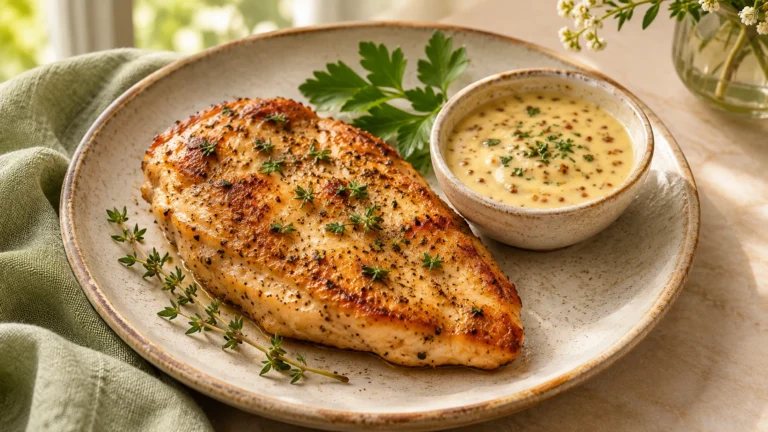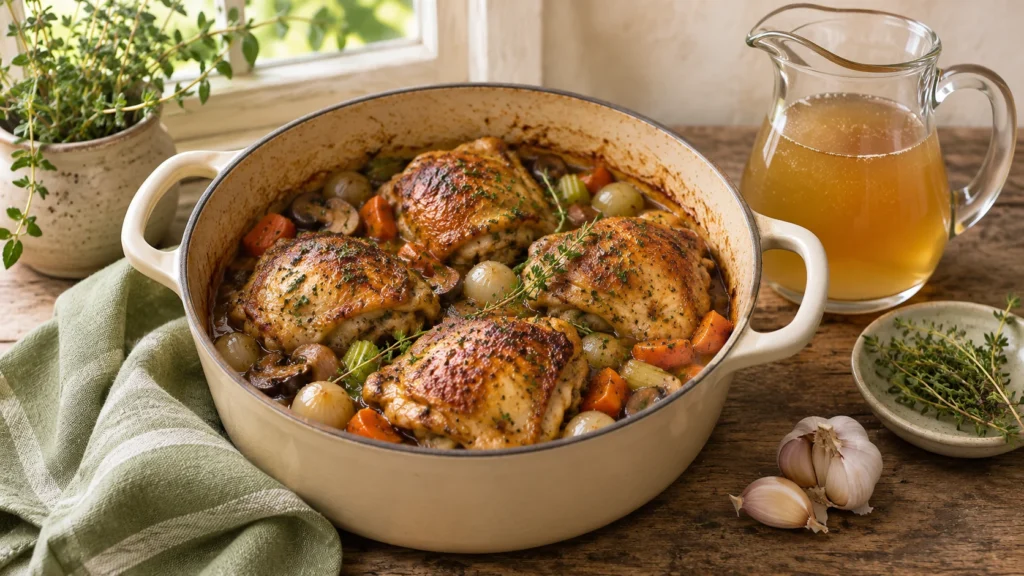
Replace red wine in a chicken braise with a suitable low-sodium or unsalted stock for cooking volume, then adjust with a small amount of recipe-compatible acidity if the sauce needs it. Taste after the chicken and its sauce are safely cooked. Stock and acid can make a balanced braise with a different aroma from wine.
Identify the role wine was meant to play
Some recipes use wine to deglaze a hot pan after browning. Others use it as a major part of the braising liquid and let its flavor concentrate over time. A small splash matters differently from a sauce whose identity depends on wine. Find out when it goes in, how much liquid is supposed to remain and whether the finished dish is meant to taste fruity, sharp or savory.
If the wine is mainly for deglazing, stock or another compatible liquid can loosen browned material. For a wine-led braise, stock supplies cooking liquid and savory flavor, but the resulting sauce will have a different character. Choose a recipe written without wine when the wine contribution is too central for a simple adjustment, especially if you need a reliably alcohol-free option.
Replace the parts wine contributes
| Situation | What to do |
|---|---|
| Deglazing or cooking volume | Use a recipe-compatible stock and measure the amount. |
| A little brightness | Test compatible acidity in a small fully cooked sample. |
| Wine is the dominant flavor | Choose a braise written without wine. |
Start with a stock whose salt level you can manage
An unsalted or lower-salt stock lets you season once the sauce has reduced. Chicken stock often fits a chicken braise. Use the kind and liquid volume suitable for the recipe, and account for the added stock when you measure everything else. A strongly seasoned stock may make a small sauce too salty once it concentrates. If you use a concentrated mix, prepare or dilute it as directed and taste a clean sample first.
Deglaze a suitable pan using the recipe's sequence. Scrape up browned residue with an appropriate utensil and discard distinctly scorched material where practical. Keep the pan stable and be careful of steam. Do not taste liquid that has contacted raw chicken or undercooked drippings. Continue the braise and check the chicken reaches a minimum of 165°F (74°C) in the thickest meat. Follow the recipe for the finished texture of bone-in cuts.
Use acidity separately from the full liquid volume
Stock provides most of the volume. Vinegar or lemon can add acidity in a small amount after you taste a safe sauce. Replacing a large wine quantity entirely with vinegar can make the braise unpleasantly tart, so choose an approach written for the substitute. Use a small amount according to that recipe or in a clean test sample. Choose the particular vinegar or juice according to the sauce you want, and check salt, sweetness and acidity together.
If the sauce already has tomatoes or other sharp ingredients, taste before adding any acid. A richer stock may need only a little brightness. If the dish is already balanced, leave the accent out. A small spoonful tested separately lets you compare stock alone and stock with a little acid. Add the preferred amount in stages to the pot.
Choose whether a fruity ingredient fits
A recipe may use a small amount of unsweetened juice or another fruit ingredient to introduce part of the flavor you want. Consider sweetness first. Juice reduced quickly can dominate the sauce and leave it sticky or sweet. A tomato-based braise may already bring enough fruit character. If you want a drier savory result, stock with a controlled acidic finish is often the simpler direction.
Read any alcohol-free wine-style products carefully if strict avoidance matters. Alcohol-free wording can mean different things by product or market. Stock is a straightforward option when its ingredients fit. Do not assume cooking completely removes alcohol from ordinary wine. Published retention data show that how much is left depends on the preparation method and cooking time.
Try an example with one clean sample
Imagine a skillet braise that calls for wine after the chicken has browned. Choose an appropriate stock-based recipe, deglaze as directed and complete the cook. After the sauce is safe, put two small tastes in clean cups. Keep one as it is and add a little compatible acidity to the other. Taste them with the same side. If you prefer the brighter sample, adjust the batch gradually after accounting for any planned reduction.
If the stock version is thin, keep cooked chicken safely out of the pan during a short separate reduction where the recipe permits. Use verified hot holding at 140°F (60°C) or above when needed. Check seasoning again afterward. For a thicker or darker finish, use the chosen recipe's method rather than trying to reach a wine color by boiling longer.
Make the substitute fit the rest of the meal
A mild rice or potato side can make a savory stock-based braise feel complete. Use fresh herbs at the end if you want another layer of aroma. For tomorrow's portion, chill eligible leftovers promptly in shallow containers and reheat hot chicken to 165°F. Bring stored sauce to a boil according to USDA guidance. Keep a note of which stock and acid you used so you can repeat the seasoning balance.
Choose the braising liquid before the pan gets hot
Set the stock and any finishing acid out separately. That makes it easier to measure stock for braising rather than guessing from the amount of wine you omitted. If your chosen stock is much stronger than the recipe expects, use the suitable dilution or choose a recipe written for it. For a pan sauce, reduced stock can change concentration quickly. Decide in advance whether you need just enough liquid to loosen the browned bits or enough to cover the cooking time. Use the recipe's tested amount for the chosen setup.
Compare a stock-only sample with the final sauce
After the chicken and sauce have cooked safely, taste a small portion with the side you plan to serve. A sauce can seem less sharp alongside potatoes or rice than it does alone. If you prefer a brighter profile, add compatible acidity to a second sample and compare them. Record the stock and approximate amount used. If the sauce is already balanced, the same side and a fresher garnish may be enough. For a new cook, try a version written for stock so you have a known starting point for the next small test.
Sources
Frequently asked questions
Can I replace red wine with only stock?
Yes in many recipes, if stock suits the method. Taste the fully cooked sauce before adding acid.
Can I replace the whole amount with vinegar?
Use stock for volume and a small controlled amount of acidity. Full-volume vinegar can overwhelm the dish.
Does cooking remove all the alcohol?
No. The retained amount depends on how the dish was cooked.
What if my braise already contains tomatoes?
Check the fully cooked sauce first. You may not need any additional acidity.
Can fruit juice replace wine?
A recipe can use a little when the sweetness fits. Choose a method written for that ingredient.
Does the stock need to be unsalted?
It gives you more room to reduce and season. Check the stock and other salty ingredients.