Use leftover chicken and salsa verde for tacos, a bowl or a quick soup. Check the chicken’s original cook date and safe storage first, then follow the salsa’s label and its own handling history. Start with a little salsa for tacos, dress a bowl at serving or thin it with broth for soup. If the chicken is served hot, reheat it to 165°F (74°C). Use a small portion of salsa at first so the whole meal stays balanced.
Match the salsa to the lunch
| Situation | What to do |
|---|---|
| Tacos | Use just enough to coat the chicken. |
| Bowl | Add the dressing at serving and taste as you go. |
| Soup | Thin with broth and verify the chicken reaches 165°F. |
Check both ingredients before mixing
Look up when the chicken first went into the refrigerator. USDA says to refrigerate perishable leftovers within two hours, or within one hour above 90°F (32°C). Properly handled cooked chicken generally keeps three to four days at 40°F (4°C) or below. If the container is past that window or its history is unclear, choose a fresh portion. Adding a tangy salsa does not recover improperly stored chicken.
Check the salsa separately. Follow the manufacturer’s instructions after opening and keep it chilled if the label directs. For homemade salsa, establish its preparation and handling history and apply safe storage guidance to its ingredients. Use a clean spoon to portion it. Salsa that touched raw poultry or uncooked poultry juices should not be used as a finishing sauce. Keep the jar off the raw prep station.
Compare their seasonings before making a full dish. Some salsa verde is mild and thin. Another may be concentrated, salty or strongly spicy. Pieces of roasted chicken with salty skin will taste different from plain chilled breast. Taste a little clean salsa before you cook and check a small bite of both once the chicken is ready. That is often enough to decide what else the meal needs.
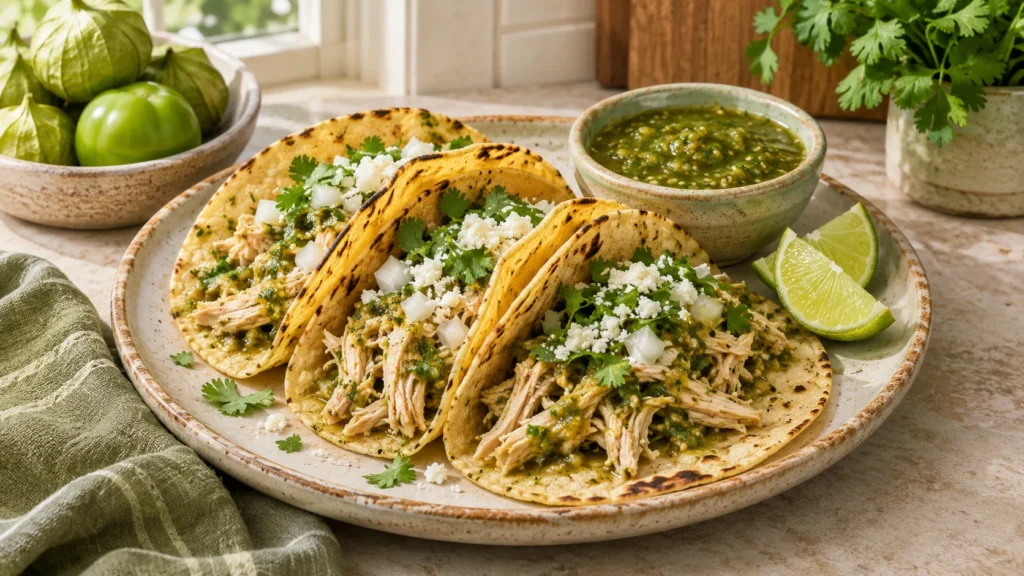
Make tacos with just enough sauce to coat
Choose shredded or chopped chicken so the filling is easy to tuck into a tortilla. Take only what you plan to eat and leave the rest refrigerated. Gently heat the chicken in a suitable pan or microwave-safe container. Add a little clean salsa or broth if needed, stir and verify 165°F in several places. Use a separate clean spoon to add any finishing sauce.
Warm tortillas according to their package or your recipe. Spoon in the chicken, then add slaw, radish or another crisp topping. A very wet filling can soak through a tortilla, so use just enough salsa to coat rather than drenching the pan. Serve any extra salsa in a small bowl so each person can decide how much they want.
For a packed lunch, keep tortilla, chicken, toppings and sauce separate. Transport perishable components cold and refrigerate them on arrival when possible. Reheat the chicken separately if you want a warm taco, then build it just before eating. Use chilled chicken straight from the refrigerator for a cold version only when its storage history supports that use.
Dress a bowl around the chicken’s seasoning
For a quick bowl, use beans, greens or a safely stored grain as the base. Add chicken in pieces that are easy to eat with a fork. If serving the chicken hot, heat it to 165°F and keep clean cold toppings aside. If the base contains cooked rice, account for its rice-specific cooling and storage guidance and reheat only what you will serve.
A bowl can handle a looser dressing than a taco. If the salsa is concentrated, whisk a little with a compatible liquid in a separate clean dish and drizzle to taste. If it is thin already, add small spoonfuls directly. Use a simple crunchy vegetable for contrast. If the chicken and salsa are both assertive, plain beans or greens give you more control than another strong sauce.
For a make-ahead bowl, pack salsa and toppings separately so they do not soften the base. Use the shortest applicable storage window among the ingredients. Label the chicken with its original cook date. A meal that combines several leftovers inherits their history, so check each component before packing.
Turn a small portion into a quick soup
Use a broth-based recipe or make an individual bowl with a simple broth and cooked vegetables. Thin a modest amount of salsa verde into the broth and taste before adding salt. The amount depends on how concentrated the salsa is. Bring soups to a rolling boil when reheating and verify that the chicken reaches 165°F. Add leftover chicken at a stage that gives it time to heat all the way through without simmering it for the entire recipe.
If using a starch, follow its instructions and account for the time it takes to cook or reheat. A can of drained beans can add body without the timing of uncooked rice. Top the soup at serving with herbs, a little lime or other fresh ingredients if the broth needs a brighter finish. When the salsa already has enough acid, taste before adding more.
Plan one portion rather than cooking dinner again
Choose the format that fits the amount left. A few pieces can fill one wrap or become part of a bean soup. A larger portion suited to several bowls can be divided before reheating. Add one other ingredient you already have, then taste the result. Keep the unused chicken and salsa cold in their separate containers and use each within its original guidance. Record the combination if it worked well enough to repeat.
To choose quickly, look at what you can add without starting a long cook. Tortillas and a handful of slaw point toward tacos. A can of beans and chopped greens point toward a bowl. A small amount of chicken and a carton of plain broth can make soup. If a tablespoon of salsa gives the broth enough flavor in your test cup, scale gradually instead of emptying the jar. You may want a bowl for yourself today and a different lunch tomorrow. Keep the portion for tomorrow untouched and safely chilled. Use clean utensils each time you open the containers. A refrigerator label with the original cook date makes it easy for another person to tell how long the chicken has been stored. If the salsa was opened on a different day, keep its label or opening date separate.
Sources
Frequently asked questions
Can I add salsa verde without cooking it?
Yes, if it is ready to eat, handled safely and kept away from any raw poultry contact.
Can salsa make older chicken safe?
No. Use chicken only within its safe handling and storage window.
Which format uses the least sauce?
Tacos generally need only enough to coat the filling. Offer the rest separately.
What if the salsa is too spicy?
Serve less of it with a mild base such as beans or greens, or dilute a small portion with compatible broth for soup.
How hot should the chicken get?
Verify 165°F when reheating leftover chicken to serve it hot.
Can I pack tacos the night before?
Pack the chilled components separately and assemble at lunch for a firmer tortilla.