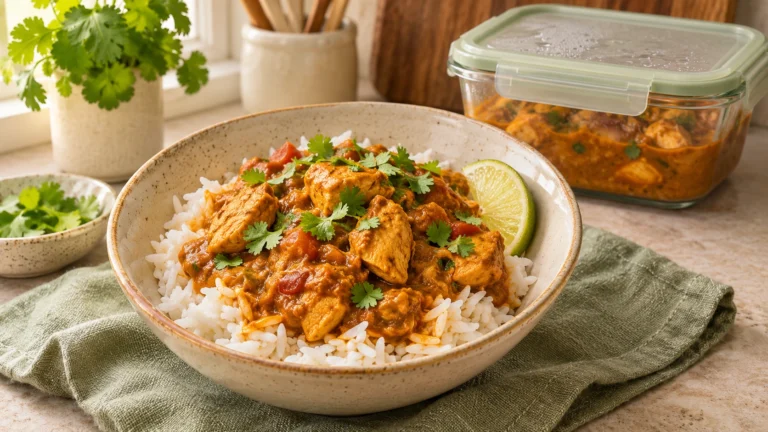
Reheat leftover chicken pasta a serving at a time, using the sauce to judge whether it needs a little suitable liquid. Tomato sauces can take a splash of water or stock when thick, while creamy sauces need stirring and can separate. Cover or stir as the reheating method directs, check several spots, and bring the pasta and chicken to 165°F (74°C) throughout.
Identify the sauce and what changed in the refrigerator
The pasta and sauce change together during storage. Noodles can absorb moisture and stick together even if there was plenty of sauce at dinner. A tomato-based dish can thicken on chilling and loosen naturally as it heats. A cream or cheese sauce can stiffen or separate, leaving a greasy-looking surface. An oil-based dish can feel dry because there is little water-based sauce to coat the pasta. Look at the whole portion before adding anything. If the cold sauce is already loose, start reheating it as directed rather than automatically adding liquid.
Check the original cook date and storage history. Refrigerate cooked leftovers promptly at 40°F (4°C) or below. Use them within three to four days or freeze them while safely stored. If the chicken or pasta was left out beyond safe limits, do not use temperature or sauce adjustments to try to save it. Fresh stock, milk or tomatoes do not restart the storage window. Put only what you plan to serve into a reheating dish and leave the remaining safe portions cold.
| Pasta condition | First adjustment | What to watch |
|---|---|---|
| Thick tomato sauce, noodles still coated | Heat the portion and stir before deciding | Sauce may loosen as it warms |
| Dry edges or tight clumps | Add a small splash of compatible water or stock | Add more only after checking the texture |
| Cold cream or cheese sauce | Use a suitable method and stir to distribute heat | Stop extra heating after the required temperature is reached |
| Chicken and plain pasta separately stored | Heat compatible portions as needed and combine | Verify both components independently when reheated separately |
Add liquid in small steps
For a tomato-based pasta, start with a small splash of water or unsalted stock if the noodles are tight or the sauce thick. Add to the pan or bowl as appropriate and stir through when the pasta loosens. A small portion can become watery quickly. If it is already loose, let heat and stirring do the work first. Try the adjustment on one serving instead of pouring new liquid into the entire storage container. The amount required depends on the original sauce, noodle shape and refrigerator time.
For a cream-based dish, use a compatible liquid in small amounts only if the recipe allows. Some thickening comes from the sauce’s fat or starch setting as it cools. Heat while stirring according to your method, and assess the sauce after it loosens. If it separates, stirring may help the texture, but a grainy or split sauce may never look quite as it did originally. Use gentle, even heating as practical while still meeting the applicable safety requirements. When reheating leftover sauces separately, follow USDA guidance to bring them to a boil. Keep the chicken and pasta moving through the reheating method so cold spots do not survive under a warm surface.
An oil-based pasta can be dry without needing extra oil. Check whether adding a little compatible water or stock helps the pasta and chicken heat more evenly. If a recipe suggests adding an oil or finishing sauce after heating, use a small amount and taste only after the leftovers are properly reheated. For a chilled pasta salad, do not apply these hot reheating steps unless you intend to change the dish. Fully cooked and safely stored cold food can be served chilled with a separately prepared dressing.
For alternatives by sauce and shape, browse Chicken Pasta Recipes.
Choose equipment that can heat the center evenly
A shallow skillet can work for a modest serving that you can stir without breaking the noodles. Add any needed liquid in a small amount. Follow the appropriate reheating sequence, stir through the portion and check the chicken pieces and pasta rather than judging by a simmer at the outside. Take it off the heat once the food reaches the required temperature and the texture is ready. Leaving a single portion on the burner while you prepare other plates can dry the very edges you intended to improve.
A microwave is useful when you need one serving. Use a covered microwave-safe dish as directed, stir or rotate during heating, and allow standing time. Check several places with a clean thermometer, including larger chicken pieces and the center of the pasta mound. If one area is below 165°F (74°C), keep heating and check again. Spreading the serving in the dish can help you avoid a dense clump, but never assume the shape alone guarantees an even result.
Compare two common plates
For a single serving of chicken Alfredo that has set in the refrigerator, place it in suitable cookware, begin heating and stir as the noodles loosen. Add a little compatible liquid only if needed. Check the thickest chicken and the center, then serve once heated through. If the sauce’s texture looks less smooth, choose a simple side and finish right away rather than increasing the heat solely for appearance.
For tomato pasta with separate cooked chicken, reheating each component can be easier than forcing one method to do both jobs. Heat the sauce appropriately, reheat the chicken and pasta thoroughly and combine. If you reheat the entire prepared dish together, stir and check multiple spots. Sauce on top can be hot while a large piece underneath remains cooler. Putting a smaller amount in each dish gives you better access to the center.
Set the next batch up for reheating
When you know pasta will be saved, portion it shallowly and chill it promptly. If the recipe works with sauce and chicken stored separately, save an undressed or lightly coated portion and label it. Larger chicken pieces can be harder to heat in the same time as small noodles. Cut compatible cooked portions to a useful serving size using clean tools before storing. Save only what can be chilled safely and use it within the original storage window. When a pasta repeatedly reheats unevenly, change the portion depth or store suitable components separately next time rather than extending the time for an oversized portion.
For related creamy versions, browse Chicken Alfredo Recipes.
Make the change on one portion before touching the rest
Check the shape of the pasta before choosing a pan. Small shapes can mix through warm sauce with a spoon. Long noodles may need gentler turning once they loosen, and a hard clump can be easier to manage in a shallow dish. A sauce with whole chicken pieces needs room for you to move those pieces and check their temperature. Do not try to make a full container reheat like a single serving. Divide what you need before heating.
If most of the sauce has settled to the bottom, spoon it over the portion before adding liquid. Heat according to the method, stir and check whether the existing sauce gives enough moisture. An extra splash is useful only when it helps the food regain an appropriate texture. If the finished pasta is already thin, a different serving with a fresh side may suit it better than prolonging the heating step. Dry edges and a cold center can appear together in a deep bowl, so check both.
For a work lunch, pack the serving in a container suitable for storage and transfer it to a suitable microwave dish if required. If you want grated cheese or chopped herbs, pack them separately and keep perishables chilled. Once the pasta is heated through, add the finish and eat promptly. Do not use a wet garnish to disguise a portion that has not heated evenly.
If you are making another batch with leftovers in mind, use the recipe's recommended storage steps and plan which components can be cooled separately. A mixed dish can still be portioned shallowly. Mark whether you kept any liquid apart or if the pasta was already heavily sauced. That small note gives the next cook a better first step than automatically reaching for water. Keep any untouched reserve refrigerated within its original safe window.
For more on thermometer use and storing cooked chicken, see the HCCR chicken food safety guide.
Sources and references
Frequently asked questions
Should I add liquid before reheating?
Only if the pasta is dry or clumped. Start with a small splash of water or another compatible liquid and check the texture before adding more.
Why do cream-based leftovers behave differently?
Their fat and starch can set when chilled, and the sauce may separate during reheating. Stir as the method directs and verify safe temperature throughout.
Can I reheat chicken pasta in a microwave?
Yes. Use a suitable covered dish, stir or rotate, allow standing time and check 165°F (74°C) at several points.
Should I reheat the whole batch?
Heat only the portion you need when practical. A smaller serving heats more evenly and the untouched reserve can stay safely chilled.