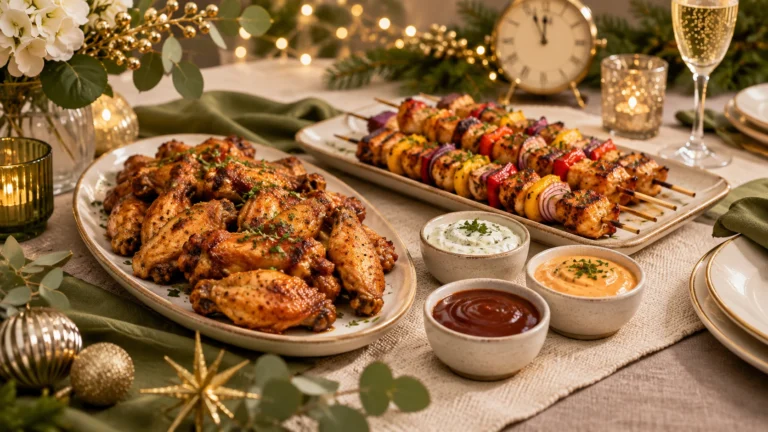
Keep the oven off with grilled chicken skewers and cucumber salad, stovetop chicken and cabbage slaw, or a cold rotisserie chicken plate. Pick the heat source first, then choose sides that need little or no cooking. If you are eating outside, put out small portions, keep perishables chilled or appropriately hot, and refrigerate or discard them within the applicable time limit.
Choose by heat source and what you already have
An outdoor grill moves the heat away from the kitchen and works for skewers or portions in a suitable recipe. Check whether the recipe uses direct heat, what size pieces it calls for, and whether the grill can handle the whole amount. Prepare the cold side in a clean area before carrying any raw chicken outside. Use one tray and set of utensils for raw chicken and a clean separate set for the cooked food.
A skillet is the simplest substitute when you have no grill. Choose similarly sized pieces with a stovetop method. If the day is very hot and you want less time over the burner, avoid a menu that asks for a second long-cooking dish. A cucumber side, a drained bean salad or bread can share the plate without another appliance. An appropriate rice cooker or microwave can handle a starch when you want more substance.
A cold chicken meal is useful when you are starting with safely handled cooked chicken. Use chilled rotisserie chicken or cooked leftovers that were refrigerated promptly and remain within the storage window. A newly mixed salad takes on the storage history of the oldest perishable ingredient. Keep the dressing and damp vegetables separate if you want to assemble the meal outside. A cold meal still needs a cooler if the food leaves the refrigerator.
| Route | Main | Cool side | What to prepare ahead |
|---|---|---|---|
| Outdoor grill | Chicken skewers or portions | Cucumber herb salad | Set out clean plates and chill the vegetables |
| Stovetop | Skillet chicken strips or cutlets | Cabbage slaw and bread | Slice cabbage and refrigerate dressing separately |
| No cooking | Properly chilled cooked chicken | Drained bean salad or sliced vegetables | Check storage dates and refrigerate the containers |
| One appliance away from the stove | Chicken with a suitable rice cooker or microwave side | Fresh greens | Follow the appliance and food instructions |
Build three summer meals with mostly cool sides
For a grill dinner, try souvlaki-style chicken, chopped cucumbers and a bowl of plain yogurt or another dressing. Let the marinade stay with the main. If the chicken has already been seasoned with lemon, use herbs and a little oil in the vegetables, then taste a combined forkful before adding more acid. If you want bread, serve one that does not require the oven. Check the chicken for 165°F (74°C) in the thickest pieces without touching a skewer.
For a skillet dinner, use thin pieces that the recipe cooks quickly and evenly. Add cool slaw with a restrained dressing, a piece of bread or an already planned starch. Cabbage can be shredded earlier and chilled. Give it a last-minute toss. Choose a bowl that will keep dressing away from any crisp coating. In a small kitchen, use the cleared prep area as the serving station and wash any surfaces that touched raw chicken.
For a no-cook plate, set out chilled cooked chicken, white beans or chickpeas and a bowl of crisp vegetables. Add crackers or suitable bread if people need more substance. If the chicken is chopped into a creamy salad, serve the beans or vegetables separately to avoid two wet dishes occupying the same part of the plate. Take each chilled component out just before serving and use clean utensils.
Match the sides to the time you have
Cucumber, radishes, chopped cabbage and washed fruit are short jobs when you have serving bowls and a clean board ready. Rinse produce under running water as appropriate. Drain canned beans and measure out only the amount you plan to serve. On a longer day, mix a dressing and chill it separately. If your plans change, dry prepared vegetables can usually wait in the refrigerator better than dressed greens.
If the dinner is for a picnic or outside gathering, plan the lead time around transportation and cooling. The day before, check that the cooler fits the food and cold sources. Chill the chicken and dressings in the refrigerator. On the day, pack them into the cooler just before leaving. Choose a shelf-stable side or dish when you cannot keep perishables cold. A shady table is pleasant to eat at, but the food still needs temperature control.
For other grill methods, browse Grilled Chicken Recipes.
Give the serving table a temperature plan
Keep cold perishables at 40°F (4°C) or below and use adequately chilled containers and a suitable cooler. Put the cooler in shade and open it as little as practical. You can keep drinks in a separate cooler if people will open it often. Put out a small bowl of cold food and refill with a fresh chilled portion when needed. Do not add new food to a dish that has already been sitting out.
For hot food, serve promptly or use equipment that keeps it at 140°F (60°C) or above. Use a thermometer to confirm actual temperatures. Food without temperature control should not sit out longer than two hours, or one hour when surroundings are above 90°F (32°C). Keep track of transport, prep and table time together. Discard perishable food that has exceeded the limit. Smell and appearance cannot reliably tell you that it stayed safe.
If you find the household cooler cannot hold everything, give the space to chicken, dairy dressings and other perishables. Choose unopened appropriate shelf-stable sides to round out the meal. Freshly prepared cut vegetables and salads can also require refrigeration, so check what you are bringing. On return, put safely handled refrigerated leftovers away promptly and retain their original storage date.
Plan a fallback for bad weather
If grilling is canceled, switch to a skillet method intended for the cut you have or use a safely chilled cooked main. Avoid improvising with pieces already threaded onto a tool you cannot use on the stove. Keep raw marinated chicken refrigerated and follow safe handling instructions. If the grill opens late, leave the salad in the refrigerator and set out the dry sides first. A meal of cooked chicken, vegetables and bread can still work without changing the salad plan.
Choose an indoor menu that releases the cook
For a kitchen that is already warm, a single skillet plus cold sides is often enough. Set plates, slice cucumber and bring out clean utensils before turning on the stove. Cut the main to the size the recipe specifies and cook in batches if one layer will not fit. A crowded pan can take longer and keep you in the hot kitchen. If the side is meant to be eaten cold, keep it in the refrigerator until you finish the last batch.
If you are starting with rotisserie chicken, decide whether dinner will be served hot today or cold later. Use a plan appropriate to the temperature at purchase and get it home promptly. Refrigerate it within the applicable food safety time limit before relying on it for dinner the next day. Portion it with clean tools and set out only what people will eat. Prepared chicken is convenient when you can maintain its temperature on the trip from the store and at home.
Set a portable menu for four
Use skewers or a chilled cooked main, sturdy vegetables and bread. Give each perishable dish its own container and pack a clean spoon for each. Choose small containers you can put out individually. If you want a yogurt dip, place just one small bowl on the table at a time and keep the extra cold. A bread basket needs little attention and gives people something to eat even as the next round of grilled chicken is checked.
Before everyone heads outside, find the clean tray for cooked chicken, a thermometer and a place to keep the cold dishes. Give the meals separate lids if they will share a cooler, and keep raw poultry sealed away from ready-to-eat food. For a short patio dinner, bring the cold sides straight out from the fridge. For a longer visit, return the sides to safe storage or discard them once they exceed the applicable limit.
For summer handheld ideas, browse Chicken Salads, Sandwiches & Wraps.
For more on thermometer use and storing cooked chicken, see the HCCR chicken food safety guide.
Sources and references
Frequently asked questions
What if I have no grill?
Use a stovetop skillet or serve properly chilled cooked chicken. Pair it with cabbage, cucumber, bread or a chilled bean side.
Which summer sides require no cooking?
Cucumber salad, raw cabbage slaw, ready-to-eat beans, washed fruit and bread can all work. Keep any perishable components chilled.
Can I serve rotisserie chicken cold the next day?
Yes, if it was fully cooked, refrigerated promptly and kept at 40°F or below. Follow its original storage window.
How long can summer chicken sit out?
Without safe temperature control, refrigerate perishable food within two hours, or within one hour when the surroundings are above 90°F. Discard food past the applicable limit.