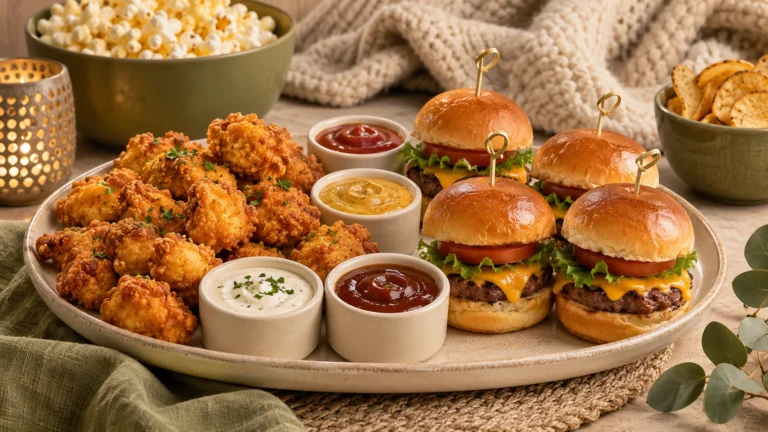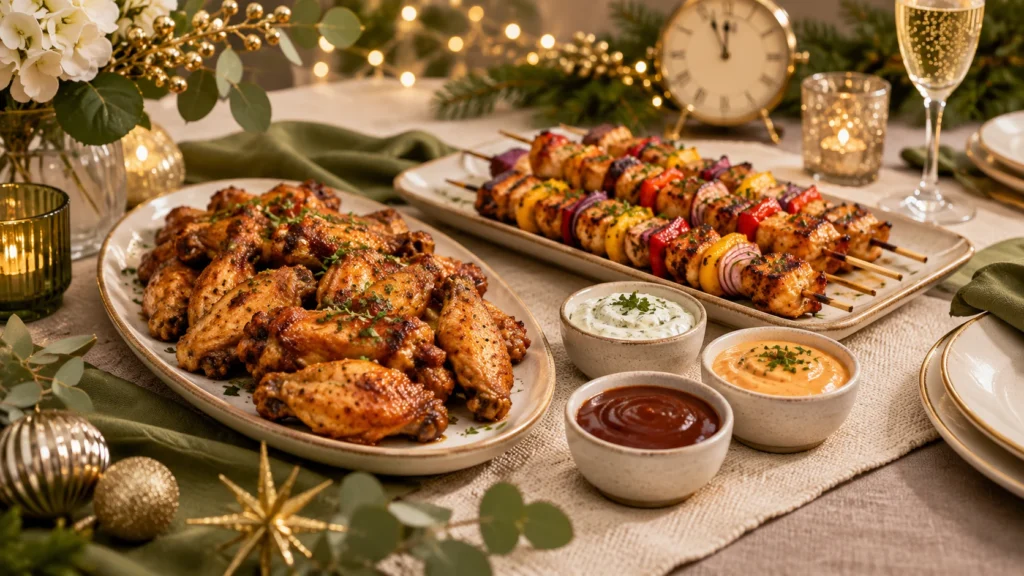
Build a New Year’s Eve chicken appetizer menu around three formats that can finish in waves: wings, skewers and boneless bites. Use one recipe that takes the oven, one that fits a second cooking surface, and one you can cook in the gaps. Put out small fresh platters as guests arrive. Keep extra food safely hot or cold, serve dips separately and set a timer for anything you place outside temperature control.
Plan fresh appetizer waves
| Situation | What to do |
|---|---|
| First arrivals | Serve a small wing platter and clean dips. |
| Later guests | Cook skewers or boneless bites in a separate wave. |
| Reserve portions | Keep chilled or use verified hot holding. |
Choose the formats by equipment and eating style
Wings are a natural fit for a tray guests can reach from several sides. Split wings from a recipe written for that cut make portions easier to count. Provide a dish for bones and napkins nearby. Use one seasoning on the main tray and offer a separate clean glaze. If you want wings crisp, avoid putting them in a deep pile or dressing more than one serving wave at a time.
Small skewers suit the grill or a suitable broiler recipe. Choose evenly cut pieces so you can check doneness in the largest areas. For a crowd that will be standing, consider taking the cooked chicken off the skewers and serving it on a clean plate with a fork or tongs. Leave sharp skewers away from young children. If a recipe calls for cooking vegetables on the same skewer as raw chicken, cook them with it as directed. Prepare separately any garnish you mean to serve uncooked.
Boneless bites are a practical third choice because guests can take one or two without needing a knife. A sheet-pan or air-fryer method can work, depending on the size of your equipment. If both wings and bites need a single oven at different temperatures, schedule them in different waves or replace one with a skillet recipe. A complete appetizer menu does not need all three items ready at the first arrival.
Plan when food will go out
Estimate how many guests will arrive early and how many will be there close to midnight. Build the first round for the people you actually expect. Put one finished chicken item on the table and keep raw portions refrigerated until their cook time. When another group arrives, bring out a clean platter with a fresh batch. A smaller group may be happy with two formats and a few fresh sides.
Use the recipe times to plan backward from the first serving time. If wings take the longest, start them first. While they bake, set out clean tongs, individual plates and the dips. Use the second appliance or burner only if someone can supervise it. Add the quick bites close to the second serving time. If the oven schedule slips, serve prepared cold sides or another ready appetizer while the chicken finishes.
Assign one person to handle the transition from raw to cooked. Use separate raw and serving utensils, and put cooked portions on clean plates. Check chicken reaches 165°F (74°C) in the thickest part, away from bone or a skewer. Check multiple pieces if their sizes vary. A timer helps you decide when to check the food. The thermometer tells you when it is ready.
Keep the sauces easy to manage
Choose a mild dip and one brighter or hotter option. A mild yogurt dip, mustard-based sauce or a suitable jarred sauce can work if it fits the guests and ingredients. Prepare or portion it with clean tools before touching raw poultry. If using a sauce to coat raw chicken, reserve a clean portion in a different container before handling the meat.
Give each dip a spoon and place the bowls far enough apart that guests can use them without crossing over the main platter. Put a small label beside each with the exact sauce name and ingredient information when needed. Keep chilled sauces cold at 40°F (4°C) or below until service. Put out a small amount and replace the serving bowl if you need more.
A sticky wing glaze can go on at the last moment when your recipe calls for it. A dip lets guests use as much as they like and can leave baked or fried pieces crisp for longer. For skewers, sauce beside the plate also makes them easier to pick up. Place napkins beside the sauce station rather than across the table.
Rotate clean platters and track holding time
FDA buffet guidance advises putting out smaller bowls and replacing them with fresh ones instead of piling new food onto old servings. Keep hot reserve food at 140°F (60°C) or above if holding it, and cold perishables at 40°F or below. Check the food’s temperature in the equipment you are using. A decorative cover or a candle near a serving dish is not evidence of safe holding.
Refrigerate perishable foods within two hours out of temperature control, or within one hour if the air is above 90°F (32°C). Mark when a platter came out and remove it before the applicable limit is exceeded. Do not mix food whose time on the table you cannot establish into a fresh batch. If serving continues late, use small freshly timed waves or stop serving chicken and switch to foods suited to room-temperature service.
Use a small sample menu
Begin with seasoned wings, cucumber and a chilled dip. For the next wave, serve cooked chicken skewers or boneless lemon bites with a clean hot sauce on the side. If you still have guests later, bring out one final small batch rather than a large refill. Pack safely handled leftovers promptly in shallow containers and date them. Separate dressed vegetables, sauces and chicken where that helps preserve their texture and identify their storage history.
Set the table for two serving waves
For a first wave at eight and a second at ten, put the wings on the schedule for the first group and portion the raw skewers in advance for the later cook. Set a fresh platter and clean tongs beside the stove before the first tray goes out. If everyone arrives together, serve one chicken item with its dips and let the second batch finish while guests eat. If the second group is smaller than expected, keep the remaining raw portions safely chilled and cook only what you need. This saves oven space and gives you a smaller cleanup at the end.
Sources
Frequently asked questions
Can I serve three chicken appetizers from one oven?
Use recipes with compatible heat or cook in separate waves. Choose a stovetop format if the oven is too busy.
What is easiest for guests who are standing?
Try boneless bites or sliders that can be eaten without a knife, and keep wet sauces separate.
Do I need to put all the chicken out at once?
Put out smaller platters and replace them with fresh ones as needed.
Can I reuse a marinade as a dip?
Serve a clean portion set aside before raw contact.
How long can chicken sit on the table?
Apply the USDA two-hour limit out of temperature control, or one hour above 90°F.
How do I keep fried or baked bites crisp?
Use a clean serving platter, avoid a deep pile and put dips beside the chicken.