A handful of safely stored cooked chicken can make a full lunch when you build the meal around a pantry base. Use rice and beans for a bowl, a tortilla for a compact filling or soup for finely shredded pieces. Add something crisp and a suitable finish. Keep cold lunches chilled and reheat hot leftovers to 165°F (74°C).
Check the amount, shape and storage history
Lay the cooked chicken on a clean surface and decide what the pieces can do. One intact slice can cover part of a small wrap. A few irregular pieces can be cut into bite-size toppings. Small shreds can distribute through soup without requiring a large quantity. Match the serving to the shape rather than trying to stretch a few pieces into a plate that depends on a substantial cutlet. If the chicken is strongly seasoned, choose a base that can carry it without requiring much extra sauce.
Confirm when it was originally cooked. Keep refrigerated cooked leftovers at 40°F (4°C) or below and use them within three to four days or freeze them promptly. Food must have been chilled promptly after cooking. If you cannot confirm safe handling, choose a fresh lunch. A new bowl of rice or can of beans does not change the deadline of the chicken you add to it. For hot leftovers, reheat to 165°F (74°C).
| Chicken you have | Lunch that fits | Build it with |
|---|---|---|
| A few neat slices | Small wrap or grain bowl | Tortilla or grain, beans if suitable, and a crisp vegetable |
| A handful of bite-size pieces | Bowl topping | Rice, drained beans and a separately prepared finish |
| Finely pulled bits | Soup addition | A compatible prepared broth or soup base |
| Strongly flavored or sauced pieces | Small topping for a plain base | A mild grain, beans or vegetables |
Use chicken as a topping rather than the entire meal
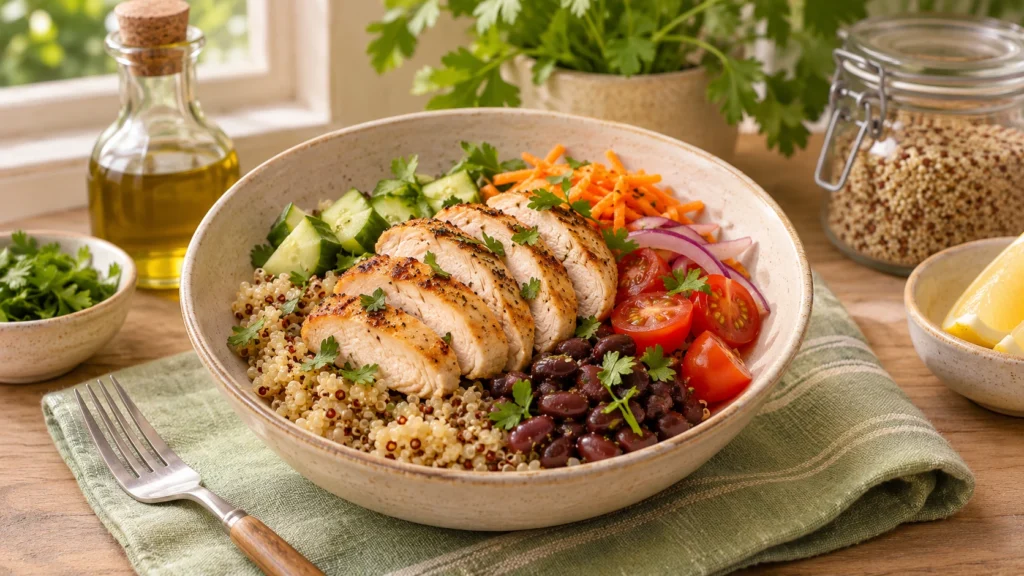
Start with a serving of cooked grain and an appropriate quantity of beans, then add the chicken over it. The grain and beans provide structure and the chicken adds an extra texture and flavor. Add cucumber, cabbage or another crisp ingredient prepared on a clean surface. Keep any chilled finish separate if the bowl will be reheated. When starting with safely stored cooked rice and chicken, use appropriate reheating instructions and verify 165°F (74°C) in the hot leftovers before adding ready-to-eat vegetables.
If you only have a spoonful of shredded meat, avoid mixing it into a very large quantity of food just to say that every serving has chicken. Put it on top where its flavor will be noticeable. A few beans or an appropriate second pantry ingredient can carry the rest of the meal. Taste the finished bowl before adding more salt, especially if the chicken or beans were pre-seasoned. The goal is a complete meal, not a particular ratio of leftover meat to starch.
Build a compact wrap with a modest filling
Use a tortilla sized for the amount you have. Cut safely chilled chicken into slices or small pieces as needed. Add a little drained beans or an appropriate cooked grain, then a dry leaf or crunchy vegetable. Keep a wet sauce in a small sealed cup. A very large tortilla with little filling can be awkward, and a tortilla filled mostly with wet vegetables can tear. Make a smaller wrap and add an independent side if you need more food.
If you are packing it to eat cold, keep all perishable ingredients at 40°F (4°C) or below. Use at least two frozen cold sources in an insulated bag if you cannot refrigerate it during transport. Assemble late if the ingredients are wet or you have a clean place to put the wrap together. This helps maintain the texture and keeps a leaking dressing cup from spoiling the whole meal. Always use clean equipment for fully cooked chicken.
For other lunch formats, browse Chicken Salads, Sandwiches & Wraps.
Add small pieces to soup after the base is ready
Start with a soup method that accepts cooked chicken. Let the broth and vegetables cook according to the recipe, then add a small quantity of shredded or diced chicken when the method calls for it. If reheating leftover soup or chicken, follow USDA reheating guidance. Bring leftover soup to a rolling boil and verify 165°F (74°C) throughout. Check chicken pieces and the rest of the dish rather than assuming hot broth automatically reheats every piece. Serve promptly so the small shreds do not stay on the heat for the whole vegetable cook.
Soup can be useful when the pieces are too small for a wrap. A suitable broth, beans and vegetables can give the bowl enough body without requiring a second cut of chicken. Do not add properly chilled cooked chicken to a lukewarm pot and serve it as a hot meal before checking the temperature. If you bring it to work, pack it cold to reheat properly or use a suitable insulated container that can maintain at least 140°F (60°C) for hot holding. Choose a different lunch if the equipment is unavailable.
Choose one pantry ingredient and one fresh contrast
A small amount of food is easier to use when your plan is deliberate. For example, if you have a handful of chopped roast chicken and canned chickpeas, drain the beans as directed, prepare a chilled or warm base as intended, and add crisp cucumber separately. If you only have cooked rice, use it within its safe storage window and pick a warm bowl or a cold lunch that suits its texture. If only a tortilla is available, make a small wrap and use fruit or a simple side to round out the meal.
Keep the role of fresh ingredients clear. A crunchy topping does not replace the main base, and a rich dressing does not make a small filling substantial. Use an amount of base that suits your appetite and choose a contrast you can prepare easily. If you only have a strongly sauced piece, choose a plain base first and taste it with the safely heated or chilled chicken. A separate sauce may not be needed.
For bowls that stretch the meat, browse Chicken and Rice Recipes.
Use the same handful for three different lunches
Imagine your refrigerator contains a small piece of plain roast breast and the cupboard holds white beans and rice. If both the chicken and the rice were safely stored, a warm bowl is a clear option. Reheat the intended amount of each leftover hot component to 165°F (74°C), then add drained beans according to the recipe and a little fresh crunch. If the chicken is already seasoned, start with a plain base and see whether the dish needs more flavor at all.
If you need a lunch you can eat cold, switch the base rather than cooking more chicken. Use a small tortilla, a few slices of chilled chicken and a spoonful of compatible beans or a crisp leaf. Keep a wet sauce separate and use an insulated lunch bag with adequate cold sources. A small sandwich with fruit or vegetables on the side can be easier to pack than a large wrap that needs too much filling. Use the same amount of chicken and let the side change the size of the meal.
If the chicken is already pulled into tiny pieces, use it at the end of a suitable soup recipe. A broth with beans or vegetables lets you enjoy small shreds in each serving. Reheat leftovers safely and use your thermometer rather than assuming a hot broth makes every chilled piece hot immediately. Serve the soup once it is ready. Refrigerate any untouched parts within their original windows.
Before you label a reserve pack, identify whether it fits a cold serving or needs heating on the day you intend to use it. If you have only cold storage at work and no suitable way to heat soup, choose the cold wrap route instead. If you cannot keep perishable food at 40°F (4°C) or below, take a shelf-stable option. The best use of the leftover depends on its age, shape and your lunch setup.
For the next roast, set aside a small portion you know you will use for a bowl or wrap. Label it with the original cook date and keep an independent clean topping ready. That gives you a lunch without relying on more meat than you have.
For more on thermometer use and storing cooked chicken, see the HCCR chicken food safety guide.
Sources and references
Frequently asked questions
Can I build a full lunch from a handful of chicken?
Yes. Use a grain, beans, tortilla or soup as the main structure, then add chicken and a fresh contrast rather than relying on the meat alone.
Which bases work when the pieces are especially small?
A broth-based soup, rice and beans, or a chopped wrap filling can distribute small pieces well. Choose according to the flavor and how you will serve it.
Does adding fresh food reset the leftovers date?
No. Keep the original date and apply the earliest relevant storage limit to a combined dish.
Can I pack the lunch cold?
Yes, if the chicken and other perishable ingredients were handled safely and stay at 40°F (4°C) or below until eating.