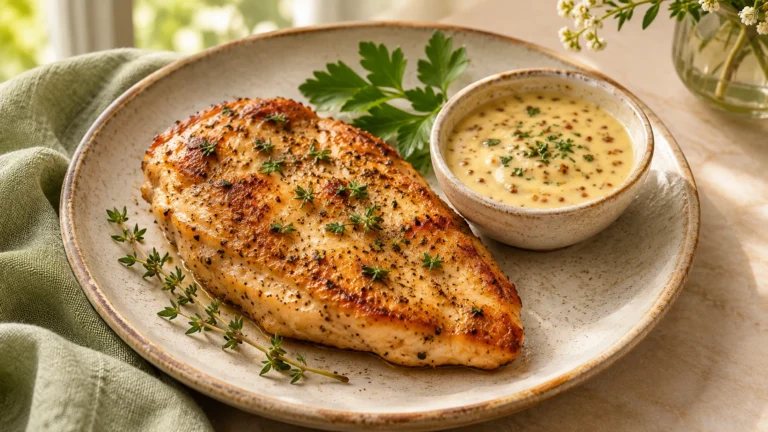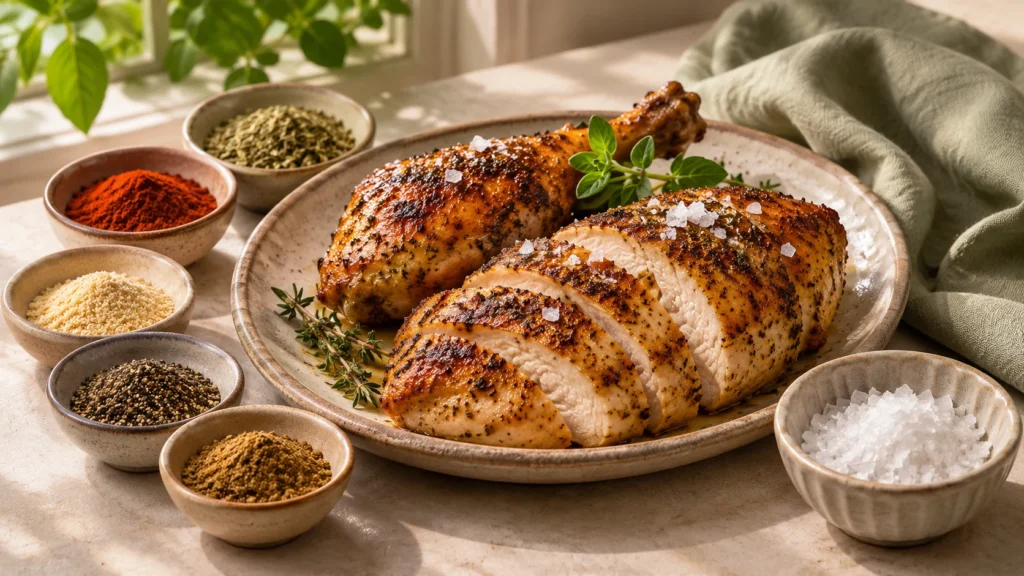
Season chicken before cooking when salt needs time to distribute or a spice blend belongs on the cooked surface. Add fresh herbs, citrus zest or a little finishing salt after cooking when you want a distinct aroma or texture. Many recipes work best with a measured base seasoning before heat and a small adjustment after tasting the cooked dish.
Decide what the seasoning should do
Salt put on before cooking has time to dissolve and move beyond the surface, particularly when the chicken is given a refrigerated rest in a tested recipe. Salt added at serving mainly seasons the surface and any sauce. A crunchy flake of salt can create a noticeable bite at the table, while the same amount put on earlier may dissolve. Think about whether you want broader seasoning or a more immediate finish.
Dried spices can flavor a coating or the browned surface. Fresh herbs and delicate oils can lose some of their aroma under prolonged heat. A late addition can keep those aromas apparent. A recipe may use herbs twice for different reasons, such as a cooked herb in the sauce and a fresh one at serving. Pick the effect you want before deciding when to add it.
Choose when to apply seasoning
| Situation | What to do |
|---|---|
| Measured salt in a tested recipe | Apply early and refrigerate as directed. |
| Ground spices or coating | Apply before cooking as the recipe specifies. |
| Bright aroma or finishing texture | Taste safely cooked chicken and add fresh herbs, zest or a little finishing salt. |
Measure salt early in a dry-brine recipe
If dry brining, use a tested amount for the cut, salt type and timing. Salt crystals of different sizes can weigh different amounts by volume. Use the brand specified or measure by weight when the recipe gives it. Keep the chicken refrigerated throughout and store it in a way that prevents contact with other food. An uncovered setup should still prevent drips and cross-contamination. Follow USDA storage guidance and the recipe.
Check whether the packaged poultry lists an added solution and whether broth, cheese or a bottled sauce will add salt later. Adjust according to a recipe suited to those ingredients. Early salting is a useful option, but a very salty marinade and a heavily salted finish can be too much together. Treat each step as part of the same finished dish.
Use a last-minute approach when dinner is close
If the recipe gives a short preparation window, measure seasoning and apply it as directed before cooking. You can get a seasoned surface without an overnight wait. Choose a dry or wet method the recipe expects. If the chicken is wet, blot it as appropriate with a clean disposable towel and avoid rinsing raw poultry. Keep ready-to-eat produce and utensils separate from raw chicken and its juices.
When cooking over direct heat, watch spice blends that contain sugar or delicate ground spices. They can darken before the chicken has safely cooked through. Use a suitable cooking method and check 165°F (74°C) in the thickest meat. For a sauce made to be added later, keep a clean separate portion away from raw contact. A browned spice crust tells you about the surface rather than the center.
Add a finish that complements the base
After cooking, taste a safely cooked piece or sauce. A little chopped parsley or fresh thyme can add aroma near the table. Lemon zest or a few drops of juice can brighten a rich flavor. Finishing salt works when you want a little surface seasoning on a slice, but taste first if the chicken already has a salty rub or sauce. Use a small sample before adjusting the whole batch.
Consider where you want the finish to sit. A roast can be carved before you lightly season the cut surfaces. A crisp chicken cutlet may be better with dry herbs and lemon on the side than with sauce poured on early. A skin-on thigh can take a separate sauce underneath so its surface stays distinct. Add the finishing element at the moment it will be tasted.
Compare two common dinners
For pan-seared boneless cutlets, follow a measured early seasoning and cook as directed. Finish with lemon and chopped herbs if you want a fresher note. For roasted thighs, a recipe may use a refrigerated dry brine or a spice blend before heat. After checking the temperature, add only the finish that is missing. If the chicken is already well-seasoned, a fresh side might be enough.
If comparing timing, use two comparable pieces and the same total salt amount where the recipe permits. Give one the intended refrigerated seasoning time and apply the other before cooking. Compare after both are safely cooked. To test a finish, leave some pieces as they are and add the planned fresh herb to others. Those two tests answer different questions.
Keep seasoning safe during prep and service
Measure spices and salt into separate bowls before working with poultry. Discard anything that touched raw chicken and avoid dipping a used raw-contact utensil into the original jar. Do not taste a marinade after raw contact. Cook poultry to 165°F and use clean tools for finishing. Refrigerate eligible leftovers promptly and reheat hot portions to 165°F. Add fresh herbs when you serve so they keep their aroma.
Choose what goes in three separate bowls
Put raw-contact seasoning in the first bowl before you handle the chicken. Put the finish in a second clean bowl and keep it in the serving area. If there will be a sauce, reserve it in a third container so nothing moves between raw prep and service. Measure before cooking, then taste only the finished chicken. If the spice crust already gives enough flavor, use the second bowl for only the people who want it. This setup makes it easier to compare a seasoned base with an optional finish without confusing how much of each went onto the chicken.
Decide whether to repeat the dry-brine arrangement
If you want to test timing again, pick pieces of similar thickness, use the same measured salt and follow a recipe with a safe refrigerated rest. Set a reminder so you can keep track of both the intended rest and the original storage window. When tasting, compare a bite from the center and a bite with the surface. If the issue is missing fresh aroma, change only the late herbs next time. If you like the finish but the chicken tastes plain underneath it, review the measured early seasoning. Separating those impressions can help you make a smaller, more useful adjustment.
Sources
Frequently asked questions
Can I season right before cooking?
Yes, if the recipe supports it. It will mainly season the surface during a short preparation.
Why season earlier?
A measured refrigerated dry brine gives dissolved salt time to distribute.
Should fresh herbs go on after cooking?
Add them near service when you want their fresh aroma. Some recipes also use cooked herbs in the base.
Can a spice blend burn?
Yes, especially when it contains sugar or cooks at high heat. Use the method in the recipe.
Can I add salt after cooking?
Yes. Taste first and choose a small amount if the cooked surface or sauce needs it.
Does marinade make raw chicken safe?
No. Keep it refrigerated and cook to 165°F.