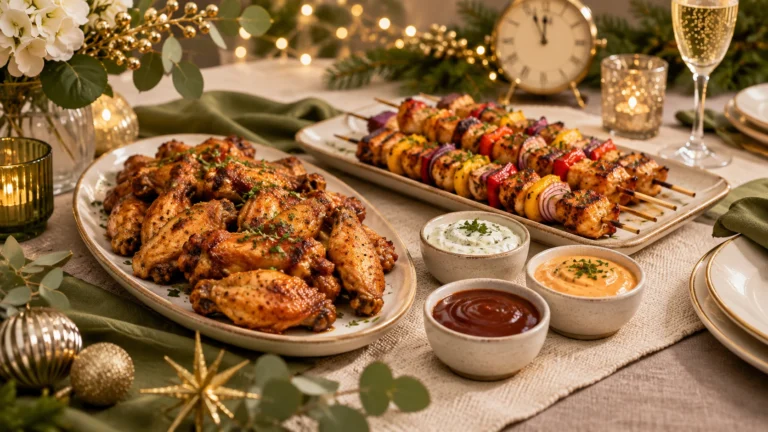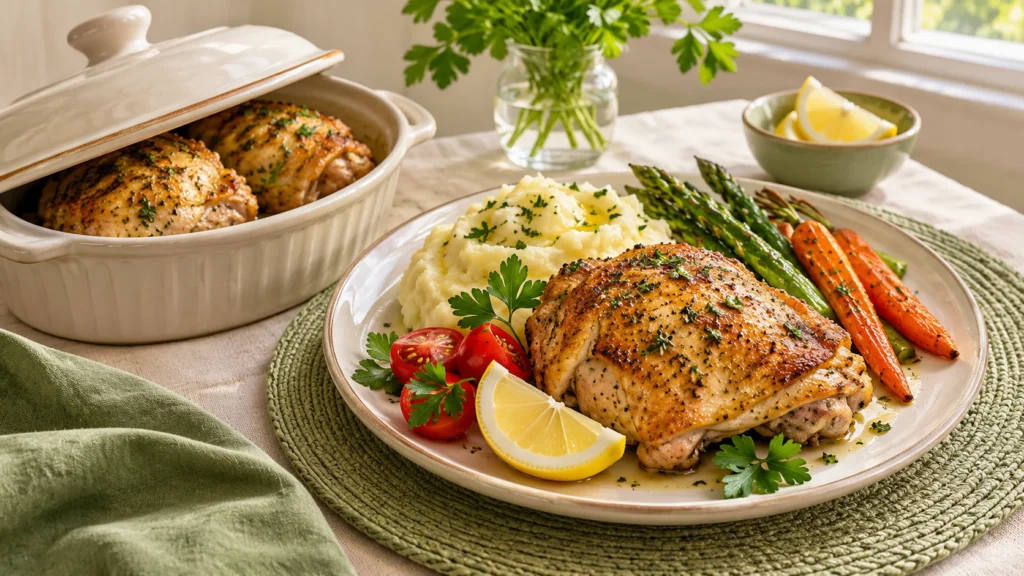
Serve the on-time guests and set aside a separate portion of chicken and sides for late arrivals. Keep that portion at 140°F (60°C) or above in verified hot holding, or refrigerate it promptly in a shallow container at 40°F (4°C) or below and reheat it to 165°F (74°C) later. Choose a dish that holds or reheats well and a fresh garnish you can add when the guest arrives. Keep an actual time record for any food outside safe temperature control.
Choose a plan for late arrivals
| Situation | What to do |
|---|---|
| Short delay | Use separately verified hot holding. |
| Uncertain timing | Chill an individual portion promptly. |
| Serving | Reheat to 165°F if needed and add a fresh garnish. |
Decide by the delay and the food
Ask for an approximate arrival time but assume it may change. A few minutes while carving may fit prompt service. An uncertain or long delay needs a clear holding or chilling plan. Count from when food leaves temperature control, including time on the table and during cleanup. Do not count only from the moment you learn a guest will be late.
Choose chicken based on whether you want to keep it hot or chill it. Braised pieces in a sauce can be practical because a single portion reheats evenly when cut or arranged according to the recipe. A dry cutlet or crisp-coated chicken may change texture during holding. If crispness matters, serve the first portions immediately and use a suitable reheating method for the late portion. Keep any sauce separate until service.
For sides, select one that can stay chilled and one that can be reheated if needed. A crisp salad with dressing apart is easier to finish at the last moment. A starch can work if you can handle it under applicable safe storage rules. Cooked rice requires particular attention to rapid chilling and relevant storage guidance. Bread or another ready side may make the late plate easier.
Put the reserved portion aside before the table eats
Use clean utensils and set apart the amount you want to serve. If holding hot, use equipment intended for hot holding and check the chicken’s temperature, keeping it at 140°F or above. A low burner, switched-off oven or warm dish is not evidence of a safe hold. Follow the appliance directions and check the food itself. If temperature cannot be maintained, move to prompt chilling while the food is still within its safe time limit.
For a chilled plan, cut or divide the chicken as appropriate and refrigerate in a shallow container. USDA gives a two-hour limit for perishables outside safe temperature control, or one hour when the air is above 90°F (32°C). Refrigerate as soon as practical. Do not wait for the entire meal to end just to use one container. Write the cook date and identify which part is for the late diner.
Keep the reserved portion separate from serving platters. Food that made several trips to the table has a different history from the untouched serving you just chilled. If you cannot tell how long a tray sat out, discard it rather than putting it into the late plate. A separate reserve gives you a clear path without having to reconstruct the main meal.
Reheat one plate and add a fresh finish
If using a refrigerated portion, reheat it only when the guest is close to eating. In a microwave-safe dish, cover as appropriate and stir or turn pieces as directed, then follow the appliance’s standing guidance. Check more than one spot for 165°F. On the stovetop, choose a suitable pan and use the amount of liquid your recipe calls for. Reheat any sauces or gravy in line with safe guidance and check the chicken itself.
Use a clean plate and utensils. Add the chilled side immediately after the hot portion is ready. A handful of fresh herbs, lightly dressed greens or a clean sauce in a small cup can make the late serving feel deliberately prepared. Put out only the portion the person plans to eat. Keep any other safely handled leftovers refrigerated.
For crisp chicken, use a recipe- or appliance-appropriate reheating method that works with the coating. Verify the same internal temperature even when the surface sounds or looks crisp. Put warm bread and cool dressing on the plate separately. If the reheat is not practical, use a cold chicken serving only when it was cooked, chilled and stored safely within its usable window.
Compare two schedules
For a known short delay, make a serving for the table and put one separately under verified hot holding. Keep the salad in the refrigerator and add it at the last moment. Recheck the food if the delay grows. Assign one person to decide when to switch to a chilled plan rather than hoping a warm pan will hold indefinitely.
For an uncertain arrival, refrigerate the reserve promptly and mark its cook date. At arrival, warm the chicken, check the temperature and add a separately packed salad or bread. If you used a rice side, follow its applicable storage and reheating plan or serve a different starch. A reserve assembled from suitable components is easier to manage than reheating a large platter for one person.
Keep the rest of dinner moving
Tell another cook where the reserved food is and how it is held. If there are two late arrivals, label their portions separately so you can heat one at a time. Put clean reheating tools by the stove and write down when the food was brought out. For the next dinner, choose an HCCR Sunday chicken or whole-chicken recipe and decide before cooking whether the late serving will be chilled or kept hot. Refrigerate safely handled extras in shallow containers and use them within the USDA window, usually three to four days for cooked chicken, or freeze them promptly.
Choose a garnish and a reheating vessel that suit the plate
For a sauced chicken plate, store a little clean sauce separately if that makes it easier to heat the chicken evenly. Reheat according to safe guidance, then spoon it where you want it. For a dry cutlet, hold the garnish and any dressing away from the surface. Choose a small suitable vessel to heat one portion. A large casserole dish can be awkward to heat and verify just for one guest.
If you need to leave before the late diner arrives, write a simple note: what is in the cold container, when the food was cooked, the reheating appliance and the 165°F check. Put the chilled garnish where they can find it without moving raw food. If the guest comes after the refrigeration window or the food may have been held unsafely, plan another meal. Keeping the portion separate helps the person arriving late make the same decision you would have made. It also lets early diners serve themselves without accidentally taking the portion you intended to save.
Sources
Frequently asked questions
What should I check first when guests will be late?
Estimate the delay and check whether you can safely hold the portions or cool them promptly.
What if only one guest is late?
Reserve one serving early and leave the rest for the table. Reheat that portion when needed.
Can I leave a plate in a switched-off oven?
Use measured safe holding or refrigerate it promptly. An oven that is off cannot establish safe holding.
Which sides are easiest to finish later?
A chilled salad or bread is simple. Use a suitable reheating plan for a hot side.
How hot should refrigerated leftovers get?
Check 165°F in the reheated food, including the thickest chicken pieces.
What if I lost track of when the plate was put out?
Discard it if you cannot verify safe holding. Use another safely handled meal.