
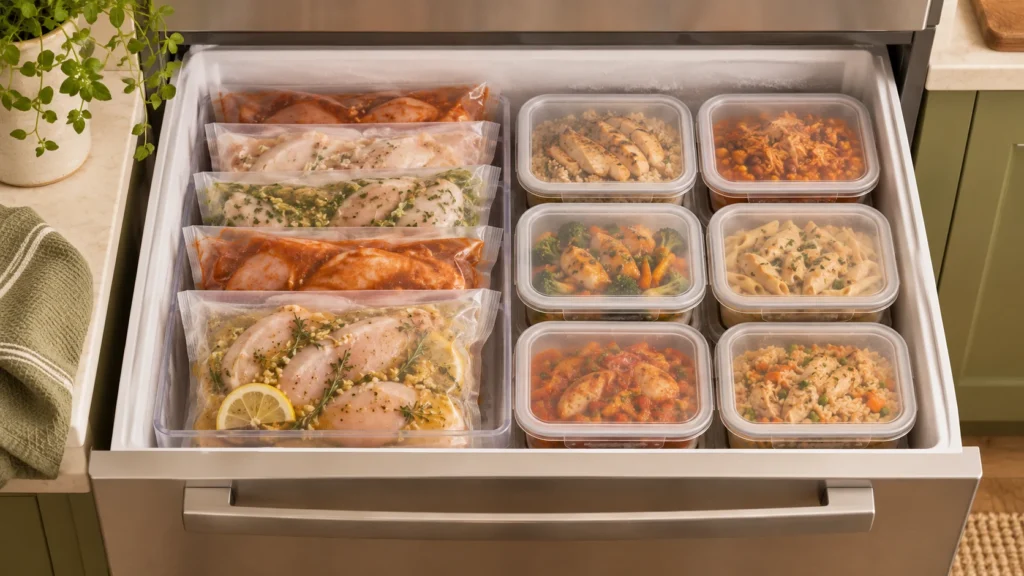
Plan a monthly chicken freezer session around the meals you will actually need, the space in your freezer and how much cooked food your refrigerator can cool at once. Count portions first, then choose a manageable mix of raw kits and fully cooked meals. Pack each in a meal-sized container and label it with the cut, date, stage and next step. Work in batches so anything waiting to be cooked, cooled or frozen can stay under safe temperature control.
Plan the monthly session in phases
| Situation | What to do |
|---|---|
| Before shopping | Count planned meals and check storage capacity. |
| Raw kits | Pack in smaller batches and label the cooking step. |
| Cooked portions | Chill promptly in shallow containers before freezer storage. |
Put meals on the calendar before you shop
Start with the next four weeks. Mark the nights when you need a fast cooked portion and the nights when you can thaw and cook a raw kit. One family might choose two quick dinners each week, while another wants individual portions for work. Count how many adults and children eat each menu and decide where the planned leftovers belong. If you already have three portions in the freezer, include those before deciding what to buy.
Build variety by changing the job each package will do. A raw lemon chicken kit can be a tray dinner with fresh vegetables. Plain cooked shreds can go into tortillas or soup. A finished braise can be a heat-and-serve dinner on a busy day. If several meals rely on chicken in sauce, consider keeping a few plain portions for different toppings. Write the intended sides on the list so bringing out a package does not leave you hunting for the rest of dinner.
For a sample month, plan four two-person dinners and four single lunches. Two raw dinner kits, two cooked dinner packs and four cooked lunch packs cover those needs. Adjust that count after looking at package yield and how much of the cooked chicken your family usually eats. Count each bag or box as one use. Several serving sizes are easier to manage when the label clearly says who or what it is for.
Check both the freezer and refrigerator
Measure usable shelf or drawer space. A shelf can look empty but still be too short for a tall tub. Set out your clean containers and see whether they fit. Flat freezer bags can become easy-to-sort files after they freeze. At first they need a stable surface and enough room to freeze effectively. Keep raw packages contained so liquid cannot drip on other food while the packages are handled.
Check the freezer thermometer for 0°F (-18°C) or below and the refrigerator for 40°F (4°C) or below. Leave shelf space for shallow cooked portions to chill and room in the refrigerator for later thawing. If a fridge is already packed with groceries, reduce the batch or schedule a second prep session. A large pot left warm on the counter while you make room is a poor fit for a freezer plan.
Group packages by use and stage. Keep raw portions in a dedicated bin or area and ready-to-heat portions where they are easy to recognize. Use older sound packages first. Put a short list on the freezer door with name, count, date and next step. Cross off a pack as you take it out so the calendar reflects what you actually have.
Work through raw kits in small batches
Prepare produce, clean sides and measured seasonings before opening the raw packages. Set out freezer-grade bags or other suitable containers and write the labels before filling. Keep chicken cold until the batch is ready for cutting and sealing. Work over a contained raw station, then place each packed kit back in the refrigerator or freezer as appropriate. Avoid leaving all the meat out while you assemble several recipes.
Pack vegetables separately when they need a different thawing or cooking schedule. If the same sauce will be served at the table, measure a clean portion first and keep it away from anything that touches raw meat. A kit with two components benefits from matching names or pairing marks. Store the components together physically if they can stay safely separated.
Each raw kit should state what happens next: thaw in the refrigerator in a rimmed tray, cook by the intended method and verify 165°F (74°C). Preserve the recipe name on the label so anyone using the pack can find it. Cold-water or microwave thawing is suitable only when you can cook immediately after thawing. Label the pack's status before it leaves the raw work area.
Cool and pack the cooked batches
Cook poultry to 165°F and use clean tools and a clean plate after cooking. Portion cooked meals promptly into shallow containers so they cool quickly. Refrigerate within two hours, or within one hour above 90°F (32°C). Use several shallow containers for a large volume of stew, sauce or meat. Keep ready-to-eat food away from raw prep and clean the work area between stages.
Once the cooked portions are safely chilled, package them for the freezer and label them with the original cook date and the intended use. Give stew or soup suitable headspace in the container for expansion and follow the container directions. Freeze promptly what you do not intend to eat in the refrigerated window. Reheat leftovers you serve hot to 165°F, stirring and checking several places as needed.
To keep a monthly session manageable, stagger the pots. While one recipe cooks, finish and refrigerate the previous batch with clean tools. Delaying all packing until the end can leave a pile of hot pans and limited cooling space. If you run out of room, finish the current meal safely and postpone the next batch.
Use a small inventory to stay ready for dinner
Count the frozen portions after the session and match several to specific dates. Note which raw bags need an overnight refrigerator thaw and which cooked portions can be reheated by a recipe-approved method. Pull the next raw pack in time to thaw fully and place it on a low refrigerator shelf in a tray. If the week changes, use the list to move a meal without losing track of the older packages.
Reserve a backup meal for the last week of the month and put it where everyone can see it. Add the date you intend to check stock again, and leave enough room for ordinary leftovers between sessions. If the list shows several unused portions of the same recipe, make a smaller quantity of that recipe next month and use the space for a meal people finished.
Sources
Frequently asked questions
How many meals should I freeze in one session?
Count the portions you will use before your next planned session and reduce the total if you lack cooling, freezer or prep space.
Should every kit be fully assembled?
Separate ingredients when the kit requires different thawing, cooking times or raw and ready-to-eat handling.
How do I fit a month of portions in a small freezer?
Use realistic meal counts, portion flat in suitable packaging where possible and rotate existing stock.
Can I leave the cooked chicken out to cool for the whole session?
Refrigerate promptly in shallow portions and follow the applicable two-hour or one-hour limit.
What goes on a raw kit label?
Include the cut, quantity, date, raw stage, thaw instructions, cooking method and target temperature.
How do I know which pack to use first?
Record dates and package condition and move the oldest sound packs into an accessible use-first area.


