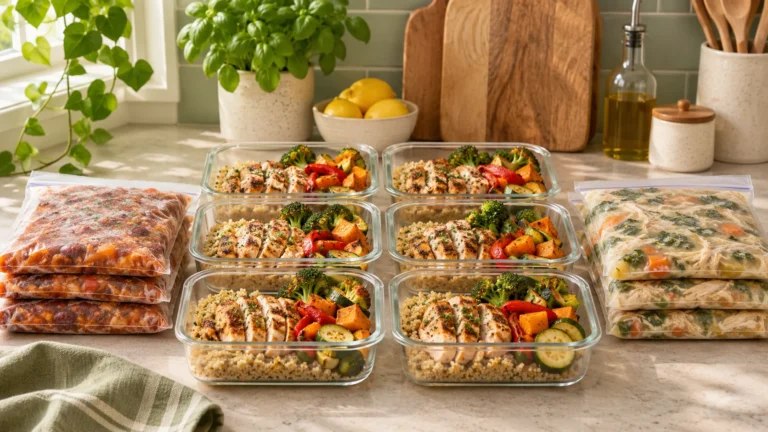
Write the dish or cut, the date, the portion size and RAW or COOKED on every chicken freezer label. Add the next step that matters: thaw in the refrigerator, add a separate ingredient, cook by the named recipe or reheat to 165°F (74°C). Label the pack before filling it when possible. Keep the original cook or pack date even if you rewrap the food later, and put the label where you can read it without taking the whole drawer apart.
Copy this chicken freezer label card
| Situation | What to do |
|---|---|
| Stage and dish | RAW or COOKED, followed by cut or dish name. |
| Portion and dates | Quantity, original cook date if applicable and freezer date. |
| Next step | Thaw instructions, recipe or finish, and temperature target. |
Give the package a clear name and stage
Start by writing what the pack contains. “Chicken breast, sliced for stir-fry” helps you decide what to make, while “chicken” leaves the cut, shape and quantity unanswered. Specify whether pieces are boneless, bone-in, whole or diced when that changes the use or cooking time. Give a finished recipe a plain name, such as “cooked lemon chicken thighs” or “chicken stew base, no potatoes.”
Write RAW or COOKED in large letters. A frost-covered bag can make a raw kit in sauce look like a finished meal. If you froze a raw sauce and a separate ready-to-use glaze, label their roles before they enter the same drawer. For example, write “clean serving glaze” on the untouched sauce and “raw chicken barbecue kit” on the meat. Assign a shared meal name so the components can be located together without confusing their handling.
Add portion count or quantity. Write “serves two,” “four thighs” or “300 g cooked shreds,” depending on how you will plan the meal. Use the same unit across similar packages so you can compare what you have. If a recipe needs a specific amount of chicken, a weight will be more useful than the number of pieces. For a family tray dinner, count pieces you will serve intact.
Use dates that help you rotate food
For a raw package, write the date you froze it and keep any earlier purchase or preparation date you need to understand its history. For cooked portions, write the original cook date and add the freeze date if different. Use a clear date format such as 17 Nov 2026 so there is no month and day ambiguity. If rewrapping, copy the original dates to the new bag and mark the event separately if it helps.
A freezer at 0°F (-18°C) or below keeps properly handled food safe indefinitely while continuously frozen. Best-quality timelines are a different matter. USDA suggests up to one year for a whole raw chicken and nine months for raw pieces for best quality. Check the applicable guidance for cooked meals and mixed dishes rather than putting the same date on every pack. A written use-first date can support quality and rotation while your original date preserves the actual history.
Keep a short inventory if the drawer fills up. Put a copy of the dish, quantity and date on a list where you can find it. Cross off items when you remove them. If you lose the date on a safely stored package, record it as unknown and reserve it for early use once you know the contents and stage. If the handling history or stage cannot be established, make the safety decision before using it.
Write the next action for raw and cooked packs
For raw chicken, use a short instruction such as “thaw in fridge on low shelf in tray; roast with recipe; check 165°F.” If it is marinated, note the sauce, whether its clean finish is packed separately and any recipe timing you need to remember. A label can say “add peppers after thaw” or “thread after thaw” when that is the next job for a kebab kit.
For cooked chicken, say how you intend to use it. “Thaw in fridge; reheat to 165°F; add to tacos” is enough when both method and use are clear. For a soup base, mention whether you need to add a side ingredient or thin the broth according to the recipe. Include the original cook date and any components with shorter storage guidance. Reheat only the portion you plan to serve.
A label can remind you to check the recipe instead of repeating it. Write the recipe’s name or where to find it if someone else may use the pack. Exact times can vary with appliances and piece size, so keep the thermometer target on the pack and use the intended method when cooking or reheating. Include special handling only when it changes the next step.
Use two examples you can copy
For a raw pack, try “RAW | lemon chicken thighs | 4 pieces | frozen 17 Nov 2026 | thaw in fridge on a tray | roast per recipe, confirm 165°F.” For a cooked pack, try “COOKED | shredded chicken | 2 portions | cooked and frozen 17 Nov 2026 | thaw in fridge | reheat to 165°F for bowls.” Add “pair with bag B” if there is a separately packed component.
For a reusable label card, keep five lines in the same order each time. Start with stage, then cut or dish, quantity, cook and freeze dates as applicable, and next step. Use a freezer-rated label or write with a freezer-suitable marker on a clean dry surface. If the container cannot be marked, use an appropriate removable freezer label and keep it away from areas where condensation may loosen it.
Place the label for the way you store the pack
Write on a visible face before the container gets wet or frosty. For stacked flat bags, put identifying information where you will see it when lifting the first edge. For upright containers, use a forward-facing side or lid. Check the label before freezing and make sure both components of a split dinner can be identified. A quick glance should tell you what you can cook tonight and what needs to thaw first.
When two cooks share the same freezer, agree on the label order and where to record open packages. A pack split into two bags should retain the shared original date but show the portion in each. On labels for a cooked meal with sides, write the shortest applicable storage guidance beside the reheating note. Check that abbreviations and units are obvious to anyone who will use the freezer.
Sources
Frequently asked questions
Should I write the cook date or freeze date?
Write the original cook date for cooked food and include the freeze date when it differs. For raw food, write the freeze date and keep any earlier date you need.
Do I need to label a pack if I recognize its contents?
Yes. Frost or sauce can hide the cut and make it hard to tell raw from cooked.
What temperature goes on a chicken label?
Write 165°F (74°C) for cooking poultry and for reheating leftovers you serve hot.
Can I reuse a freezer label?
Reuse it only if it is designed for that purpose. Remove outdated information so the new contents and dates are unmistakable.
Should I use a best-quality date?
It can help with rotation. Keep the original date too, and use the guidance for the actual cut or dish.
How do I label a kit with a separate sauce?
Use the same meal name on both parts and distinguish raw-contact marinade from a clean sauce for finishing.