Turn leftover chicken and mashed potatoes into a lunch bowl, skillet meal or small bake. Check the cook date and storage history of both components before combining them. Use the earlier applicable deadline, then reheat the portion to 165°F (74°C) in several spots. For the easiest lunch, heat the mash and chicken separately in a bowl, then add a fresh side or topping. Use a skillet or bake when you have time to finish the surface.
Choose an easy leftover lunch
| Situation | What to do |
|---|---|
| Bowl | Heat chicken and mash and add a crisp side. |
| Skillet | Use a small portion and brown the mash as the recipe directs. |
| Bake | Choose a shallow dish and verify 165°F throughout. |
Check both leftovers before choosing a lunch
Find out when each component was made and put away. Properly chilled cooked chicken generally keeps three to four days at 40°F (4°C) or below under USDA guidance. Likewise, handle mashed potatoes as a perishable leftover, especially when they include milk, cream or gravy. Refrigerate perishable foods within two hours, or within one hour when the surrounding air is above 90°F (32°C).
The components may come from different meals. If the chicken was cooked on Sunday and the potatoes on Tuesday, use the earlier applicable window and check how both were kept. Mixing them does not reset either date. If the potatoes were frozen while safely stored, thaw safely and account for the time they spent refrigerated before freezing. If any component is past its window or was mishandled, replace it.
Take a portion with clean tools and leave the remainder in the refrigerator. Have a separate serving container for any fresh side. Keep clean utensils and ready-to-eat ingredients away from raw poultry or surfaces that touched it. If packing for travel, chill the components and keep them at 40°F or below using an insulated bag with cold sources. Refrigerate at your destination when you can.
Make a bowl with the least cleanup
For a bowl, portion enough mashed potatoes for a base and cut the chicken into small pieces that will heat fairly evenly. Keep any crisp vegetables or sauce separate. A little broth or milk can loosen stiff potatoes if it suits the recipe and your preferences. Stir it in gradually. If the mash is already soft, you may simply need to redistribute it during heating.
Cover the potatoes as appropriate for the microwave and heat according to the appliance instructions. Stir through the thick areas before the final heat check. Reheat the chicken in another section or dish so you can turn the pieces and check them easily. If one component reaches temperature first, hold it covered briefly while you finish the other. Verify 165°F throughout the reheated meal.
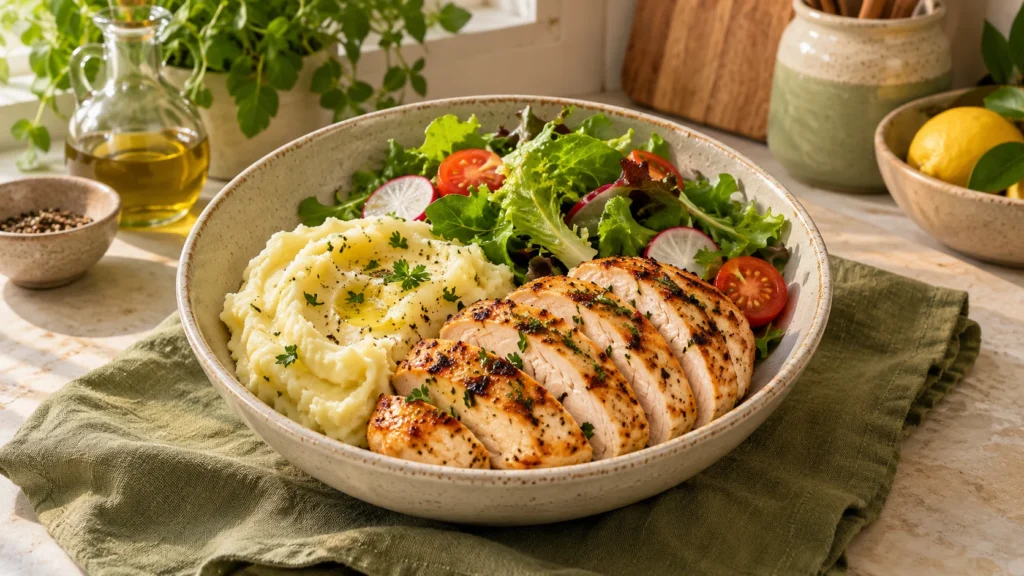
Assemble with the potatoes below, chicken above and a fresh side at the edge. Lemon, chives or chopped herbs can brighten a rich lunch. A handful of crunchy greens or a few slices of cucumber give contrast without another cooking step. Add a warm gravy only after it has been reheated safely. If the lunch already has a rich sauce, a simple vegetable side may balance it better than a second topping.
Use a skillet if you want browned edges
Follow a recipe designed for reheating or cooking with leftover mashed potatoes if you want a crisp exterior. Firm, plain mash can sometimes be shaped into small cakes. A softer mash may work better as a base. Avoid making the cakes thick if that would leave a cold center. Reheat the chicken separately in a suitable pan or microwave-safe dish and check for 165°F before adding it to the plate.
If using a skillet for both components, heat the chicken through in a small amount of suitable liquid, then transfer it with clean utensils to a clean dish. Wipe the pan as the method allows before browning the mash. Any thin gravy can be finished separately. Serve once the portions meet the reheating target. A golden surface is a texture cue, while the thermometer tells you about the middle.
For a single lunch, use the small pan that fits your portion. A nearly empty large skillet can dry the edges quickly, while a crowded pan can hold steam and slow browning. Use an amount of fat and heat consistent with the pan and the recipe. Set out the side while the chicken heats so lunch is ready when the mash is finished.
Assemble a small bake when the oven is available
Choose a shallow oven-safe dish and a casserole recipe suitable for cooked chicken and mashed potatoes. If the recipe uses a little cooked vegetable or sauce below the topping, distribute it evenly. Smaller, consistent pieces make it easier to portion the meal. Use the recipe’s cover and bake settings and check 165°F in the center and any thick areas. A browned top can appear before the filling is hot enough.
A bake is useful for lunch at home or for several diners. If taking it to work to reheat later, pack a chilled portion in a container appropriate for the appliance available there. Keep a salad or pickle separate from the hot dish. Make only the amount you plan to reheat so the rest of the original leftovers can stay refrigerated until another meal.
Choose a fresh side in two minutes
Use a small handful of washed greens, snap peas, a cucumber or prewashed cabbage. Keep the dressing separate until eating. For a pantry option, open and drain beans or choose a pickle that suits the chicken’s seasoning. Start with the easiest side you already have instead of adding another recipe. A clear lunch plan is one reheated main, one fresh component and clean utensils.
For example, a bowl made from unsauced chicken and thick mashed potatoes needs a different finish from one made with chicken in gravy. For the first, loosen the mash gently and use lemon or greens to bring the plate together. For the sauced version, warm and stir the gravy as directed and add just enough to suit one serving. Keep remaining gravy in its original container. If you want to make several portions for family members, weigh or scoop the mash first and divide the chicken evenly. Check each reheated portion or the thickest areas of the dish. A crisp topping is easiest to add at the table where you can control how quickly it softens.
Sources
Frequently asked questions
Can I heat chicken and mashed potatoes together?
Yes, if both were safely stored and the whole portion reaches 165°F. Stir or rearrange and check the thick areas.
Should I add milk to the mashed potatoes?
Add a small splash if the recipe suits it and the mash needs loosening. Heat and stir the portion thoroughly.
What if the leftovers came from different dinners?
Confirm both dates and use the earlier applicable storage deadline.
How do I keep chicken from drying out?
Use small portions, cover as appropriate and add a little suitable liquid if needed.
Can I pack this lunch for an office?
Keep it cold in transit, refrigerate at work if possible and reheat in a suitable container.
What side goes with a rich chicken and mash bowl?
Try crunchy greens, sliced cucumber, cabbage or another fresh vegetable packed separately.