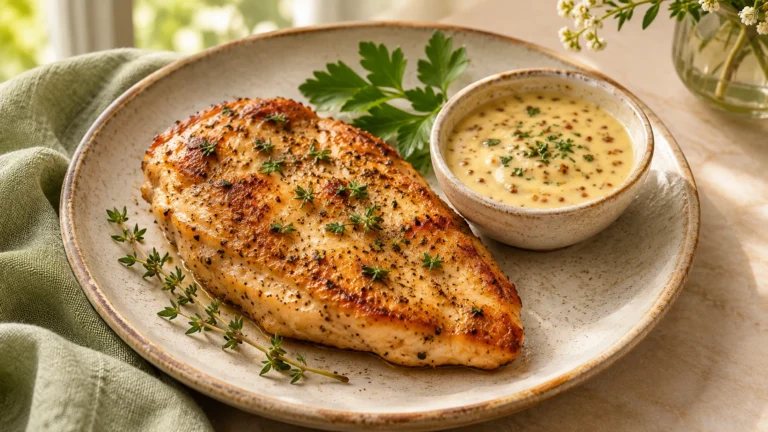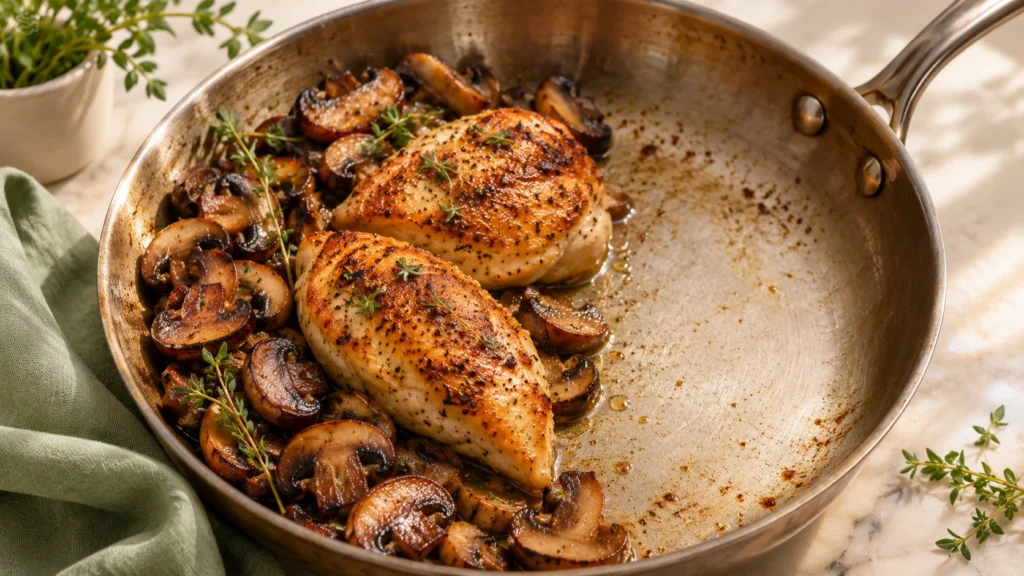
Brown mushrooms in a separate batch before adding them to chicken or its sauce. Use enough skillet space for moisture to evaporate, and wait for the wet phase to pass before expecting color. You can fold the browned mushrooms into the main or add some to a finished sauce. In either case, control the liquid separately from chicken doneness.
Decide if the mushrooms are the main bite or a sauce ingredient
If you want mushrooms people can see and bite into, give them space to brown and add them near the end. They can stand beside the chicken or sit on top of a finished pan sauce. If the goal is a deeper background flavor, you might cook a portion in the sauce after browning. Use a recipe that allows enough time to manage the liquid before the chicken overcooks.
Fresh mushrooms contribute savory flavor, and many varieties contain naturally occurring glutamate. Browning adds its own cooked aroma. A pale, wet slice may still taste savory, but it will bring a different texture. Decide whether you want visible browned edges or mostly the flavor in the liquid. You can use some for each job.
Add mushroom flavor without more water
| Situation | What to do |
|---|---|
| Visible browned pieces | Cook a manageable batch and add near the end. |
| Background flavor in sauce | Fold in part of the browned batch and adjust liquid separately. |
| Crowded wet skillet | Give moisture time to evaporate or work in smaller batches. |
Prepare pieces that fit the pan and method
Clean the mushrooms as appropriate, dry surface water and cut them in even slices or halves. Use a suitable skillet and heat according to your recipe. Arrange a manageable amount in the pan. Thick pieces can need a longer cook, while thin pieces may shrink quickly. Neither needs to be stacked on top of a full layer already steaming.
As the mushrooms heat, they can release water. Give that moisture a chance to evaporate before judging their color. Stir or turn as the recipe directs. If the mushrooms are sitting in a lot of liquid and you have a full pan, finish smaller batches on the next round. A wide skillet provides more surface for moisture to escape than a small deep pot with the same amount inside.
Cook mushrooms and chicken with separate endpoints
A useful order is to brown the mushrooms, move them to a clean vessel and cook the chicken according to the recipe. If you start with the chicken, cook it to 165°F (74°C) in the thickest part and move it to a clean plate if the sauce and mushrooms need more time. Keep cooked pieces separate from raw tools and drippings. Do not taste anything that contacted raw poultry until it has cooked safely.
Once the chicken is done, decide how to finish the pan. A moderate amount of browned fond can add flavor if the recipe calls for deglazing. Use the intended liquid, lift brown bits and leave scorched residue behind. If you pooled uncooked mushroom water in the same pan, the chicken and sauce may need a different schedule. Separating batches gives you more control over both.
Choose what to do with the liquid
If mushrooms softened but did not brown, finish them when practical in an appropriately heated pan once the excess moisture is gone. If the chicken sauce is already thin, choose a separate reduction after the chicken is fully cooked rather than boiling the main for a long time. Taste a safely cooked spoonful. Reduction can concentrate salt, so stop when the seasoning and body suit the meal.
For a cream-style sauce, use the recipe's sequence for dairy and protect it from vigorous heating if the method calls for a gentler finish. Fold in browned mushrooms at the end when you want the most distinct texture. If the sauce needs to taste more strongly of mushrooms, deglaze or simmer a small prepared portion as the recipe allows. Save some pieces for the top and give them less contact time with liquid.
Compare two batches before changing seasonings
Cook a small layer of even mushroom slices and note when moisture evaporates and browning begins. Next time use the same amount of fat and similar heat but compare the equivalent mushroom quantity spread across two batches. Try each safely finished sample in the same sauce. Check if your complaint is wateriness, weak aroma or too little mushroom in each bite. A larger amount in a crowded pan can make the first and second problems worse.
A skillet dinner with mushrooms spooned over sliced chicken can suit a quick meal. A sauced pasta may work better with a smaller portion blended into the sauce or lightly simmered after browning. Choose a recipe that includes the treatment you want, then use the ladle or spoon to control how much liquid goes onto each plate.
Store and serve with the texture in mind
If a meal will sit, use verified hot holding at 140°F (60°C) or above where appropriate. Keep dry browned mushrooms separate when the recipe allows. Refrigerate eligible leftovers promptly in shallow containers and reheat hot portions to 165°F. Reheat a separate leftover sauce to a boil according to USDA guidance. At serving, use enough sauce to moisten the chicken and keep a few mushroom pieces visible on top.
Adjust the order to the number of burners
If you only have one useful burner, cook the mushrooms first and move them to a clean bowl before starting the chicken. Keep the mushrooms safely held if they must wait, then add them at the recipe's finishing stage. With two burners, you can use a separate skillet for mushrooms and a saucepan for a controlled sauce adjustment when the chicken is done. Watch the heat and amount of liquid instead of trying to finish each pan at the same instant. Select portions that fit the equipment with usable space around them.
Compare a mushroom topping and a sauce sample
Set aside a small safely cooked amount of browned mushrooms. Serve one sample over the chicken and fold another into the recipe's sauce. Taste both with the intended side. See whether you prefer the clear mushroom bite or the aroma throughout the sauce. If the second looks overly loose, check the original sauce consistency before increasing mushrooms. For a dish where the vegetables need to keep a dry finish, use the first approach and ladle less sauce at service. Keep a note of the approximate batch size and pan width, since that can help you reproduce a good result with more chicken.
Sources
Frequently asked questions
Why is there water in my mushroom pan?
Mushrooms can release moisture as they heat. A crowded pan can make evaporation slower.
Can I cook mushrooms and chicken together?
Use a suitable recipe. Separate batches often make moisture and doneness easier to control.
Should I reduce the sauce with chicken still in it?
If chicken is fully cooked and the recipe allows, remove it before a long reduction and hold safely.
Can I use the browned bits?
Yes when the recipe calls for deglazing and the residue is browned rather than scorched.
When should mushrooms return to a creamy sauce?
Add browned pieces near the end when you want a more distinct bite.
Is browning the same as adding umami?
Mushrooms bring natural savory compounds. Browning adds cooked flavors and changes texture.