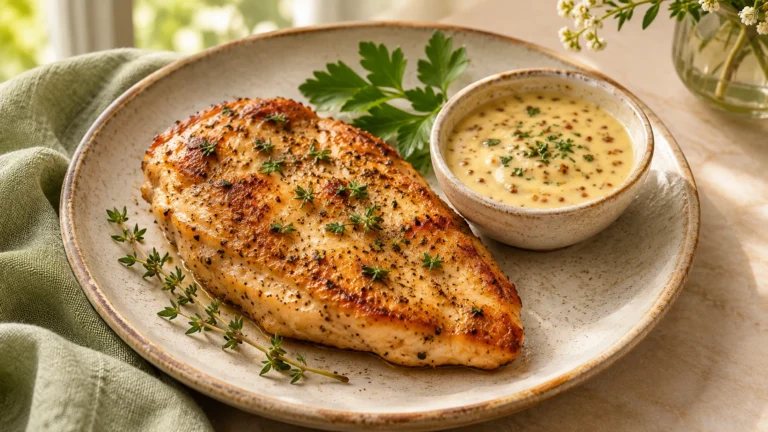
For egg-free chicken breading, choose a wet layer that leaves an even film and grips the crumbs. A light flour slurry, thinned plain yogurt or a recipe using verified eggless mayonnaise can work, depending on the coating and cooking method. Check every ingredient and shared surface if you are cooking for an egg allergy. Removing the egg dip alone does not establish that the meal is suitable.
Identify the job of the egg layer
In a familiar flour, egg and crumb sequence, the first flour coating absorbs a little surface moisture. The egg creates a sticky middle layer, and the crumbs form the outer crust. If the recipe uses only wet and dry bowls, the wet ingredient may also help form the crust directly. Read the exact sequence before you replace anything. A liquid that works with fine crumbs may let heavy flakes slide, and a thick wet layer may become pasty underneath a coating browned in the oven.
The cut matters. Flat, thin cutlets are easy to coat evenly and handle with tongs or a spatula. Tenders can have narrow ends and creases that trap thick slurry. Irregular pieces have more places where moisture can accumulate. Fit the wet layer to the pieces in front of you. Dip and lift one piece, allow the excess to drip, then check both sides for an even film. If the dip forms a heavy ridge, thin the clean mixture before coating the rest.
| Wet layer | Best use to consider | What to check |
|---|---|---|
| Flour mixed with water | A simple binder where the recipe supports a slurry | Fluid enough to drain and thick enough to cling |
| Thin layer of plain yogurt | A coating that can carry some dairy tang | Use plain yogurt and thin a heavy scoop before dipping |
| Milk with a light initial flour coat | A thinner wet layer for a compatible crumb | Watch for bare areas and use a recipe built for the sequence |
| Verified eggless mayonnaise thinned as directed | A developed recipe for breaded cutlets | Confirm that the product is eggless and suitable for the intended eater |
Compare the wet layers with the cooking method
A flour slurry can hold breadcrumbs if it coats evenly. Whisk the chosen flour into cool liquid gradually, break up lumps, and use the recipe’s consistency as the guide. If too thin, it may drip away before the crumbs go on. If too thick, it can form a heavy inner layer under the crumbs. Put only part of the clean mixture into the dipping bowl. Keeping a separate untouched portion allows you to adjust the consistency for later pieces without moving raw chicken residue into your ingredients.
Plain yogurt can act as a wet layer when its flavor makes sense for the chicken. Remove the excess and check that the crumb adheres around the edges. Milk is thinner and usually easier to handle with fine crumbs or a method that has a light first flour coat. A Food Network Kitchen method illustrates another route, using a thinned eggless mayonnaise as the wet layer between flour and crumbs. Follow that method’s proportions when using it. Ordinary mayonnaise typically contains egg, and an eggless alternative may still contain other ingredients an eater needs to avoid.
Let the finished coating guide your choice
An oven-baked coating may look pale even when it is securely attached. If the recipe calls for toasting the crumbs first or adding oil to them, follow that method instead of making the wet layer thicker. Pan-frying can brown the outer crumbs quickly, so a very heavy wet layer may leave a soft section under the crust. Use the cooking method the coating was developed for, and check the chicken temperature independently of browning. A small batch is a better test than coating a whole tray with an untried mix.
Set the first crumbed cutlet on a clean tray used only for the raw preparation. Lift it with tongs and see whether the breading peels away in one sheet or falls in dry patches. Peeling suggests that the wet layer may be too heavy or the surface too wet. Dry patches often mean too little coverage or poor contact. Use a clean bowl to adjust anything reserved for the rest of the batch. Discard flour, crumbs or dip that touched raw chicken or its utensils.
To see how crumbs lie on a tender, compare the conventional Parmesan Chicken Tenders.
Read the whole label and prevent cross-contact
For an egg allergy, check the ingredient list and any Contains statement. On FDA-regulated packaged foods, egg is a major allergen and must be declared when present as an ingredient covered by the labeling requirements. Check bread, prepared crumbs, seasoning packets, eggless mayonnaise and any sauce or dressing served with the chicken. Read the actual package each time, since formulas change. A precautionary statement about a shared facility is voluntary. Its absence does not settle questions about manufacturing cross-contact.
Use clean bowls, utensils, work surfaces and cookware. Check the cutting board and any tray that previously held breaded food prepared with egg. Keep the egg-containing ingredients and their utensils apart while preparing the batch. If frying for someone with an egg allergy, use clean equipment and oil that has not been used to fry egg-containing foods. Confirm uncertain ingredients or preparation with the manufacturer or the person managing the allergy before serving. The crumb coating, side dishes and dip all need the same attention.
A practical example with breaded tenders
Suppose a tender recipe uses beaten egg followed by coarse crumbs, and you have a flour slurry from a compatible preparation. Try one tender before coating the rest. If the narrow end accumulates batter, let it drip a little longer and press the crumb gently so it covers the corners. If the crust browns before the center reaches 165°F (74°C), use an appropriate heat setting for the recipe and avoid thicker layers on the remaining pieces. A successful visual test tells you the coating is attached, while the thermometer confirms the poultry is ready.
Let crumb size and handling guide the final choice
Very fine crumbs tend to fill shallow spaces and can make it easier to see where the wet layer is missing. Coarse crumbs give a thicker, more irregular crust and need enough contact to stay attached. Try coating the first piece without squeezing. If the crust comes loose when you lift it, check the underside for a bare wet patch. Light, even pressure helps attach the crumbs, while rubbing them back and forth can pull up the wet layer you just applied.
For breaded cutlets, turn the chicken only as the cooking method calls for and use a utensil that supports the piece. Before flipping, check whether the edges release from the pan. A wet coating moved too early can leave part of itself behind. If the first cutlet is ready safely but has an uneven crust, review when you moved it and how much mixture stayed on it as well as the binder itself.
When preparing multiple batches for the same meal, start with an empty tray and keep the verified ingredients in closed containers until you need them. Portion out crumbs in several small rounds so unused ingredients remain untouched. Separate serving utensils help prevent crumbs from moving between platters after cooking. The successful binder for one cut may need a different consistency for another, so keep the remaining unused mixture available for adjustment.
If you are changing the wet layer for convenience and also want a gluten-free version, verify the flour and crumb substitutions independently. A slurry thickened with a different flour may not flow or brown the same way. Start with a recipe that was developed for the dietary requirements you need and pay attention to the first serving before scaling up. A short trial in your cookware gives you more specific information than a list of interchangeable ingredients.
For a packed lunch, let the cooked pieces cool under normal safe storage practices, then refrigerate promptly. Pack the dip separately so it does not soften the coating. If allergy precautions matter, label the container and keep the verified dip in its own closed cup with a clean utensil.
For coating and cooking ideas to adapt and verify, browse Fried & Crispy Chicken Recipes.
For more on thermometer use and storing cooked chicken, see the HCCR chicken food safety guide.
Sources and references
Frequently asked questions
Can a flour slurry hold breadcrumbs?
Yes, in a method designed for it. Use a smooth slurry that leaves a light, continuous film. Let extra liquid drain before pressing the crumbs onto the chicken.
How can I check for egg in prepared crumbs?
Read the full ingredient list and any Contains statement on the actual package. Contact the manufacturer if you need information about production cross-contact.
Can I use ordinary mayonnaise instead of an egg?
Ordinary mayonnaise often contains egg. Choose a verified eggless product if the meal requires avoiding egg, and check all other ingredients and preparation surfaces.
Does milk work without a flour layer?
It can in recipes designed around a quick milk dip. For some coarse crumbs, milk alone may leave a film that is too thin. Follow a compatible recipe and assess the first piece before breading the rest.