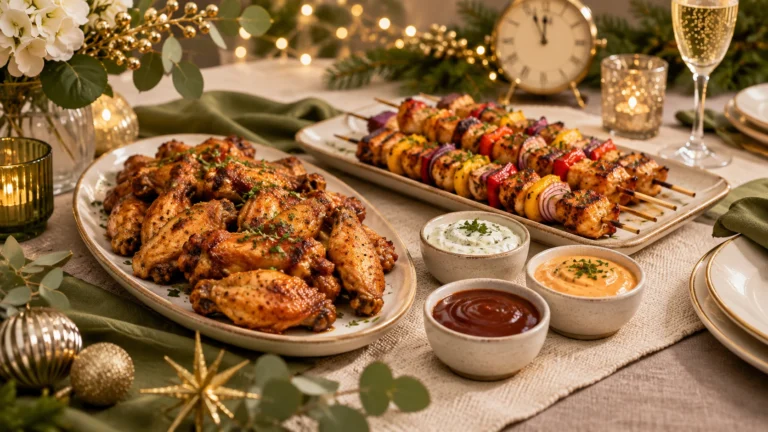
For a small Easter lunch, reserve the oven for a whole chicken or tray of portions and make your sides on the stove or ahead. Boiled potatoes and a chilled spring salad leave room for the roast. Work backward from your midday serving time, leave a buffer for the actual temperature check, and finish the vegetables while the cooked chicken rests.
Pick a roast you can serve comfortably at midday
A small whole bird gives you a centerpiece and more than one cut. Check its size against the pan, the oven shelf and the number of servings your recipe gives. Whole chicken adds a carving step. If lunch needs to move quickly or guests prefer a particular cut, portions can be more practical. Choose pieces of similar size, or a method intended for mixed pieces that you can check individually.
Portions also make it easier to accommodate a narrow oven. Quarters may need more space than you expect, especially if you want the skin dry and browned. Set out the empty pan and work out whether the pieces can fit in an open layer. A packed tray may cook differently from the recipe. If a larger tray will not fit, use a smaller menu, repeat the cook in appropriate batches, or select a different cut for the gathering.
If you want to use the same tray for chicken and vegetables, choose a recipe that accounts for cut size and cooking order. Potatoes and other dense vegetables may need a head start. For the easiest Easter lunch, let the chicken have the oven and use a separate saucepan for potatoes. Consider how the cooked bird or tray will move to the board and where cold serving bowls will fit on the table.
| Table plan | Chicken choice | One stovetop side | One make-ahead or chilled side |
|---|---|---|---|
| Two or three diners | Similar-sized portions | Buttered baby potatoes | Cucumber and dill |
| Four to six diners | A small whole bird suited to the recipe | Peas or potatoes | Undressed spring greens |
| One usable oven shelf | A roast or portions in one pan | Rice or green beans | Chilled cabbage or cucumber |
| Children or easy serving | Portions with clear serving sizes | Tender potatoes | Raw vegetables served as appropriate |
Use a side that can wait if the roast runs late
A pot of small potatoes is flexible because you can start it on your own schedule and finish with butter or herbs near lunch. Check your burner count. If you also want a warm green vegetable, choose peas or trimmed asparagus that can be finished once potatoes are drained. A salad needs only a clean prep surface and refrigerator space. Put the dressing in a jar so you have one quick job when the chicken is ready.
Prepare a chilled side the day before if its ingredients suit early prep. Keep a sturdy washed salad or sliced vegetables in a clean covered container. Add herbs and dressing closer to serving. If you fully cook a side ahead, refrigerate it promptly in a shallow container and reheat to 165°F (74°C) when serving it hot. Decide where and when it will be reheated. A make-ahead side that needs the same oven slot as the chicken may still create a bottleneck.
If the roast runs late, leave cold side dishes in the refrigerator. Hold cooked hot food at 140°F (60°C) or above when using an appropriate hot-holding setup. If you cannot maintain temperature and expect a substantial delay, cool suitable food promptly and reheat safely when needed. Finish tender green vegetables near serving to protect texture. An undressed salad provides a particularly simple fallback.
Use the day before for preparation and space checks
Confirm the gathering date and your guests’ lunch time early. Easter’s date changes by year and traditions can follow different calendars, so check the one your guests observe. Shop with time for safe refrigerator thawing if the chicken is frozen. Check the instructions for the bird’s size and put it in a clean spill-proof container below ready-to-eat foods. Review whether the garnish, potatoes and serving dishes can be prepared beforehand.
Prepare the salad and starch with clean equipment separate from raw poultry. Check the carving board and thermometer and make space for the pan to rest safely. An easier midday start might mean setting the table, chopping herbs, or measuring a salad dressing the previous evening. Reserve the roast itself for the cooking day if crisp skin and fresh pan juices are important to your menu.
For a crisp oven method, see Crispy Oven Baked Chicken.
Work backward from lunch and leave the oven undisturbed
If lunch is around one, use that time as a target and start the recipe early enough for expected cooking, temperature checks and carving. The exact start depends on cut, weight and recipe. Give yourself a margin. Keep an oven area clear and decide which other actions you can complete while the chicken cooks. Put potatoes on the stove at the point their recipe and the roast plan overlap comfortably. Keep salad chilled.
For a whole bird, use a thermometer to confirm 165°F (74°C) in the thickest part of the breast and the innermost parts of the thigh and wing without touching bone. Check the thickest part of separate portions. A nicely colored skin is a quality cue and does not establish the center temperature. If you open the oven and the chicken needs longer, keep the side jobs under control and make the poultry the priority.
After the chicken has reached the safe temperature, let it rest according to the recipe. Use that time to finish the quick vegetable, dress the salad, drain the potatoes and set out clean utensils. If you plan to carve at the table, leave enough room around the centerpiece. Otherwise slice on a clean board in the kitchen and transfer the pieces to a warmed serving platter if you have one. Add clean garnishes after arranging the food.
Make the first serving easy to pass
Set out the potatoes with a spoon and bring the salad with dedicated tongs. If there are both dark and white meat portions, arrange them so diners can see their choices. Offer pan juice or gravy separately if the main has crisp skin. Place hot dishes on suitable trivets and keep cold dishes away from the hot pan. Serve an initial portion and let people take seconds so you can pace the meal.
Refrigerate cooked perishables promptly in shallow containers after lunch. The usual limit is two hours out of temperature control, or one hour above 90°F (32°C). Keep salad away from hot leftovers when storing. Date the containers from the original cook and plan another meal within the safe window or freeze the suitable cooked portions.
Solve a spring side shortage with a simpler plate
If the asparagus at the market is scarce, use peas, green beans or a clean crisp salad. Check the preparation required and pick a side you can finish without the oven. A basket of bread or a larger serving of boiled potatoes works if the party needs a little more substance. Keep butter, herbs or a mild dressing separate if guests prefer to season their own portion. Add only as much garnish as you can assemble while the roast is resting.
For a small lunch after a morning commitment, do the kitchen setup the night before and schedule the poultry around the time you will actually be home. A recipe you know is easier to check on a tight schedule. If there is not enough time for a whole bird, use portions according to a suitable recipe and serve a clean cold side. Give yourself enough time to verify the result and move it to the table without rushing.
If an invited guest brings a side, confirm whether it arrives chilled, hot or ready to sit out. Reserve holding space in the fridge or a suitable hot station and agree who will do the final serving step. This helps keep the single oven reserved for the main. A simple make-ahead side can be a better fit than a casserole that needs finishing at noon.
For other single-shelf ideas, browse Baked Chicken Recipes.
For more on thermometer use and storing cooked chicken, see the HCCR chicken food safety guide.
Sources and references
Frequently asked questions
How do I plan Easter lunch with one oven?
Reserve the oven for the chicken, make a starch on the stove and serve a chilled side. Work backward from the meal with a buffer for doneness checks.
Which sides work if the roast takes longer than expected?
An undressed chilled salad, boiled potatoes with suitable hot holding, and vegetables you can finish quickly are flexible choices.
Should I choose portions or a small whole chicken?
Choose portions for easy serving and similar cuts. Choose a whole bird for a centerpiece and a mix of light and dark meat.
Can I roast potatoes and chicken together?
Yes, with a recipe that accounts for pan space and cooking order. Stovetop potatoes avoid using extra oven room if the tray is crowded.