Build a cold chicken lunch as lettuce cups, chopped salad or a snack box. Pair the cooked chicken with additions such as cucumber, peppers, cabbage, radishes, olives or a measured serving of dressing. Choose what fits your appetite and check packaged sauces and sides if you are tracking carbohydrates.
Start with the chicken you have
Plain roast or poached chicken gives you room to choose a dressing. Slice it across the grain for lettuce cups or cut it into small pieces for salad. Strongly seasoned chicken can work well in a box with simple crunchy sides and a little lemon. A heavily glazed piece may already bring a sweet or spicy sauce to the meal. If you track carbohydrates, use the quantities and package information for that glaze as well as the sides.
Start with safely stored fully cooked chicken. Refrigerate leftovers within two hours of cooking or serving, or within one hour above 90°F (32°C). Keep chilled chicken at 40°F (4°C) or below and use most cooked leftovers within three to four days. A cold lunch can use chicken directly from safe refrigeration. Plan portions before you leave home and keep the unused part in the refrigerator.
Choose a cold lunch format
| Situation | What to do |
|---|---|
| Assembly space at lunch | Pack sturdy leaves and fill them at the table. |
| Room for a fork and bowl | Use a chopped salad with a separate dressing cup. |
| Short interrupted break | Use a divided snack box with chilled chicken and crisp sides. |
Build lettuce cups that stay easy to eat
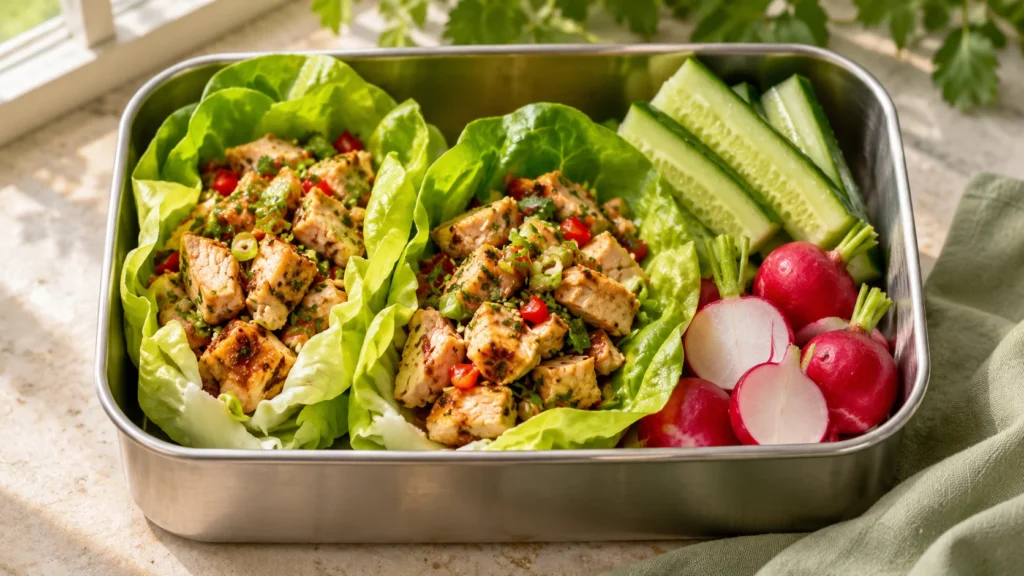
Choose cupped leaves with enough structure to hold chopped chicken. Wash produce under running water unless the package says it is prewashed and ready to eat, and dry the leaves thoroughly. Carry the lettuce in a relatively wide box with a lid so it does not have to fold sharply. Pack the chicken in its own section and spoon a thin layer of dressing over the filling at lunch.
Try a Mediterranean-style cup with lemon-seasoned chicken, diced cucumber, olives and chopped parsley. Add a little feta if it suits the meal. A second option uses shredded cabbage, cooked chicken, vinegar and a small amount of sesame oil. Put any toasted seeds in a separate container and add them just before eating if they fit your needs. Choose an amount of filling each leaf can hold without tearing. Two lightly filled cups are sometimes easier to eat than one overflowing leaf.
Build a chopped salad when you want every bite mixed
A sturdy salad can use chopped romaine or cabbage with sweet pepper and radish. Use fairly even bites so a fork picks up chicken, vegetable and dressing together. Add a few richer ingredients such as avocado or cheese if they suit your preferences. Pack the dressing separately and toss just before eating. If the vegetables shed water, carry them in their own cup and drain them before tipping them into the greens.
One option pairs chilled herb chicken with romaine, cucumber, celery and a lemon dressing. Another pairs smoky leftover chicken with cabbage and thin strips of pepper. Beans, grain, dried fruit and packaged toppings can also fit a lunch, and they change the amount of carbohydrate. If you are tracking, measure the serving you actually use. A recipe name alone gives little information about what ends up in your container.
Use a snack box for a short or interrupted break
Put the cold chicken in bite-size pieces and pair it with vegetables that hold their shape. Radishes and cucumber can go in separate sections, with a small cup of dip. Add pickles or olives if you want a tangy side. Check the salt level when both the chicken and the extras are seasoned. A snack box gives you control over which items you eat together and how much dressing you use on each bite.
Consider how long the lunch needs to satisfy you. A handful of sliced vegetables and a few bits of chicken may feel light on a long day. Adjust the portions and choose additional components you enjoy. Cheese, avocado and a yogurt-based dip each change the flavor and texture. If you use any packaged additions, compare serving sizes when you compare labels. Two tablespoons of dressing and a large free pour yield different results.
Pack the right version for the place you eat
For a lunch at home, assemble just before eating and change the texture with something fresh and crisp. For a work lunch with a refrigerator, pack the food chilled and put it away when you arrive. During transport use an insulated bag with at least two cold sources. If you rely on the bag through lunch, verify it keeps food at 40°F or below and keep it closed until you eat.
If you have a proper break and room to toss a salad, use a large container with space to mix. For a small desk without much space, a divided box may work better. Lettuce cups are easy to portion but can drip, so add sauce in small amounts. An easy lunch has as much to do with the space and utensils you have as with the recipe.
Use the same components in two different lunches
Imagine you have plain chilled chicken, one small cucumber, a head of romaine and some peppers. For the first lunch, pack some romaine leaves whole and use chopped chicken and peppers as the filling. Store the dressing separately. For the second, chop the rest of the romaine and layer the chicken and cucumber in a divided salad box. A different dressing or a few fresh herbs can make the meals distinct without requiring another batch of chicken.
Write the date on the chicken container and work within its original refrigerator window. When making a lunch several days later, freeze an eligible portion promptly and thaw in the refrigerator when you need it. Wash and dry vegetables close to the meal when it is practical. If you want to choose lower-carbohydrate sides by comparison, decide what you are replacing and compare the amount that actually goes into the box.
Compare two side portions that fill the same space
Start with the same portion of chicken in both boxes. In one, pack sliced cucumber and radishes with a small dip cup. In the other, use a scoop of a typical grain or pasta side with its own dressing. The quantity of carbohydrate depends on the weight and ingredients of both sides, including dressing. If you are making the comparison for your own planning, use the portions you would eat and consistent units. Taste both versions before choosing how often to repeat them.
Sources
Frequently asked questions
What sides can I pack with cold chicken?
Try cucumber, cabbage, celery, peppers or radishes. Choose sides you enjoy and that stay firm in your container.
Are these lunches all the same in carbohydrates?
Amounts vary by ingredients and portions. Check labels for packaged sides, sauces and dressings if you need an exact figure.
Can I use rotisserie chicken?
Yes, when it was handled safely, cooled promptly and is still within its original storage window.
Can I mix dressing in the night before?
Sturdy cabbage sometimes works dressed ahead. Keep dressing separate from more delicate lettuce for a crisper result.
How do I carry a cold chicken box to work?
Use an insulated lunch bag with at least two cold sources and refrigerate it at work if possible.
Can I build a meal around spicy chicken?
Yes. Pair a small portion of strongly seasoned chicken with cool, mild vegetables and choose a simple dressing.