
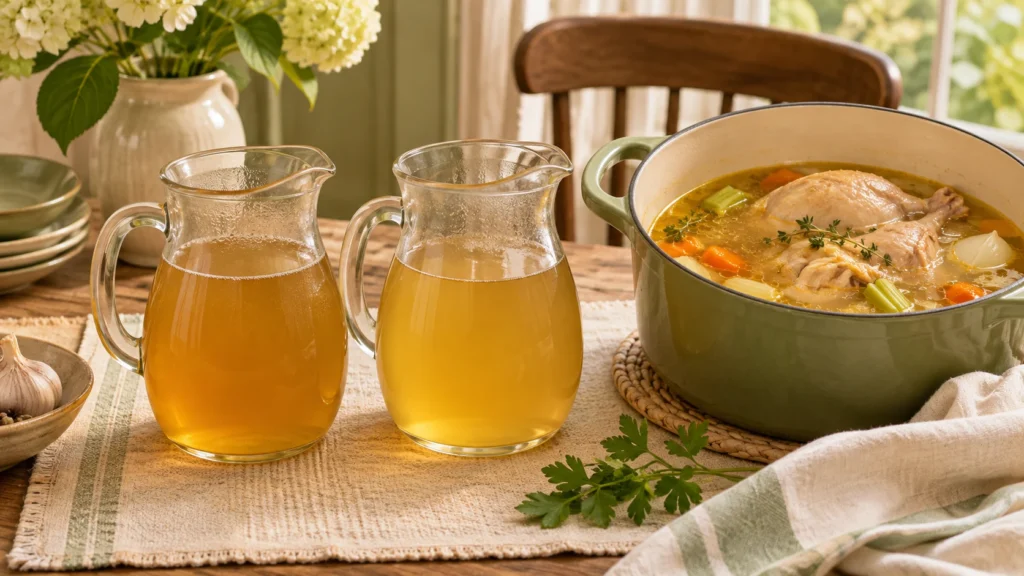
Choose chicken stock for body in a reduction, chicken broth for a soup whose liquid will be tasted directly, and whichever has the right seasoning for rice or another grain. Stock is often made with bones and can be fuller-bodied. Broth is often lighter or more seasoned. Commercial names overlap, so check sodium, taste and concentration.
Know what the names often describe
Cooking traditions frequently use stock for a base simmered with bones and aromatics, while broth can be based more heavily on meat and may be seasoned for serving. A bone-rich stock can develop gelatin and set softly when cold. Some stocks and broths contain both meat and bones, and products on supermarket shelves do not always follow a culinary distinction. Find out what the liquid does rather than assuming the name guarantees a result.
A homemade liquid that sets in the refrigerator can give a pan sauce a fuller texture. A carton labeled stock may still pour as thinly as broth. A broth with a full chicken flavor can make a useful sauce even without much gelatin. An unsalted liquid is often easier to reduce, while a seasoned liquid can save effort when served in soup. These are useful kitchen clues and can vary within either label.
Choose a chicken cooking liquid
| Situation | What to do |
|---|---|
| Pan sauce | Choose a lower-salt liquid if it will reduce. Use fuller stock for body. |
| Soup | Taste the prepared liquid with the other ingredients. |
| Grains | Match salt and strength to the meal and follow the recipe’s liquid ratio. |
Taste before reducing a pan sauce
For a chicken pan sauce, choose liquid with flavor you like and enough body for the finish you want. Deglaze with the amount the recipe specifies, then simmer until the sauce coats the spoon or reaches the intended volume. Starting with strongly salted liquid can concentrate the seasoning as water evaporates. Give salt a final check after reduction and account for salt from the chicken, butter or other ingredients.
If your broth tastes mild and thin, you can still use it in a recipe that finishes with butter or another thickening step. Follow that recipe rather than simply reducing a salty broth further. If your stock is very concentrated, start with the required dilution. Choose a small test quantity before pouring an entire carton into the pan. You can add more liquid if the concentration suits the dish.
Choose a soup base by the finished bowl
For a clear chicken noodle soup, taste the cooking liquid warm before adding salt. If it tastes good by itself and suits the other ingredients, it can work whether it is called stock or broth. A stock with more body may give a fuller spoonful, while a light broth can let fresh herbs and noodles stand out. Add seasonings toward the end if salty ingredients will enter the soup later.
If the recipe uses concentrated soup base or cubes, read the mixing directions and check the sodium after dilution rather than comparing dry products directly with a carton. Prepare a little first to see how it tastes. If you are substituting for an unsalted recipe base, choose an unsalted or similarly seasoned liquid where practical. Rice, noodles and cooked chicken affect how strong the assembled bowl will taste.
Use the right concentration in grains
For a rice pilaf, choose the liquid according to how strongly you want it to flavor the finished grain. Follow the recipe or the grain package for the liquid quantity and cooking method. A very thick or concentrated stock can behave differently from a normal-strength liquid. Dilute it as the recipe allows. If the rice will be served with a salty sauce, a more lightly seasoned liquid or water may be the better base.
For a plain grain used under several dinners, use a mild stock or broth. If the grain will be used cold with chicken and vegetables, avoid seasoning it so heavily that it suppresses the fresh dressing. Taste what you have and compare the same serving units on labels. The final use of the rice tells you how much added flavor it needs.
Read a shopping label with one use in mind
Compare sodium for equal prepared volumes and check whether the package lists an amount per small serving or per cup. Review any seasonings that would shape the dish, such as strong herbs or yeast extract. If comparing two cartons, choose a flavored broth for soup only if you enjoy it after warming. For reduction, pick a liquid you can concentrate without oversalting.
Check the storage instructions once opened. Homemade and opened products need appropriate cold storage. Refrigerate eligible leftovers promptly in shallow containers within two hours, or within one hour above 90°F (32°C). Keep food at 40°F (4°C) or below, and use safely stored cooked leftovers within three to four days unless an earlier product instruction applies. Reheat soup or a leftover sauce to a boil according to USDA guidance, and heat any reheated chicken in it to 165°F (74°C).
Test the same liquid in different ways
Suppose you have an unsalted chicken stock and a lightly seasoned broth. Heat equal small amounts for tasting. Try the broth as a base for soup, then reduce a little of the stock for a pan sauce and compare their intensity. Save a separate portion if you intend to use it later. You may find the broth is your preferred soup and the stock gives the sauce more body. A single carton can also work in both if the seasoning and texture match.
Match a replacement to the dish you already started
If you planned soup with unsalted stock and only have seasoned broth, start by tasting a small prepared amount. Leave added salt until you know how the chicken and noodles affect the whole bowl. For a pan sauce, choose a diluting liquid or different recipe if the prepared broth is already salty. If you planned to use a rich stock under roast chicken and find the carton is relatively thin, you can still use it for a lighter pan sauce. The outcome depends on the body and seasoning you taste, not whether the carton has the word stock on it.
Compare prepared portions at the same volume
When a concentrate lists nutrition for a small spoonful, first work out how much it makes according to the mixing directions. Then compare it with the same volume of prepared broth. If a homemade stock is especially strong, portion it for the amount you expect to use and record whether it was frozen after dilution. Chill food promptly and date the container. Labeling concentration avoids guessing when you prepare rice or soup later. It also helps you choose whether a saved portion will complement a salty main.
Sources
Frequently asked questions
Can I substitute stock for broth?
Usually, if you compare flavor, salt and strength and adjust seasoning as the recipe allows.
Which is better for pan sauce?
Choose a liquid you can reduce without making it too salty. A gelatin-rich stock can give a fuller texture.
Which is better for soup?
Use the liquid whose flavor you like warm with the other ingredients in the bowl.
Does stock always gel when cold?
No. Gelation depends on ingredients, concentration and how it was prepared.
Can I cook rice in broth?
Yes, follow the liquid and cooking instructions for the recipe, and consider the seasoning of the main.
What does low sodium tell me?
Read the actual amount for the same prepared volume. Taste before adding additional salt.


