
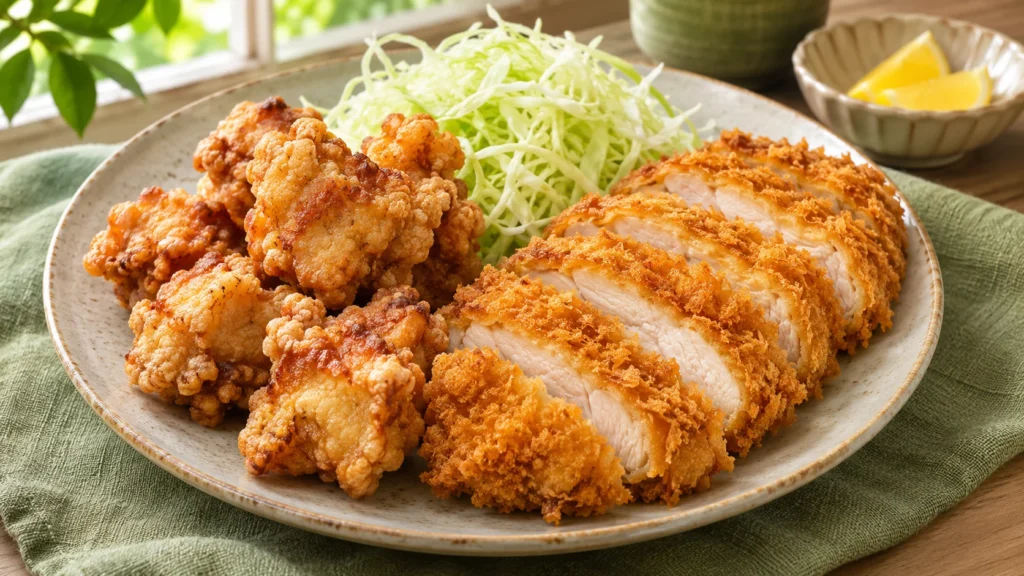
In a representative Japanese karaage recipe, marinated bite-size chicken pieces are coated with starch and fried. Chicken katsu commonly uses a flattened cutlet coated with flour, egg and panko, then cooked and sliced to serve. Choose karaage when you want irregular bites that can be shared, and katsu for a cutlet meal with its own sides and sauce. Check the exact recipe because cuts, coatings and cooking methods vary.
Compare the two coating workflows
| Situation | What to do |
|---|---|
| Karaage example | Marinated bite-size pieces with flour and starch. |
| Katsu example | Larger cutlet with flour, egg and panko. |
| Serving | Choose a shared plate or a sliced cutlet meal. |
Compare two recipes before buying chicken
Just One Cookbook’s karaage recipe uses bite-sized chicken thigh pieces, seasoning or marinade and a starch coating. Check its individual directions, including its flour and potato starch steps and frying sequence. The piece size gives the finished coating several irregular surfaces. It also makes it easy to serve small portions or put the bites beside rice. Chicken thigh suits the example. Follow a different documented recipe if using a different cut.
Just One Cookbook’s chicken katsu example shows a cutlet prepared with flour, egg and panko before frying. The larger flat surface produces a crumb coating that looks and feels different. The cutlet can be sliced for chopsticks or served whole as the chosen recipe directs. A katsu plate can have shredded cabbage and sauce alongside. Read the exact example before choosing a very thick breast or a different binder.
Both recipes are individual examples. Karaage is a broader term and its flour or starch mixture can vary. Katsu variations can use different cuts or oven preparations. Use the recipe’s own coating and heat sequence rather than copying the timing or crust of the other dish. A cutlet occasionally cut into strips after cooking is still prepared differently from small pieces coated individually.
Look at where each coating gets its texture
For karaage, small pieces can pick up a thin, uneven coating. Drain or otherwise prepare the marinated chicken as the recipe directs. Coating a very wet piece may change how the flour or starch adheres. Prepare the coating on raw-use equipment and discard any that touched uncooked chicken. Keep the cooked serving plate and its tools separate.
Katsu uses a layered coating in the documented example. Flour and egg help the panko adhere. A thin, evenly prepared cutlet can cook more predictably than one with a thick center and very thin edges. Press or handle the crumbs according to the recipe. Avoid assuming panko and starch are direct replacements. Each works within its own method and gives you a different surface.
For either style, select the cooking equipment and load the recipe can handle. Use an appropriate oil and safe setup when frying. Keep the pan stable and follow the recipe and appliance guidance. Work in manageable batches if necessary, keeping waiting raw chicken cold. A crowded pan or a cut thicker than planned can interfere with timing. Check poultry with a thermometer rather than using browned crumbs as the final signal.
Choose the cut and verify the center
For bite-size pieces, cut them to the approximate size the recipe uses. Check several of the largest cooked pieces for 165°F (74°C) in the center. If the pieces vary, the small ones may finish first. Use clean tools to remove pieces that are ready and continue cooking those that are below the target. Clean the probe after checking undercooked meat.
For a cutlet, even out the thickness as the recipe directs. A thin cutlet may be easier to check from the side if that places the thermometer’s sensing area in the center. Check the thickest part. Once the chicken reaches 165°F, use a clean board for slicing. Keep the raw station and any utensils that handled raw egg or chicken separate from the finished meal.
If using a packaged coating, check its ingredients. The katsu example contains wheat and egg unless you use a suitable variation. A karaage marinade may include soy or other ingredients depending on the recipe. Check all sauces, mixers and coatings for the actual products before serving someone with a restriction. The name of the dish does not tell you the full ingredient list.
Choose bite-size service or an individual cutlet
For shared service, plate small karaage pieces with a clean dip or lemon if it suits the recipe. Set out a utensil for guests and keep portions in a single layer where practical to preserve the crust. Add rice or another side for a full dinner. Put a small batch out first if more pieces are still cooking.
For a cutlet meal, slice the cooked katsu with clean equipment and serve it with shredded cabbage and the chosen sauce. Keep a wet sauce off the crust until each person serves themselves if crispness matters. Add rice or a side according to the size of the serving. The sliced cutlet can be easier to portion onto individual plates than a dish that must be assembled from many small pieces.
For a fair comparison, keep sides simple and taste a piece from each before adding sauce. Notice the thinner irregular coating on the bites and the separate panko crumb on the cutlet. If you want a specific katsu dinner, use the HCCR katsu resource for related recipes rather than converting a karaage instruction set. Chill safely held leftovers promptly and reheat them to 165°F when serving hot.
Plan a shared plate and an individual meal
If you have four diners and only a small suitable frying setup, choose a service style before preparing the raw poultry. For a shared plate, portion karaage so each batch has similarly sized pieces. Keep waiting raw pieces cold and have a clean tray ready for the finished batch. Dress any fresh sides first and keep them away from raw prep. Serve a small amount of clean dipping sauce or lemon alongside so people can try the crust before adding a wet finish.
For an individual katsu dinner, use one cutlet per intended serving if the recipe’s size and your menu support it. Set out a clean slicing board before cooking. Check each cutlet at the center, then slice as needed. Bring cabbage and sauce to the plate separately. If you are trying both formats at home, compare a small sample rather than running two crowded pans at once. Plan time for cleaning the raw station and collecting the hot equipment safely. A simple side such as rice or greens gives both versions room to show the effect of their different cuts and coatings.
Sources
Frequently asked questions
What should I check first when deciding between karaage and katsu?
Choose the serving format, then confirm the cut, coating and equipment in the recipe you want to use.
Can I substitute panko for potato starch?
Use a recipe designed for the coating. It changes how the exterior adheres and cooks.
Does karaage always use thigh meat?
The documented example uses thighs. Other recipes can vary, so follow the cut and size listed.
Does katsu need to be sliced?
Slice it after cooking if that fits the serving style, using clean equipment.
What changes if my recipe uses different ingredients?
Check its method, cut thickness, allergens and serving format rather than relying on a universal rule.
How hot should the chicken be?
Verify 165°F in the center of the thickest pieces or cutlet.


