
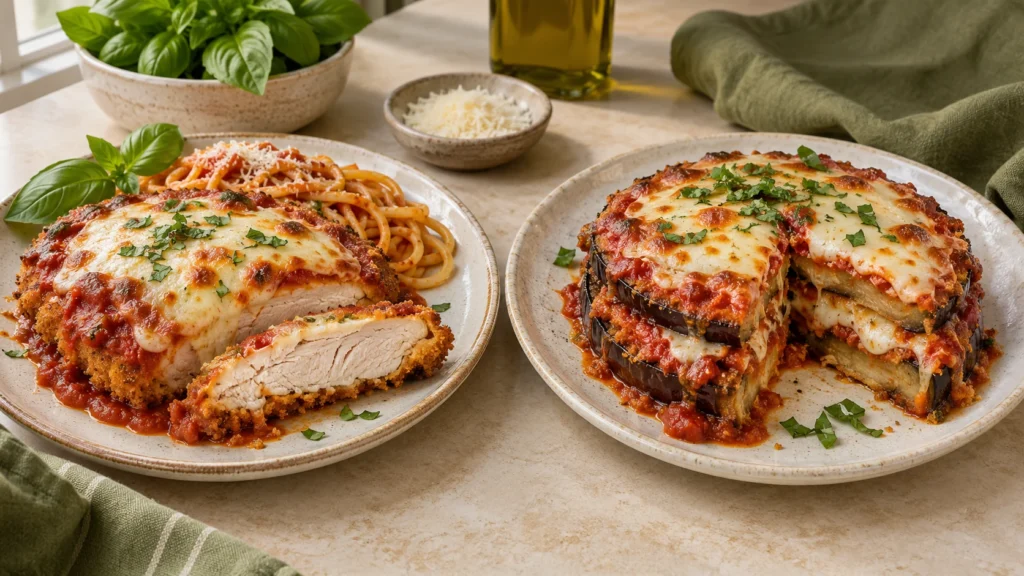
Chicken Parmesan starts with raw chicken cutlets that must reach 165°F (74°C). Eggplant Parmesan starts with vegetable slices whose thickness, moisture and tenderness determine when they are ready for sauce and cheese. Both can use a crumb coating and tomato sauce, depending on the recipe, but the prep and doneness checks differ. To make both for dinner, prepare the eggplant first on clean tools, keep all raw chicken contact separate and finish each recipe in its own pan.
Sequence the two Parmesan dishes
| Situation | What to do |
|---|---|
| Eggplant | Prep slices first and check tenderness and moisture. |
| Chicken | Bread separately and verify 165°F in the cutlet. |
| Shared sauce | Divide a clean portion before raw poultry prep. |
Separate the work before mixing the coating
Read a recipe for each main. A chicken Parmesan recipe often flattens the cutlets to even thickness, then coats and browns them before using sauce and cheese. An eggplant recipe may salt and drain the slices, roast them first, or coat and bake them directly. Some versions assemble several layers. Choose the individual workflows instead of assuming one temperature or timing works for both.
Set out clean pans, boards and bowls. Slice the eggplant and prepare its coating before opening raw poultry if the same counter will be needed. Use separate coating bowls and utensils for the chicken. Discard flour, binder or crumbs that touched raw chicken. Set aside a clean portion of tomato sauce and cheese before preparing the cutlets, and keep it away from raw tools.
Ask about dietary preferences and requirements before treating the same ingredients as suitable for both plates. Check cheese and prepared sauce labels. Some cheeses use animal-derived rennet. Breading can contain wheat, eggs or milk. If the eggplant option needs to avoid animal ingredients, choose an appropriate recipe and confirm each product. If a guest has an allergy, discuss what separate handling is needed and what you can actually provide.
Prepare eggplant for the texture you want
Cut the slices to a comparable thickness using the recipe’s directions. If the recipe calls for salting, leave time to drain and pat them dry. Other recipes roast eggplant without a separate salting step. Water released by the slices can thin the sauce or soften coating, so use the steps that match the version you are making.
When baking slices separately, give them room on the tray as instructed. Check them for the desired softness and surface color before adding sauce. If the recipe expects slices to be tender enough to layer, check thicker pieces as well. Eggplant changes more when it cools in a deep pile, so arrange the cooked pieces as directed rather than stacking them immediately.
Use sauce in the amount the recipe expects. A heavy layer can soften crumbs, while a layered bake may deliberately use enough sauce to moisten the dish. Pick the result you want first. Taste and season the sauce with clean tools and keep the selected part for eggplant separate from anything used on the chicken.
Prepare chicken cutlets for even cooking
Start with cutlets of similar thickness and handle them on dedicated raw-use equipment. If flattening them, follow the recipe and clean the work area afterward. Use your chosen flour, binder and crumb sequence, then cook in appropriate batches. A thick cutlet can take more time at the center than a thin one with the same coating color.
Verify 165°F at the thickest area before serving, using a thermometer inserted from the side for thin cutlets when that places the sensing area in the center. If the recipe browns the coating before the oven finish, keep following its sequence until the chicken is fully cooked. Use a clean plate for cooked portions and wash tools that touched raw or partially cooked chicken.
Add sauce and cheese when the recipe directs. For crisp edges, leave some cooked coating exposed if that suits the dish. A broader cutlet can carry sauce differently than a narrow slice of eggplant. Check your chosen recipe before doubling the amount on one plate or using leftover sauce from the raw station.
Make both versions for two people
Prepare a clean batch of sauce and divide it with clean spoons. Cut and prep the eggplant first, then store its clean ingredients away from the chicken work area. Start the eggplant on the schedule its recipe calls for. Set up a second pan and separate tools for the cutlet. Check oven space and whether the recipes can share a temperature. If they differ, use a suitable skillet recipe for one main or stagger the oven steps.
Choose one shared side that suits both diners, such as a fresh salad or bread. Wash and prepare it before the raw chicken step and keep it clean and chilled until serving if needed. Finish the eggplant when tender and the chicken when it reaches its safe temperature. Use clean separate serving utensils. If keeping one dish hot while the other finishes, verify safe hot holding at 140°F (60°C) or above.
Store leftovers by dish
Pack each version in shallow containers and refrigerate promptly. Label the date and any ingredients someone else needs to know. Keep wet and crisp sides separate. Reheat properly handled hot leftovers to 165°F. The crumb may soften in the refrigerator, so choose a suitable reheating method for the texture you want and check the food’s actual temperature.
Make a two-diner schedule
If the eggplant recipe calls for draining, start that first and use the interval to prepare clean tomato sauce and cheese. Divide the sauce before you bring out the poultry. If the eggplant goes into the oven at a different heat, start it separately and finish the cutlet in a suitable skillet method or wait until the oven is free. Warm holding only works if the food remains at the appropriate temperature. When you cannot confirm that, plan a shorter overlap and serve each as it is ready.
Keep the shared side simple. Bread can go to the table early, and a clean chilled salad can wait in the refrigerator. If one meal needs strict separation because of an allergy or other requirement, discuss that before shopping and use separate protected preparation and service as agreed. At plating, use distinct spatulas. Store leftovers under their original cooking date and reheat single portions instead of putting both mains into one pan. If you want a firmer crust the next day, keep extra sauce separate when the recipe and storage allow.
Sources
Frequently asked questions
Do both dishes need breading?
Follow the recipe. Some eggplant versions roast slices without breading, while breaded cutlets are common for chicken Parmesan.
Should I salt the eggplant?
Use the recipe’s directions. Some methods call for salting and draining, and others do not.
Can I share the coating bowls?
Keep eggplant coating separate from anything that touched raw chicken.
Can both dishes use one tomato sauce?
Yes. Divide a clean batch before raw poultry prep and check each diner’s ingredients.
How do I know the chicken is ready?
Verify 165°F in the thickest part. A golden crust does not prove the center is cooked.
Can I use the same oven?
Use separate pans, check for compatible recipe temperatures and give both dishes enough space.


