
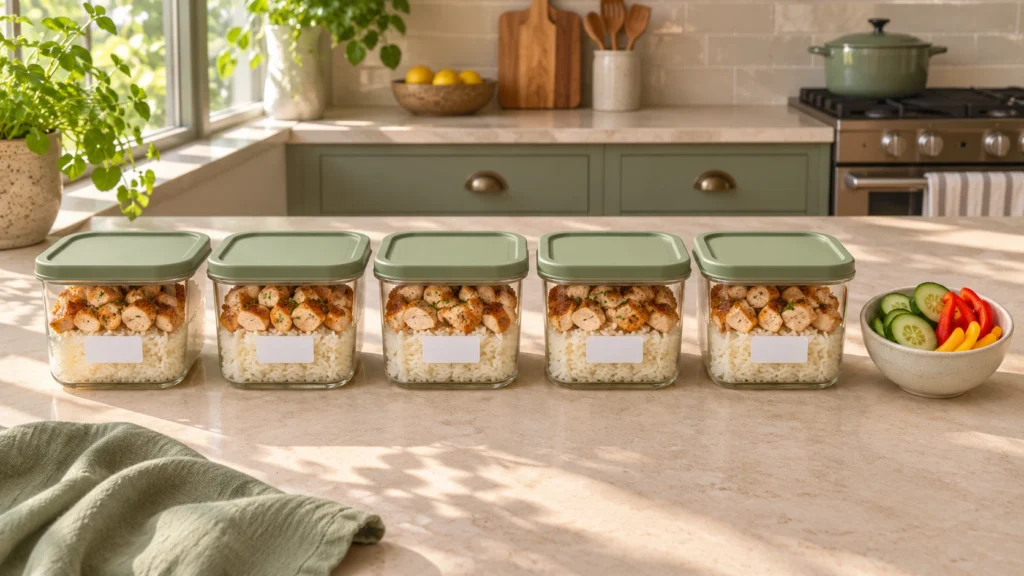
For five workday lunches, refrigerate the early servings and freeze the later ones on prep day. If you cook Sunday, Monday through Wednesday can go in the refrigerator, with Thursday and Friday frozen. Cool the meals promptly in shallow containers, label each with the cook date and planned lunch day, and move each frozen portion to the refrigerator early enough to thaw. Reheat hot lunches to 165°F (74°C).
Work backward from lunch, not from the weekend
The useful deadline is the time you will actually eat the portion. USDA recommends using refrigerated cooked chicken leftovers within three to four days, with the refrigerator at 40°F (4°C) or below. A Sunday-to-Friday plan extends past that window. Thursday can be close depending on when you cooked Sunday and when you eat. Freezing both Thursday and Friday on preparation day gives you a buffer for changes in the schedule. It also keeps you from having to decide on Wednesday whether a container is getting too old.
Start with the days you expect to work and where you will eat. If you will be away from a refrigerator, arrange an insulated bag with adequate ice packs for a cold meal. If you have a microwave at work, identify which parts can be heated safely in their containers. A cold garnish goes in a separate package. Knowing where you will store and serve the lunch helps you pick its ingredients and pack the correct portions before you start cooking.
| Lunch day | Sunday action | Before serving |
|---|---|---|
| Monday | Refrigerate the labeled serving | Keep cold during transport and refrigerate at work where available |
| Tuesday | Refrigerate the labeled serving | Heat the hot components to 165°F (74°C) |
| Wednesday | Refrigerate the labeled serving | Use within the original refrigerator window |
| Thursday | Freeze the labeled serving | Transfer to the refrigerator Wednesday or earlier if its size requires |
| Friday | Freeze the labeled serving | Transfer to the refrigerator Thursday or earlier if its size requires |
The table is an example, not a fixed schedule. If you prepare on Saturday, use different dates. If your workdays are irregular, assign actual dates rather than a generic “later this week.” If you move lunch to another day, keep the original date on the label and check whether the portion was safely stored. Do not carry an unchilled lunch around for the rest of the day and assume the freezer will make it usable again.
Portion before the batch sits on the counter
Cook the chicken to 165°F (74°C) in the thickest part and use clean utensils for the cooked food. Set out enough shallow containers before the meal finishes. Portion large amounts of cooked chicken, rice or soup promptly, rather than leaving everything in a deep pot to cool. USDA advises getting perishables into refrigeration within two hours, or one hour when ambient temperatures are above 90°F (32°C). The maximum time is a limit, not a target. Warm food can be refrigerated in shallow containers so it cools more quickly.
If you are prepping chicken and rice, split both into shallower servings. Keep cold vegetables, dressings or other prepared toppings separate and return them to refrigeration as needed. Label every container or keep related small packs together. A late-week lunch can freeze as a single ready-to-heat portion when the recipe suits it. If the grains and chicken need different treatment, freeze separately and label them as one meal. A compact portion is easier to thaw and heat evenly than a packed container several servings deep.
Write labels for the person opening the fridge later
Write the meal, cook date, freeze date if applicable, and intended serving date. Add “fully cooked” so the container cannot be mistaken for a raw kit. Note any topping that stays cold and the practical reheating instructions. Include 165°F (74°C) for the reheated leftovers. If you must change containers to heat the lunch, say so. Use freezer-safe packaging and check whether the packaging is suitable for the microwave before heating.
A Sunday label could read “Cooked lemon chicken and rice. Cooked and frozen Sunday, 15 November. Intended for Thursday, 19 November. Transfer to refrigerator Wednesday evening if the portion thaws overnight in your fridge. Heat chicken and rice to 165°F (74°C). Add cold slaw after heating.” In another week, substitute actual dates and adjust the transfer to suit package thickness. The purpose is to make the next decision obvious, not to guarantee the same thaw time for every appliance.
For other grain and chicken preparations, browse Chicken and Rice Recipes.
Use two lunch styles to give the same batch some variety
For a grain bowl, use a compatible chicken and rice method, divide the cooked food into portions and hold back the fresh finish. Lemon dressing or cucumber can be prepared separately and added at work. That lets you heat the bowl thoroughly without warming its cold ingredients. If one rice portion is still icy, reheat only using a suitable method and make sure it reaches temperature throughout. Stir or rotate as directed and check more than one spot. For restaurant-size containers or dense servings, use a smaller microwave-safe dish if that fits the method.
For a chicken soup lunch, use a shallower single-portion container and leave expansion space when freezing. A clear soup base can be easier to portion than a large fully assembled dish. Add any fresh herbs separately. Reheat soup to a rolling boil following USDA guidance, check any remaining cold spots and verify the reheated chicken reaches 165°F (74°C). Use a container and appliance that can handle the liquid without spilling. Refrigerate or freeze remaining soup promptly.
Put transport and delays into the plan
A safe refrigerator at home cannot protect a lunch that spends the morning in a warm car. If you take a cold meal, carry it chilled in an insulated bag with cold sources and refrigerate it upon arrival if available. If you carry a hot meal, use an appropriately preheated insulated container that can hold it at 140°F (60°C) or above. Choose the cold route when you cannot verify a safe hot hold and have a suitable way to reheat at lunch.
When a meeting interrupts your normal lunch, put a safely chilled portion back into the refrigerator promptly. If keeping it hot, maintain the appropriate temperature. If a lunch has been outside safe temperature control beyond the guidance, discard it instead of reheating and guessing. Note the reason for any missed lunch so you can choose a smaller batch, keep a spare frozen or move a transfer to another day next week. The five-meal plan should survive a change in the calendar without making you stretch a storage window.
Prepare the next week from what actually worked
Mark which containers were easy to use at work and which took longer to thaw. A rice bowl and a soup can take up different shelf space and require different utensils. Use a shallower shape for any portion that repeatedly remains frozen in the middle. Keep a list of the freezer portions near the workweek schedule, and move only what you expect to eat. Rotate older safely stored portions into new weeks before adding more. If you often skip one day, prepare fewer refrigerated portions and leave a spare frozen.
For a different base, browse Shredded Chicken Recipes.
Make a late-week transfer easy to remember
Put two reminders on the same calendar you use for work. The first tells you which portion to move to the refrigerator. The second tells you to pack that meal and, if needed, which chilled topping goes with it. If your Friday plans change, leave the meal frozen. A portion that has thawed in the refrigerator should follow the storage limits for that food, and transferring food does not make previous room-temperature exposure safe.
For transport, USDA recommends at least two cold sources in an insulated lunch bag, placed above and below perishable food. Keep the container closed until lunch or transfer it to a refrigerator promptly. Pack utensils separately so they stay clean. If you are sharing a refrigerator, use a label that identifies your food and the intended day.
On prep day, make sure your menu fits the available cooling space. If you cannot get five properly portioned containers safely chilled in time, prepare fewer meals and use a second prep day. The freezer plan is a way to preserve safely handled food. It does not replace the cooling step.
For more on thermometer use and storing cooked chicken, see the HCCR chicken food safety guide.
Sources and references
Frequently asked questions
Can I refrigerate all five lunches at once?
Refrigerate only portions you will use within three to four days of cooking. For a Sunday prep session, freeze later lunches that would fall beyond or near the end of that window.
Which portions should I freeze on prep day?
Freeze the late-week lunches and any extra servings you do not expect to eat in the refrigerator window. Portion and cool them promptly using shallow packaging.
Does a frozen portion always thaw overnight?
No. Size, shape and refrigerator temperature affect thawing. Move a thick portion earlier and use a suitable reheating method if it is still partly frozen.
Can I reheat the cold topping with the chicken?
Keep ready-to-eat cold toppings separate if you want their original texture and temperature. Heat the chicken and other leftover hot components thoroughly before adding them.


