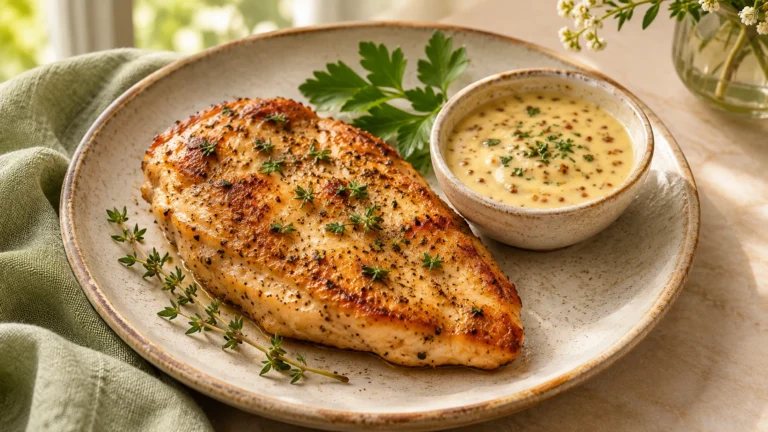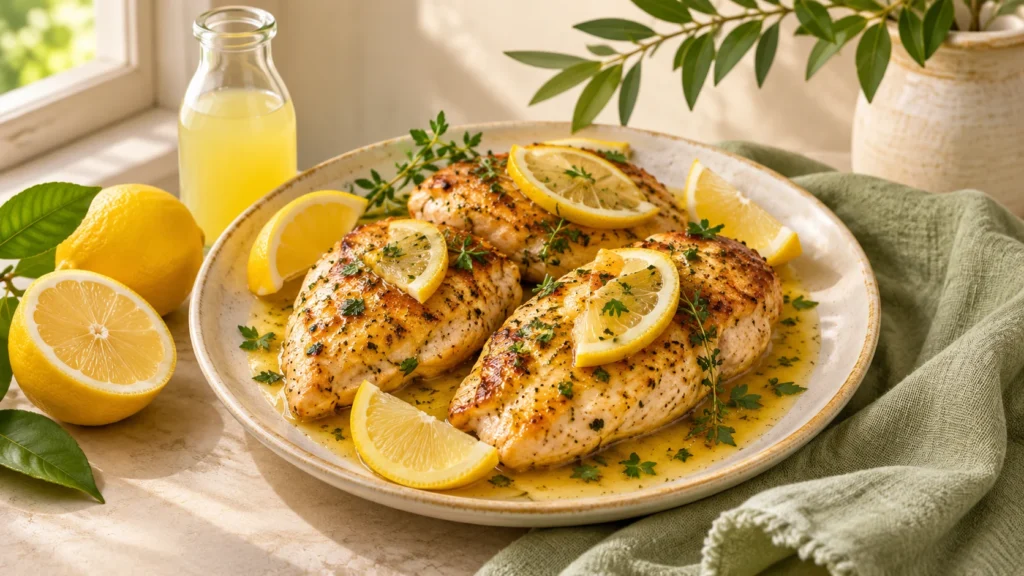
Bottled lemon juice can replace fresh juice in many chicken marinades and cooked sauces when the product is plain lemon juice and the recipe does not depend on zest. Measure the juice the recipe calls for and taste a clean sample. Use fresh lemon when you need aromatic zest, wedges or a fresh citrus finish.
Separate juice from peel
Lemon juice supplies acidity and a noticeable citrus taste. Zest supplies fragrant oils from the colored outer peel. A spoonful of bottled juice can provide the acid component but cannot provide grated peel or the fresh aroma it contributes. If a recipe calls for juice and zest separately, treat those as two different ingredients. Use a real lemon for the zest or choose a version that only needs juice.
Look at how the citrus is used. In a marinade with garlic and herbs, the difference between juices may be less noticeable after cooking. In a brief lemon-butter finish where citrus is the leading flavor, you may taste and smell the difference more clearly. In piccata, a wedge or slice can also have a serving role. A bottle cannot provide a wedge for someone who wants more lemon at the table.
Match the lemon to its job
| Situation | What to do |
|---|---|
| Measured juice in a marinade | Use plain ready-to-use juice and taste before raw contact. |
| Zest or fruit garnish | Use a fresh lemon. |
| Finished pan sauce | Test acidity in a clean sample near service. |
Read the bottle before measuring
Choose a product whose label says lemon juice if that is what the recipe uses. Sweetened lemon drinks and citrus-flavored concentrates have different ingredients, and an undiluted concentrate may require preparation according to its own directions. Some juice is reconstituted. Check the ingredient list and storage directions. Measure in teaspoons or tablespoons when possible rather than estimating from the vague yield of one lemon.
Fresh fruits vary in size, juiciness and acidity. Bottled juices can vary by product and can have a different flavor from fresh-squeezed juice. For an ordinary chicken recipe that uses a measured quantity of juice, use that amount as a starting point when the substitute is ready to use. Taste a clean prepared sample before making a large adjustment. If the recipe calls for a whole fruit's juice but gives no volume, use a recipe that states an amount or add a modest portion to the clean mixture and adjust.
Try bottled juice in a refrigerated marinade
A quick marinade with oil, measured lemon juice and compatible seasonings can work well with bottled juice. Mix a small sample and taste before it contacts raw chicken. Balance the other ingredients according to the recipe rather than adding more acid because the bottle smells less fragrant. Keep poultry refrigerated while marinating. Acid does not make raw chicken safe, and the use of bottled or fresh lemon does not change that requirement.
Fresh zest can be added when the recipe calls for it. Grate only the colored outer peel as directed and keep ready-to-eat garnish separate from raw-poultry equipment. For serving sauce, reserve a clean portion before you add the raw chicken. If a used marinade is to become a cooked sauce, follow USDA boiling guidance. Cook the poultry to 165°F (74°C) in the thickest part regardless of how long it marinated.
Use a different test for a finished sauce
For a lemon-butter or lemon-caper sauce, taste the cooked base first. Try a small quantity of bottled juice in a clean sample, then judge sharpness and fragrance at serving temperature. Add juice gradually if the recipe allows. A cooked sauce can become too tart quickly when a small amount of liquid carries a lot of flavor. Fresh juice or a little grated zest can be useful near the end when the intended lemon aroma is still missing.
If the recipe uses dairy or a butter emulsion, follow its order and heat instructions for adding acid. Raising the boil or adding a large amount of juice at once may change the texture. Put a wedge or fresh herbs on the plate when optional brightness at service suits the dish. You can use bottled juice in the cooked base and fresh lemon in a garnish if you have a single fruit and need it to go further.
Compare two ordinary chicken meals
For weekday chicken strips in a garlic-lemon marinade, a bottle of ready-to-use juice is often a convenient option. Measure it, taste the clean marinade and cook according to the recipe. For chicken with a short lemon pan sauce, fresh juice and zest can stand out more because you are tasting them nearly as soon as they go in. To compare, use the same base and clean spoons for two samples, then taste at the same temperature.
Decide what is missing before you add more. If the sauce already tastes tart and you want more aroma, use zest or a fresh garnish instead of extra juice. If the aroma is good but the sauce feels heavy, test a small extra splash in one spoonful. This helps you avoid making the whole dish sour just to get a brighter smell.
Plan ahead for the next recipe
Note whether the recipe asks for a measured amount of juice, zest or fruit slices. Keep the bottle refrigerated after opening when its label specifies and use it within its product guidance. Use fresh fruit for peel or slices and wash it before cutting. A juice substitution in a chicken dish is a flavor choice. If you are following a tested preservation or canning recipe, its specified acid is a separate requirement and should be followed exactly.
Measure the amount you actually miss
If the recipe asks for a fresh lemon and you only have bottled juice, identify whether you need juice, zest or both. Use a written measured quantity when possible. A ready-to-use bottle can make it easier to repeat a small amount, while a fruit gives you several different finishing options. Try a single spoonful of fully cooked sauce with a little juice and compare it with a sample that gets fresh herbs or another suitable aroma instead. Notice whether your goal is sharpness or the impact of a fresh garnish.
Compare the finishing role at serving
For a sauce already balanced with capers or another sharp ingredient, put lemon beside the chicken and let diners decide if they need more. For chicken whose marinade tasted good before raw contact, wait until the cooked sample and the side are on the same plate. If both together are already tart, another splash may be unnecessary. Use a fresh clean spoon to add the next amount rather than tipping a bottle over the whole dish. A small test saves the rest of a sauce if the product is stronger than you expected.
Sources
Frequently asked questions
Can I use bottled juice in a chicken marinade?
Yes, in many recipes. Use ready-to-use lemon juice and taste the clean marinade before raw contact.
Can juice replace zest?
Juice supplies acidity. Use fresh zest or a recipe designed without it when peel aroma matters.
Should I use a one-for-one swap?
For plain ready-to-use juice, start with the measured amount and adjust a clean sample if the recipe allows.
Is concentrate the same as ready-to-use juice?
Read the container and prepare it as directed if it needs dilution.
Why does my sauce smell less lemony?
The difference may come from missing zest or fresh juice added nearer service.
Does lemon cook chicken safely?
No. Marinate under refrigeration and cook chicken to 165°F.