
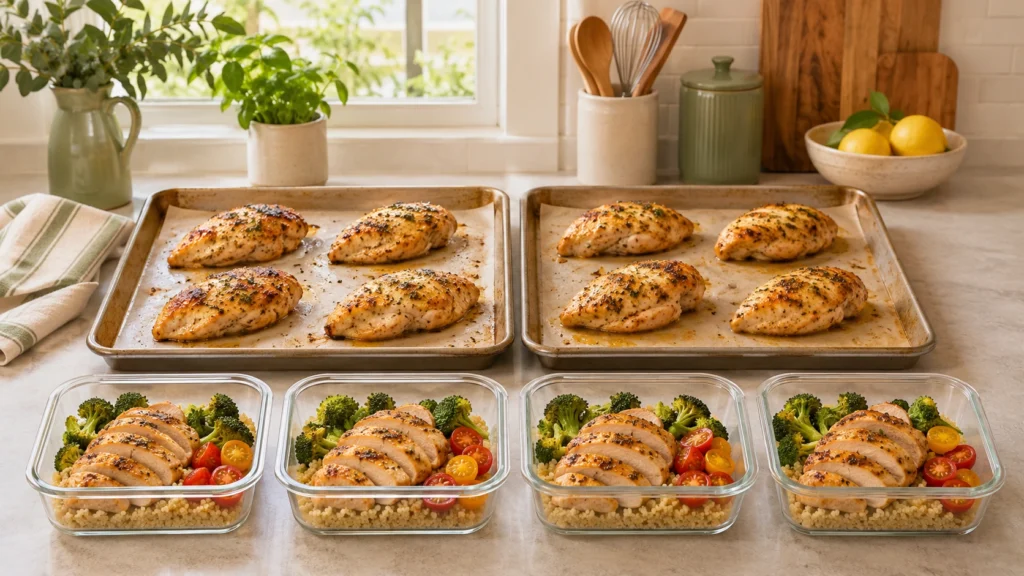
Set your chicken batch size by the smaller of two capacities: the amount you can cook with proper tray spacing and the amount you can cool promptly in shallow containers. Stagger batches if your oven or refrigerator is tight. Check each batch reaches 165°F (74°C), refrigerate it promptly instead of waiting for the last tray, and label the servings you intend to freeze or use first.
Count the spaces you have before you cook
Start with the pan the recipe expects and the number of pieces that can fit without overlap. A second rack does not guarantee room to roast a second crowded tray. Check the oven’s rack, pan and rotation guidance. A tray that is too deep or too close to another can change circulation and browning. Consider the size of the chicken and whether separate groups will finish at different times. Use an arrangement the recipe and equipment can handle.
Count containers and refrigerator space just as carefully. The goal is to divide cooked chicken promptly rather than put a large, deep pile of hot food into cold storage. Clear space for shallow containers and allow the refrigerator to circulate cold air. Check it is at 40°F (4°C) or below. Keep raw poultry below ready-to-eat foods and protect cooked portions from drips. If the available shelf cannot take the number of shallow servings, reduce the amount you plan to cook.
| Constraint | Count beforehand | What to change if the space runs out |
|---|---|---|
| Oven capacity | Number of trays and properly spaced portions | Use more cooking rounds or cook less |
| Cooling capacity | Number of shallow containers and clear refrigerator space | Reduce batch size or free appropriate shelf space |
| Temperature checking | Several pieces per tray where sizes differ | Sort pieces by thickness and check each group |
| Serving or freezing | Labeled use dates and available freezer space | Freeze late portions promptly or plan another prep day |
Stagger cooking and cooling instead of making one queue
Say you want twelve breast portions but can comfortably space six on a tray. You also have room to refrigerate six shallow portions promptly. If the second batch cannot be cooled safely while the first is still using the available space, cook only the first six or choose a second prep window. If enough cold space is available, cook the food in two rounds. Portion and chill the first batch promptly when it is ready. You do not need to leave it next to the oven until the second batch finishes.
Prepare the containers, thermometer and clean tongs before the first tray comes out. Keep the raw portions for the next batch refrigerated until you need them. Use a separate raw tray and clean serving tools for finished food. If a smaller piece finishes early, remove it to a clean plate after verifying its temperature. If using a multi-rack method, check representative pieces from each rack and the thickest pieces independently. It is possible to get different results across the oven even with identical timing.
Portion each tray on its own clock
USDA recommends getting perishable food into the refrigerator within two hours, or within one hour above 90°F (32°C). Divide large amounts into shallow containers so they cool quickly. Warm food can go into the refrigerator in suitable shallow portions. Do not wait for every tray to cool all the way to room temperature on the counter. Label each batch so its original cook time and date stay clear, even if the second tray was prepared later.
If several people are helping, assign a clean person to package cooked food or finish the raw preparation before returning to the cooked station. Put labels and containers where they can be reached without crossing the raw area. Set a tray on an appropriate heat-safe surface during the brief period needed to transfer food. The refrigerator shelf should not become a place where deep stacked containers trap heat or unintentionally block airflow. Cool food in manageable amounts and maintain the proper cold temperature.
For other methods by tray and cut, browse Baked Chicken Recipes.
Record how each portion will be used
Label cooked portions with preparation date, intended meal and freeze date when applicable. Use refrigerated leftovers within three to four days or freeze them promptly. The thinner portions may suit sandwiches or cold salads if kept properly chilled. Larger pieces may be easier to portion after cooking with clean equipment. Pack sauce and fresh garnishes separately if they need a different reheating or serving step. Store anything you need after the refrigerator window in the freezer at 0°F (−18°C) or below.
For example, one tray can be designated for early-week lunches. The next could be split into later meals and frozen promptly after safe portioning and cooling. A note such as “cooked chicken breast, single portion, freeze date, reheat to 165°F” gives the next cook the information they need. If you will eat the chicken cold, follow appropriate storage and thaw instructions. When reheating, check enough spots to verify it reaches 165°F (74°C). Avoid repeatedly heating the entire batch to serve one person.
Use the results to plan the next batch
Write down how many pieces actually fit, whether a tray position browned more quickly, how many clean shallow containers were used and where they went. If the refrigerator was tight, change the amount or divide prep into more than one day. If two trays fit but made checks and cleanup difficult, one tray at a time may be easier. Clear enough counter space to unload one hot tray while keeping clean ingredients away from anything that held raw chicken.
Batch cooking can reduce work later only if each stage is manageable. Do not start another pan because the oven is warm when there is no room for the cooked portions. Finish the safe cooling and storage plan first, or save the raw pieces in appropriate cold storage for another cook. A smaller batch that fits the kitchen gives you more useful meals than a larger batch that sits out waiting for space.
For portions to shred before packing, browse Shredded Chicken Recipes.
Prepare a clear landing place for each hot tray
Before loading the oven, decide where the first tray will go after cooking. Put a heat-safe surface there, keep the probe close and set out clean tongs and shallow containers. Keep the raw tray away from that station. If the recipe requires two trays and one will need rotating, plan when to check both. Allow enough space to handle them without dragging either across a clean bowl or the plate you will use for serving. The area next to the oven is part of batch capacity.
For a tray of mixed sizes, place the portions where you can check the thickest pieces without reaching over a large pan. If the recipe allows and the small portions reach 165°F (74°C) sooner, move those to a clean platter with a clean utensil. Chill the food you intend to save promptly. When serving some immediately, identify those pieces before labeling the storage containers. If two batches use different seasonings, separate their containers and include the relevant ingredients on the label.
Check the refrigerator before starting the second round. Airflow, clearance and container depth all matter. Avoid putting several deep hot containers in one tight stack. Use shallow portions and leave space consistent with your appliance instructions. If you cannot cool more cooked food promptly, keep the uncooked pieces refrigerated safely and plan another session within their storage window or freeze them. A warm oven does not reduce the need for cold storage.
Use a simple batch note so tomorrow’s meal is identifiable. For each tray, record the cook date, what was frozen, whether it is seasoned and who plans to eat it. Freeze later portions promptly in suitable packaging after the safe cooling steps. If a batch includes rice, cool it promptly too rather than mixing a large amount into a deep container of chicken. Keep cold garnishes separate and use them according to their own storage instructions.
For a later reheated bowl, heat both leftover chicken and rice thoroughly to 165°F (74°C). Use a suitable dish, stir or rotate where appropriate, and check several spots. A plan that records only the oven timer leaves the next cook guessing about what was packaged. Add a short serving instruction to the label and leave the packaging clear enough that you can find the correct meal without opening other containers.
If you are cooking for more people next time, increase the number of safe cooking and cooling rounds instead of packing more food onto the same tray. Check the actual equipment and space first.
For more on thermometer use and storing cooked chicken, see the HCCR chicken food safety guide.
Sources and references
Frequently asked questions
Should I cook every tray at once?
Only when the oven, recipe and cooling space can handle every tray. Check pieces on each rack, and split the cook if crowding makes it difficult.
How do I avoid crowding the refrigerator during cooling?
Clear space and divide cooked food into shallow containers promptly. Cook fewer portions if you cannot fit them with appropriate airflow.
Can I wait for the last batch before chilling the first?
Chill each batch promptly after cooking. The first tray’s handling window is independent of the last tray.
Is it enough to label only the freeze date?
Record the original cook date and freezer date, plus the intended use or serving count. That helps you keep track of how the food was handled.


