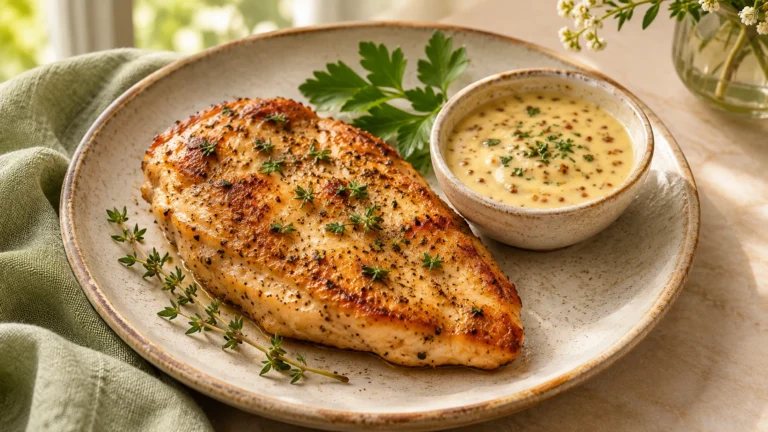
Choose apple cider vinegar for a fruitier, rounder chicken glaze or braise. Choose food-grade distilled white vinegar when you want a sharper, more neutral acidity. Read each bottle's labeled strength before swapping. Test a small amount in a clean portion of sauce, and keep any sauce you taste or serve separate from raw chicken.
Read the type and strength on the bottle
Apple cider vinegar has an apple-derived flavor and can contribute some color. Distilled white vinegar usually presents a more direct acidic taste with less competing aroma. A similarly labeled acidity percentage helps you compare the listed strength. The finished dishes can still taste different because the vinegars have different flavors and the foods contain salt, sugar or fat.
Use cooking vinegar. Avoid cleaning vinegar and other products not labeled for food. Some specialty vinegars are sweetened or diluted. Read the acidity and ingredient list, especially when a recipe already includes honey or salt. The swap here concerns everyday chicken dishes. Follow a tested formulation for a preservation or canning recipe.
Use the right vinegar for the job
| What you notice | What it means | What to do |
|---|---|---|
| Glaze needs fruity acidity | Cider vinegar can complement maple or honey. | Test a little in a clean portion before reducing. |
| Ginger and garlic should lead | Food-grade distilled white vinegar adds direct sharpness. | Check the acidity percentage and add in small increments. |
| Marinade is already strong | More acid can change the chicken surface and its taste. | Follow a method that suits the cut and keep it cold. |
| Finished plate only needs lift | A full recipe change may be unnecessary. | Try a few drops on one cooked portion, with its intended sides. |
When comparing the two vinegars, use bowls of the same base and track the amount you add. Check one uncooked clean sample and one prepared according to the recipe when both tasks matter. A vinegar that seems harsh in the bowl may fit after cooking and serving with rice, while a fruity vinegar may be more detectable than you expected.
Match the vinegar to a glaze, braise or marinade
In a sweet glaze, cider vinegar can complement apple, maple or honey. Distilled white vinegar can provide a clean counterpoint when ginger and garlic should lead. Taste a clean sample with the planned sweetener before reducing. Acid and sugar can seem stronger as the sauce loses water, so review the mixture near serving temperature as well.
In a braise, use the type named in the recipe and adjust only after tasting the cooked sauce safely. A neutral white vinegar may fit a dish designed around a clean, tangy flavor. If you want a softer apple note, make a small clean test before changing the whole pot. Longer cooking, sauce volume and seasoning all affect how the acidity comes through.
For a marinade, follow a recipe for the cut and duration. Cider vinegar or distilled white vinegar can give the surface a different flavor even when both bottles show the same percentage. Keep the chicken refrigerated. Salt, time and cut thickness affect the outcome separately. Increasing acid without a recipe can change the surface texture while leaving the center tasting about the same.
Compare a real glaze method with a separate clean sample
HCCR's sticky honey-garlic chicken thighs provide an example of vinegar mixed with honey, water, a savory seasoning and cornstarch before the sauce meets the chicken. Keeping a test portion separate gives you a chance to taste the balance first. For a vinegar comparison, use two small clean portions with identical sweet and salty ingredients, then add a little of each bottle in separate bowls. Record the amounts.
Warm each clean sample if the recipe calls for a cooked glaze. Use the same temperature and taste afterward with clean spoons. Cider vinegar may bring a noticeable fruit note. White vinegar may taste brighter or sharper. If one dominates, test a little more of the unsweetened base rather than masking it with a large dose of sugar. Scale the change gradually according to how the finished dish should taste.
Keep raw chicken separate from any tasting
Mix your clean sample before marinating. Use clean tools and store any reserved portion away from the raw chicken. If marinade has touched raw poultry, do not taste it. Discard it or follow USDA's instructions for boiling it if the recipe calls for using it as a cooked sauce. Poultry needs 165°F (74°C) in the thickest relevant meat.
Vinegar changes flavor and some surface qualities. It is not a substitute for cooking, clean tools or prompt refrigeration. Brush cooked chicken only with reserved clean sauce or a properly cooked sauce. Avoid dipping a used raw chicken brush into the serving glaze.
Finish a small serving first
Spoon a little vinegar-adjusted sauce over a piece of fully cooked chicken and taste it with the intended side. A sharp sauce on its own can be balanced over plain rice. An already tangy side may make even a gentle sauce taste stronger. Keep the first test small enough to avoid committing the whole pot.
If you choose a swap for convenience, note the vinegar and strength on the recipe. If you chose it because the chicken was too rich, a few drops of clean vinegar at serving may achieve the effect without changing the marinade at all. The stage where you add it can matter as much as the bottle you choose.
Use a chicken and white rice recipe to compare how much vinegar you notice once the sauce is on plain rice.
Repeat the test on the finished dish
Take two small portions of glaze from a clean base and use the same measure of food-grade vinegar at comparable labeled strength. Warm both as the recipe directs, then taste each on a cooked bite with the same side. The comparison can help you tell whether a fruit note suits the dish or whether you want a more neutral sharpness. Give each sample the same time to cool before tasting, because very hot samples can make smaller differences hard to judge.
For a braise, reserve the test for a portion of the finished cooking liquid. If the recipe already contains vinegar, there may be enough acid in the base. For chicken served with a dressing, taste the chicken with and without the dressing before adding another acid. Measure the first addition so it is easy to repeat, then adjust one portion rather than the entire batch. Keep clean sample dishes away from all raw-contact tools.
A change in vinegar can also alter the color of a pale sauce. If presentation matters, compare the glaze on a white plate. The darker one may fit a braise even when you prefer the lighter option for chicken and rice.
Avoid testing a swap against an unbalanced base
Start with the flavor the recipe intends before replacing the vinegar. If the sauce lacks salt or is already very sweet, a vinegar comparison alone may make both options seem unsuitable. Taste a little base, correct one issue in a clean sample and then introduce one of the vinegars. Try the same correction in the second sample so the difference stays meaningful.
For a chicken marinade, judge the overall dinner after cooking, since a very sharp liquid does not always produce a strongly acidic bite. Let the food finish safely, then taste it plain and with the intended side. A reserved sauce added at service is an easier point to adjust for diners who want extra tang. Keep the raw marinade handling separate from that finishing decision.
Watch for the difference between sharpness and volume
A teaspoon of vinegar tasted alone reveals little about the whole sauce. Try it mixed into a small measured amount of the other ingredients and compare the aroma after the mixture warms. When acid is added at the end, it can taste more prominent than the same amount cooked with the other liquids. Retest after you decide where in the sequence it belongs. For a braise with vinegar as a central ingredient, use a published recipe and make only a modest clean finishing adjustment until you know how the original result tastes.
Sources and references
Frequently asked questions
Can I substitute white vinegar for apple cider vinegar?
Often you can in ordinary cooking when the strength is comparable and the flavor fits. Test a clean portion before changing the full recipe.
Does apple cider vinegar always taste milder?
It can taste rounder because of its apple character, but acidity and taste vary by product and dish. Read the label and compare.
Does vinegar make raw chicken safe?
No. Follow safe handling and verify 165°F (74°C) when cooking chicken.
Can I use cleaning vinegar?
Use products labeled for food. Cleaning products can have a different strength and may be unsuitable for cooking.
What if the glaze tastes too sharp?
Try diluting a clean sample with more of the compatible sauce base, then taste it with the chicken.
Does the same swap apply to canning?
Follow a tested preservation recipe and its specified acid type and strength. These comparisons are for ordinary cooked meals.