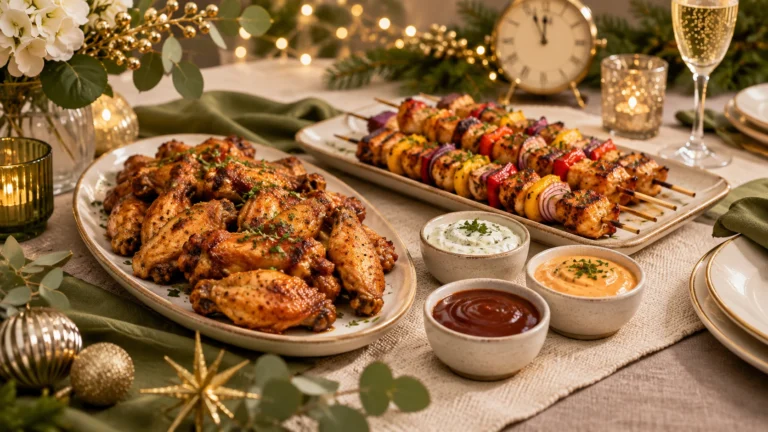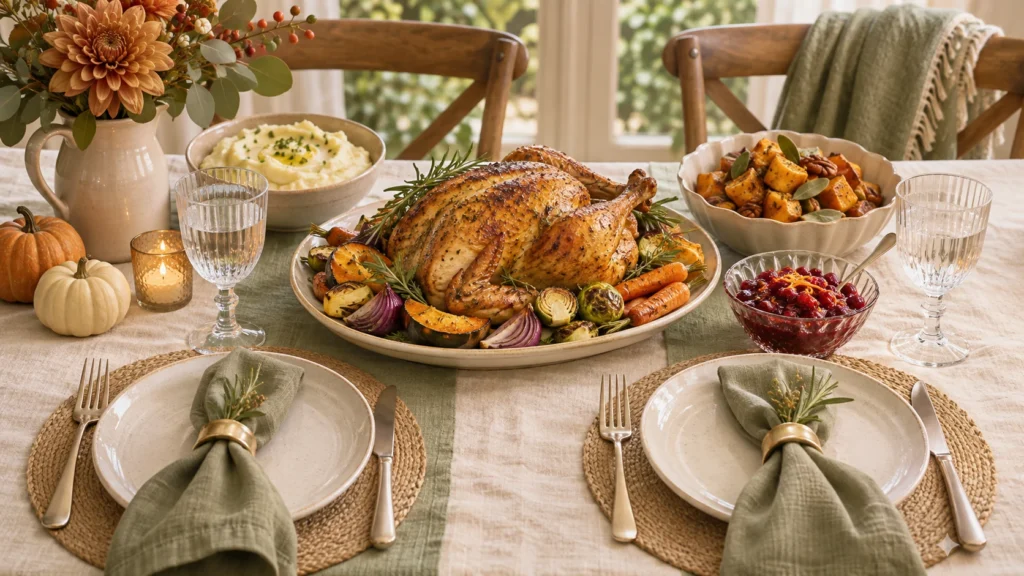
For a small Thanksgiving, roast a chicken that fits your pan and oven, or cook bone-in pieces if you want less carving and more flexibility. Add two sides that can finish outside the oven, such as mashed potatoes and green beans. Plan the table and carving before the main is ready so everything can be served warm.
Choose a whole bird or pieces by space and preference
A whole roast chicken suits guests who enjoy both breast and dark meat and want a centerpiece to carve. Check the size of the pan and the rack clearance with the oven cool. Leave space for safe handling and the recipe's intended setup. A smaller oven or narrow pan may be easier to use with several bone-in thighs, split breasts or a tested recipe for individual pieces. Purchase the mix your guests are likely to eat rather than relying on a single weight recommendation.
Think about leftovers before shopping. A whole bird may provide extra meat if your diners usually take smaller portions. Pieces can be easier to count when you know everyone wants a particular cut. Check actual piece sizes in the package, because one very small thigh or breast half may be a different serving from the next. If you are using a standard recipe, use its yield as a reference and adjust for the sides and appetites at your table.
Fit the roast chicken to the table
| Situation | What to do |
|---|---|
| Whole chicken | Check pan clearance, thermometer placement and carving space. |
| Individual pieces | Choose the cuts guests want and check thick pieces separately. |
| One oven and two burners | Roast chicken and put potatoes and green beans on the stove. |
Plan a two-side menu that leaves the oven free
Try roast chicken, mashed potatoes, green beans and a small dish of cranberry relish. All the sides can be prepared without a second oven rack. Mashed potatoes can use a saucepan, and beans can be steamed near the end of cooking. If you want oven-roasted vegetables, put them on their own appropriately placed tray or choose a tested one-pan recipe. Prevent raw poultry juices from contaminating vegetables or ready-to-eat garnishes.
For two diners, choose simpler portions and arrange the chicken and sides on individual plates. For four to six, use a serving platter and put hot sides in dishes you can reach without moving the carving board. A salad or prepared chilled relish can replace a hot side when burner space is tight. Choose the sides based on when they need to be stirred, checked or drained, as well as their total cooking time.
Set the cooking and serving order
Move a frozen chicken to the refrigerator with enough time to thaw, using a container to catch drips. A whole bird is usually slower to thaw than loose pieces. Keep it away from ready-to-eat foods, and use the thawed raw poultry within USDA's window. If using cold-water or microwave thawing as directed, cook immediately afterward. Read the roast recipe to estimate when to start preheating, when to check the bird and how long to allow for carving.
On the day, make chilled sides first and put out clean serving dishes. Start the chicken according to its recipe, then begin stovetop sides with the oven doing most of the work. Use a food thermometer. For a whole chicken, check the innermost thigh and wing and thickest part of the breast for at least 165°F (74°C), keeping the sensor away from bone. For pieces, check the thickest meat and remove pieces once they are ready. Allow any recipe-directed rest before carving.
Make carving a separate task
Find a stable clean board with room around it and a clean platter nearby. The board and knife used for raw poultry need to be washed before they touch cooked food. Remove the legs at the natural joint, separate thighs and drumsticks if desired, and take the breasts off the bone so you can slice against the grain. Arrange light and dark meat so people can take what they prefer. If carving whole birds is unfamiliar, serving individual pieces can make dinner easier.
When plating with sauce, leave some of the chicken surface dry if people like the browned skin. Keep a small bowl for pan juices or safely prepared gravy. If reheating stored gravy, bring it to a boil. Serve cold relish separately so it remains cool. Check hot food stays at 140°F (60°C) or above if it has to wait for guests. The sides can come to the table once the carving station is clear.
Use an example schedule for a small table
Imagine four people, one oven and two burners. Roast a chicken using your chosen recipe. Start the potatoes during the roast's last stage and set a small pot or steamer ready for beans. Stir or drain the sides while the bird rests according to the recipe, then carve. If the chicken needs more time after its first temperature check, delay the beans and hold the potatoes safely. Start the beans only when you can finish the rest of dinner without rushing.
If you are cooking pieces, the same sides work with a simpler serving routine. Count the largest pieces before choosing where they go on the tray, check each thick section and serve them with a small bowl of pan sauce. A recipe with mixed cuts may require different timing. Let the actual temperature tell you when the main is ready.
Put planned leftovers away before the evening ends
Refrigerate eligible perishables promptly within two hours, or within one hour above 90°F (32°C). Divide chicken and sides into shallow containers rather than waiting for a whole bird to cool on the table. Use most cooked refrigerated leftovers within three to four days at 40°F (4°C) or below. Freeze eligible portions sooner if you need them later. Label the original cook date and warm hot leftovers to 165°F.
For a next-day meal, save a small portion of carved chicken with potatoes or beans, and hold chilled relish separately. Chicken pieces also work as a sandwich filling when fully cooked, safely chilled and within the original storage window. Planning one use for leftovers makes it easier to portion and store the meat while you clean up.
Scale dinner without filling the oven
For two guests who prefer dark meat, a small recipe for bone-in thighs may give you all the roast flavor you want with more room for sides. With a whole bird, choose a pan with enough room to catch juices and a board large enough to carve comfortably. Keep the side quantities modest and plan one leftover use. If the oven is smaller than expected, put potatoes on the stove and leave the beans or salad to finish at the end. The menu still works when only one pan can roast.
Sources
Frequently asked questions
Is a whole chicken enough for a small Thanksgiving?
Check your recipe's yield, the sides and guest appetites. For a group that wants specific cuts, pieces let you count servings.
What sides can I make on the stovetop?
Mashed potatoes and steamed green beans make a simple pair. A chilled relish needs no burner.
How do I check that the whole chicken is cooked?
Check 165°F in the thickest breast and innermost thigh and wing, avoiding bone.
Can I roast pieces instead of a whole bird?
Yes. Use a recipe written for those pieces and check the thickest part of each.
What if the main is running late?
Delay quick sides or hold cooked ones safely, and wait for the chicken to reach temperature.
How should I save leftover roast chicken?
Carve and refrigerate it promptly in shallow portions. Reheat hot leftovers to 165°F.