
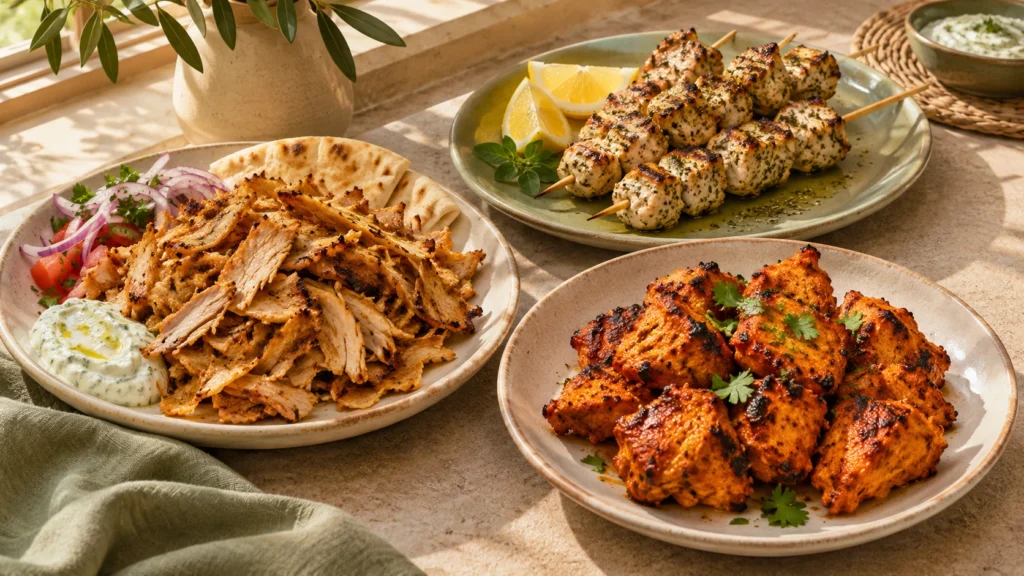
Choose shawarma for warmly spiced sliced chicken suited to a wrap or platter, souvlaki for lemon-and-herb skewers, and tikka for marinated chunks with a more layered spice finish. The representative recipes use different seasonings and service styles, though all three can be adapted for a home grill. Shop by the cut, marinade and method of the example you want to cook.
Compare the seasonings and what the heat does
Chicken shawarma can be cooked on a vertical rotisserie and sliced from the outside as it cooks. A home version may use a compact stack, a grill, oven or skillet to produce similarly spiced cooked pieces. Representative shawarma recipes often use warm spices such as cumin and coriander, though actual blends differ. Follow the source’s choice of cut and order of slicing. A whole stack and a set of thin pieces are different cooking tasks.
Souvlaki in the Good Food example uses chicken pieces seasoned with lemon, oil, garlic and herbs, threaded and cooked as skewers. Its fresh citrus and herb taste can stand out more than a warm spice blend. If oregano is the main dried herb, use it in the amount called for and taste extra lemon separately. A side with cucumber or yogurt can support the dish without needing to imitate the marinade.
Chicken tikka often uses boneless pieces with a spiced marinade. The representative Good Food skewer recipe uses a tikka paste and yogurt. Exact spice blends, heat and dairy ingredients can vary. At home, suitable recipes can use a grill or broiler. The cooked chunks are often served on their own with a garnish. Chicken tikka masala is a different serving format because it adds sauce.
| Feature | Shawarma-style example | Souvlaki example | Tikka skewer example |
|---|---|---|---|
| Notable flavor | Warm spices, aromatic and savory | Lemon, garlic and herbs | Marinated with a distinct spice blend |
| Piece shape | Cooked pieces often sliced or shaved for serving | Boneless chunks on skewers | Boneless marinated chunks |
| Equipment | Vertical rotisserie or a suitable home adaptation | Grill, broiler or other specified skewer method | Grill or broiler as specified |
| Straightforward serving | Wrap or mixed plate | Skewers or pita with sides | Starter, skewer plate or sandwich adaptation |
Choose a format for the table
A wrap is particularly convenient when the cooked shawarma-style chicken is sliced thin enough to spread across bread. Start with a flatbread suitable for wrapping and a deliberate amount of chicken, then add a crisp vegetable or a suitable prepared sauce. The bread and garnish should be ready before the chicken is sliced. Keep wet toppings in their own dishes to avoid making the wrap difficult to handle.
A souvlaki plate can make the skewer the main visual element. Offer a mild grain, potatoes or bread beside a sliced cucumber and tomato side. Use a clean cooked-food plate. Remove the chicken from the skewers if that makes it easier or safer for diners to eat. Choose cold accompaniments that do not require the grill. If you want a pita, use a small number of pieces and balance them with chopped vegetables and sauce.
Tikka works in either a starter or a main. Arrange a few cooked pieces with salad and a separately prepared dressing. For dinner, choose a starch or flatbread and a fresh side. It can be wrapped if you cut particularly large cooked pieces into a workable size. If you want a pourable sauce, add a separate accompaniment or look for a complete sauced recipe instead of trying to stretch the marinade.
Choose by the pantry you have today
If there is lemon, oregano, garlic and oil available, the souvlaki direction is a useful starting point. With warm ground spices, consider a home shawarma preparation suitable for your poultry cut. If you have a tikka spice blend or paste and appropriate marinade ingredients, choose a recipe that gives you the right proportions. Check salt and heat in any blend before adding more. A substitute should fit the method as well as the intended flavor.
Pick the chicken by the recipe rather than using one cut everywhere and hoping the timings still match. Boneless thighs and breasts can be cut into chunks, but the shape and size affect how they cook. A stack of meat for a rotisserie-style adaptation behaves differently from single skewers. Check the appliance’s directions and use clean utensils and serving dishes. Do not rely on a charred surface to establish whether the chicken is cooked through.
For related plate and wrap ideas, browse Mediterranean & Middle Eastern Chicken Recipes.
Set up a clean cooking and serving sequence
Marinate raw chicken in the refrigerator. Set aside a clean portion of any sauce needed at serving before the marinade touches raw poultry. Prepare vegetables and bread away from raw prep. Check that any skewers are intended for the chosen heat and follow the cooking method for their use. Have a clean cooked-food tray waiting and use suitable tongs.
Check chicken at 165°F (74°C) in the thickest parts, without the thermometer touching bone or a skewer. Check a few different pieces. If you have both an open grill and a broiler option, pick the one the recipe explains most clearly. Place a bowl of chopped vegetables and a separate sauce at the table. The cooked chicken can go straight into a plate, and people can assemble wraps themselves if they want.
For a group with different appetites, serve one protein and offer more than one presentation. Keep the finished seasonings distinct by leaving dips on the side. A small meal can be skewers with a plate of cucumber, while a fuller one can add flatbread and rice. Refrigerate leftover perishables promptly and reheat cooked chicken to 165°F when serving it hot. Store wet toppings separately to preserve texture.
Three ways to make the choice quickly
With a grill, boneless chunks and lemon, choose a suitable souvlaki recipe. With warm spices and a skillet, look for a shawarma-style adaptation designed for a skillet and serve it sliced. With a tikka paste and a broiler, use a skewer recipe that tells you where to place the rack. These choices describe the examples and their practical differences. The dishes also have variations beyond the methods shown here.
Run a small tasting without cooking three full meals
Choose one small preparation of each dish if you have the time and equipment. Keep the side neutral, such as plain bread or a dish of cucumber. Taste the chicken before dipping it. In shawarma, notice the warm seasoning along the sliced surfaces. In souvlaki, check which parts of the bite bring out lemon and oregano. In tikka, notice the spiced coating and the browned edges. Use a complete recipe for each dish and keep the preparations separate. A common side helps the differences remain easy to notice.
If you want an easier comparison over three meals, choose the same type of plate and change only the chicken and its appropriate garnish. Try shaved or sliced chicken in a wrap first. Serve the souvlaki on a skewer plate with lemon or a cool accompaniment. Give tikka a fresh herb or a separate dressing that fits the recipe. This is a comparison of eating formats, not a claim that any one side defines a dish. The decision for a busy week is whether thin slices or bite-sized pieces make the service easier.
Consider what happens at a mixed table. A plate lets guests see and choose the chicken, starch and fresh ingredients. A wrap gives them less control once the sauce goes in, so limit the initial amount and offer more separately. A skewer means you should give people a stable plate or take the pieces off cleanly for them. A single dish can support all those options after it is cooked. That matters if some diners want a larger meal and others want only a starter.
If you have only one hot surface for the entire meal, choose cold toppings that suit the main’s dominant flavor. Warm bread according to its directions if there is time, or serve a suitable ready-to-eat option. Get the cucumber or greens chilled before handling poultry and add herbs on clean plates. Choose the format that best fits the strength of your seasoning, the chicken shape and the available tools.
For tikka-style ideas, browse Indian & Pakistani Chicken Recipes.
For more on thermometer use and storing cooked chicken, see the HCCR chicken food safety guide.
Sources and references
Frequently asked questions
Can all three be served in wraps?
Yes. Slice or remove fully cooked chicken from the skewers as needed, add a crisp vegetable and use a modest amount of sauce.
Which example best fits a grill?
The souvlaki and tikka skewer examples are straightforward grill options when the recipe supports it. A shawarma-style grill preparation can also work.
Is tikka usually hotter than souvlaki?
Heat depends on the blend or paste used. Taste the planned seasonings or check labels before assuming how much chile a dish contains.
Which is easiest to make without specialized equipment?
Choose the recipe written for the cookware you have. A skillet shawarma-style method or a broiler skewer recipe avoids needing a vertical rotisserie or tandoor.


