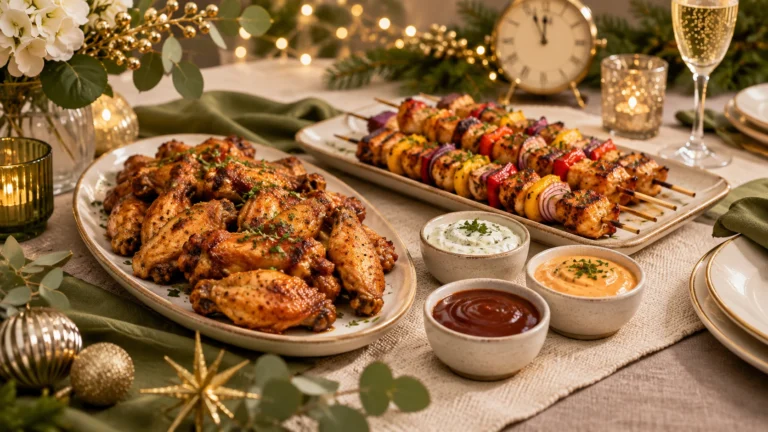
For an Eid al-Fitr meal with guests, choose one main chicken dish, one starch and one fresh side before deciding whether you need a second main. Share prep such as onions, garlic, ginger or herbs across dishes, then finish each differently. Use the local Eid announcement for the date, and plan to replenish small platters while safely holding the rest.
Plan for the full meal and the guests you expect
This example is an Eid al-Fitr lunch or dinner served family-style. Check the local community’s Eid date and your guests’ arrival plans. The observance marks the end of Ramadan, and local announcements can differ with the approach to moon sighting. Work backward from the confirmed time, using a plan that can handle guests arriving in waves. The food here is one flexible household menu, and different households and regions may choose other dishes.
Start with the main dish and its recipe yield. Count the guests expected at the meal, the appetite range, and how many other substantial dishes will be served. If you have a starch, a starter and dessert, the initial chicken portion per guest may be smaller than if chicken and rice are the entire meal. Bone-in pieces take more platter room and contain less edible meat per piece than their weights suggest. A second main changes how you assign portions.
For example, if a recipe makes four full main servings and chicken will be the only main for eight adults, planning around two full recipe yields is a reasonable starting point. If you also have another main, decide whether most guests will sample both, and use smaller first portions with enough reserve for seconds. Check whether scaling the ingredients also requires separate batches. Two batches can give you more consistent browning or sauce reduction than doubling everything in a single crowded pot.
| Menu layout | Shared prep | Distinct finish | Serving advantage |
|---|---|---|---|
| Tomato-based chicken curry and rice | Chopped onion, garlic and ginger | Tomato and the curry’s own seasoning | One main cooked and served from a pot |
| Chicken korma and fresh salad | Portion aromatics and washed herbs | Creamy or nut-based finish where the recipe uses it | Sauce portions easily with rice or bread |
| Roasted chicken and sauced second main | Split chopped aromatics early | Dry oven roast and a separate stovetop sauce | Uses different heat sources |
| One chicken main and two sides | Herbs and fresh vegetables | Plain grain plus a brighter salad | Fewer last-minute hot dishes |
Use one prep session and separate finishes
Chop onions, measure garlic and ginger, and wash herbs before bringing raw chicken into the prep area. Divide each ingredient into the amounts the recipes call for, and label the bowls. Put more fragrant herbs aside for serving if the recipes use them differently. Shared prep works best with individual ingredients that each recipe can handle in its own order. A common sauce may create two dishes that taste similar and may conflict with the method.
For example, start with roasted portions using a dry or lightly glazed finish from their recipe, then build a stovetop chicken curry with its own liquid and spices. If a second chicken main feels unnecessary, use some of the ginger or herbs to season rice instead. A relaxed menu can have one rich main, a mild starch and a crisp chopped salad. Offer extra chile, chutney or herbs separately so people can adjust their plate without changing the entire meal.
If curry and korma are on the same table, give them different seasoning and serving roles. A brightly seasoned tomato-based dish can sit alongside a milder creamy one if you have enough stove space to finish both. Check the recipes and ingredient labels, especially when guests avoid dairy or nuts. Use appropriate clean, separate equipment where required. A second main needs a second serving utensil, space and a safe holding plan.
Put the equipment next to the menu
Write down the oven and burners you can use. One chicken recipe can take a tray and another can use a burner. Rice may need its own saucepan or cooker. The salad can stay chilled in the fridge. If the sequence has several dishes reaching a critical stage at once, simplify which ones you are preparing. Choose a fully cooked main that can reheat well, and keep a strongly time-sensitive dish fresh on the day.
One or two days ahead, buy ingredients, check dish sizes and confirm refrigerator space. Make dressings and prep ingredients according to storage needs. A cooked sauced main can be prepared ahead if cooled promptly in shallow containers and chilled at 40°F (4°C) or below. Most cooked refrigerated leftovers should be used within three to four days. Reheat hot leftovers to 165°F (74°C) and bring reheated sauces to a boil according to USDA guidance.
On the day, start the longest recipe first and set up your serving area before the final temperature checks. Poultry needs 165°F in the thickest parts. Separate raw poultry tools from clean serving equipment. Keep cold sides chilled and prepare an extra clean platter and spoon for the next round. Put out bread and other nonperishable items when appropriate so the hot line stays simple.
For other styles of chicken, browse Indian & Pakistani Chicken Recipes.
Replenish rather than filling the whole table at once
Place a manageable first portion of each main on the table. Check what has been taken before bringing out more. A small platter is easier to lift and gives you more flexibility when guests arrive later. Hold hot food at 140°F (60°C) or above and cold perishable food at 40°F or below. Use a thermometer to verify both where necessary and replace used serving dishes with clean ones. Avoid adding fresh food to a dish that has been sitting out.
Set a time limit for dishes without temperature control. Refrigerate perishables promptly and within two hours, or one hour if the surroundings are above 90°F (32°C). Discard food that has been out beyond that limit. Separate the safely held reserve from the served dishes and date it from when it was originally cooked. If guests ask to take food home, portion it from safely handled food and account for how it will stay at a safe temperature on the way.
Example with six guests and one oven
Roast enough portions for the table, and use a pot or rice cooker for a shared starch. Make cucumber salad and a separate dressing earlier. Use garlic and herbs in the chicken and a little fresh herb in the salad, leaving the flavors of the main and side distinct. Serve one platter of chicken and keep the remaining portions under safe temperature control. If you want a second sauced main, cook it ahead only if you can cool, reheat and hold it safely.
Scale capacity before scaling ingredients
A recipe that fits a skillet for six might need two batches for twelve, even when you can double every ingredient. Compare usable cooking area and depth, and check whether the recipe is suitable for doubling. Leave a place to set a finished hot batch and clean the pan if the next method calls for a fresh start. When scaling rice, use a vessel large enough for expansion and follow the method’s liquid and batch guidance.
For a meal where many people arrive at once, put the bread, fresh sides and plates out first as appropriate. Give the main its own serving station and put drinks somewhere else so people collecting water do not hold up the food. If there will be a break before eating, keep cold dishes chilled and hold suitable hot dishes safely. Set out the first cooked chicken platter only once people are ready to serve themselves.
Ask a helper to take charge of the chilled food or the second platter. Give them the target holding temperatures and the time the first dish went out. If the group is smaller than planned, keep the extra food safely stored and skip the second serving dish. Label any portions for guests or the next day with the original date, and use shallow containers for prompt refrigeration.
For a starch-led serving format, browse Chicken and Rice Recipes.
For more on thermometer use and storing cooked chicken, see the HCCR chicken food safety guide.
Sources and references
Frequently asked questions
How can two dishes share prep without tasting alike?
Portion common aromatics before cooking, then give each dish its own seasoning, liquid and finishing method. A roast and a stovetop curry are one option.
Which components are easiest to serve to a group?
Portioned chicken, a large bowl of rice or bread, and a separate chilled salad pass easily with dedicated utensils.
Which Eid date should I use?
Confirm the local Eid al-Fitr announcement your household follows, then schedule the meal around the agreed gathering time.
Should I double both chicken recipes for more guests?
Estimate the share of each main across the full menu. Scale up only what you need and cook in separate batches when the equipment cannot handle a larger load.