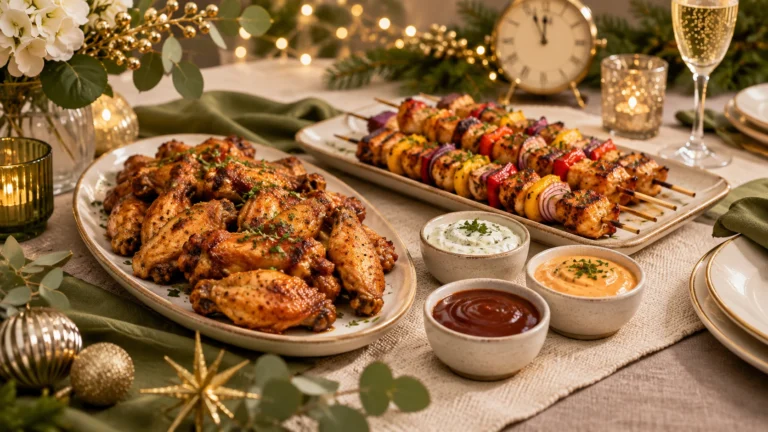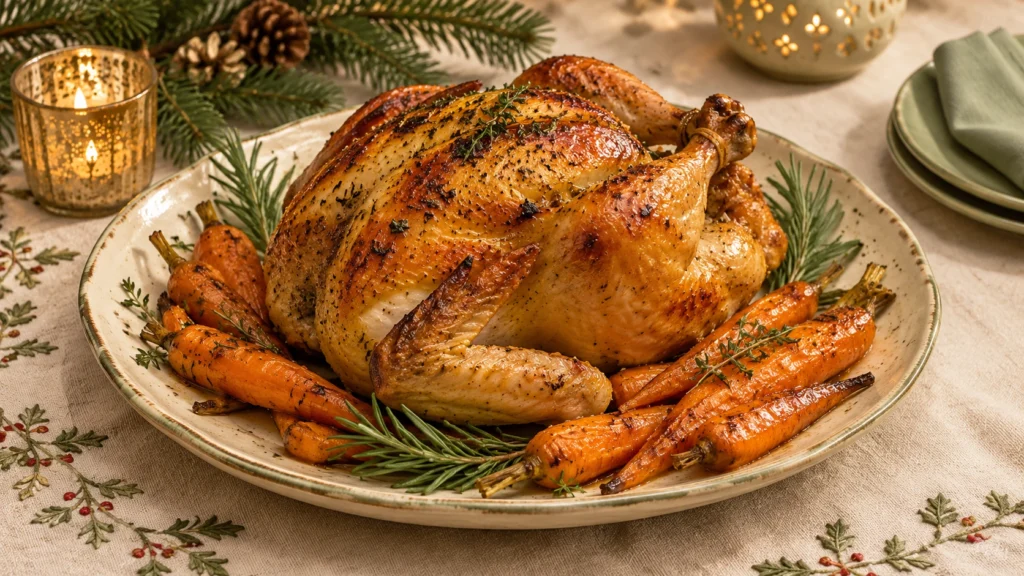
For a small Christmas dinner, roast a small whole chicken if carving at the table matters to you. Choose chicken portions when you want simpler serving, or a sheet-pan dinner when the oven has room for only one tray. Pick one stovetop side and one chilled or make-ahead dish. Confirm the chicken’s temperature before serving, and leave time for a late finish.
Pick the format before buying the sides
A whole bird gives the table a centerpiece and lets people choose white or dark meat. Look at the actual pan you will use and check that the oven rack can hold it with room around it. Compare the recipe’s serving yield with your guest list. If everyone prefers the same cut, a whole bird may leave more of the other cuts than your table wants. A small bird can still be a good choice if you have a definite plan for the leftovers.
Portions fit a table where people want predictable servings. Bone-in quarters bring a generous leg portion and take up more space than a thigh alone. Breast portions may suit diners who prefer white meat. Try to buy pieces of comparable size if cooking them together. When baking mixed cuts, select a method designed for them, check pieces individually and remove each cooked piece when it reaches the minimum temperature.
A tray meal makes sense when the oven has only one usable shelf. Choose a recipe that accounts for the cut, vegetable size and order of addition. Dense potatoes and carrots might need an earlier start, especially when paired with small boneless pieces. Check that everything fits in a single layer with space for the air to circulate. If it looks crowded before you begin, move a side to the stove.
| Format | Good fit | Oven plan | Side that frees space |
|---|---|---|---|
| Small whole roast | Diners want both light and dark meat | Reserve a stable pan and a carving area | Boiled potatoes or a chilled salad |
| Bone-in portions | People prefer an easy serving cut | Leave space between pieces | Stovetop greens |
| Sheet-pan dinner | One shelf needs to handle the main and a side | Choose a recipe with compatible sizes and timing | Chilled cabbage salad |
| Small boneless portions | Two diners want little carving or leftover meat | Check each piece early in the recipe window | Stove-cooked grain |
Build a menu for two or for four to six
For two, try two portions of the cut you like, a little pan sauce or clean serving sauce, and potatoes or couscous. Add cabbage, cucumber or a crisp green vegetable. A small baking dish can keep the oven plan simple, but check how much airflow the recipe expects. If you would rather serve a bird, buy a size appropriate to the recipe and plan to cool and store the extra meat shortly after dinner.
For four to six, decide whether the group wants a carve-at-table bird or portions ready to pass. Match the recipe yield to adult and child appetites. One roast, a starch and two vegetable options can be plenty if there are starters and dessert. If the only main is chicken and people expect seconds, choose enough portions for that and check that the pan still fits them with room. A chilled side also gives you something ready while you deal with the roast.
Keep the side menu flexible. With only two burners, rice or potatoes can use one while gravy or greens use the other. If both warm sides need finishing at once, substitute a cold salad for one. If the main will give you only a little pan juice, plan on a light dressing or an appropriate prepared sauce instead of relying on a large batch of drippings. Put gravy on the table separately to keep crisp skin drier.
Plan ahead without cooking everything twice
A few days before Christmas, check your guest count, defrosting plan and pan fit. Follow safe refrigerator thawing for a frozen bird, allowing enough time for its size. Buy dry goods and decide how the meal will get to the table. A day ahead, chill a sturdy cold side in a clean covered container, mix its dressing separately, or make a cooked side that has a clear cooling and reheating plan. Cut delicate garnishes closer to serving.
Refrigerate cooked perishable make-ahead foods promptly in shallow containers. Use a fridge at 40°F (4°C) or below. USDA recommends using most cooked leftovers within three to four days. When serving cooked leftovers hot, reheat them to 165°F (74°C). Label the container with the cooking date and put the instructions beside your serving timeline. A dish made early still needs time and equipment to reheat.
Avoid partial cooking of chicken with the intention of finishing it later. If you need to get ahead, prepare clean ingredients in advance and cook the chicken through in one sequence. Another workable option is to fully cook an appropriate dish earlier, chill it promptly and reheat it safely. For a roast whose skin is part of the appeal, do your ahead work on the sides and cook the bird on the day.
For an oven method, see Crispy Oven Baked Chicken.
Give the cooking day three checkpoints
First, clear a clean carving board and put out the thermometer, serving platters and trivets. Identify the oven slot and load it according to the recipe. Start the side with the longest unattended cook, usually a grain or potato dish. Keep the chilled salad in the refrigerator and leave its dressing off until people are ready to eat.
Second, check the chicken temperature according to the recipe. Whole poultry should reach 165°F in the thickest part of the breast and the innermost parts of the thigh and wing, with the probe clear of bone. Check the thickest part of individual pieces as well. Give yourself a margin around the expected finish because pan material, cut size and oven behavior all affect timing. If the chicken needs longer, keep cold sides chilled and hot sides held at 140°F (60°C) or above.
Third, finish one or two quick jobs as the cooked chicken rests as directed. Fluff rice, drain potatoes, toss the salad or set out the sauce. If you want to carve at the table, check that there is space for the dishes and the carving utensils. If that looks cumbersome, carve in the kitchen and serve a clean platter of slices and legs. Keeping the carving board clear beats trying to move every hot dish at once.
A practical fallback for a full or slow oven
If the vegetables need more space than expected, move the potatoes to a pot and make one cold vegetable. That leaves the oven available for the chicken. If the roast is done early, choose the sides nearest completion and serve them with the chicken once they are ready. For a delay, hold hot food appropriately or refrigerate it promptly for later reheating. Put leftovers away within two hours, or one hour if the surroundings are above 90°F (32°C).
For a menu that can survive a last-minute guest change, keep a side that scales without a second tray. Couscous, boiled potatoes or a bowl of beans work if they fit the chosen menu. Check the size of your largest clean serving dish before doubling a side. A little extra starch can serve more diners without creating a crowded oven or changing the cooking plan for the poultry.
Check the size of the serving dishes too
A Christmas table can fill up faster than the oven. A whole bird on a wide platter may leave little room for a potatoes bowl and carving board. During prep, put the empty serving dishes in place to see what fits. If the bird will be carved in the kitchen, use a smaller platter with only the first servings. Keep the second helpings in the kitchen within appropriate temperature control. Smaller dishes also make it easier to pass sides without people reaching over the hot roast.
For a dinner with several courses, plan which dish holds the kitchen’s attention. A cold starter and a finished dessert leave a clear window for the bird, potatoes and carving. If a guest offers to bring a side, agree whether it needs reheating before you count it in your menu. Set a separate time for any extra oven work, or ask for a dish that arrives ready to serve.
For alternatives by cut, browse Baked Chicken Recipes.
For more on thermometer use and storing cooked chicken, see the HCCR chicken food safety guide.
Sources and references
Frequently asked questions
What can I serve instead of a large whole roast?
Serve chicken quarters, thighs or breast portions. A tray dinner can cook the main and selected sides together if the recipe allows enough room and uses compatible cooking times.
Which Christmas sides can I make ahead?
Prepare a sturdy chilled salad without its dressing or fully cook a side suitable for reheating. Chill cooked food promptly and reheat hot leftovers to 165°F.
How can I plan Christmas dinner for only two?
Pick two chicken portions, one starch and one fresh vegetable. A small whole bird also works if you want a centerpiece and have a plan for the extra servings.
What if the roast takes longer than planned?
Let it reach the required temperature. Keep cold sides chilled and hold hot sides at 140°F or above, or chill and reheat them safely if the delay will be longer.