
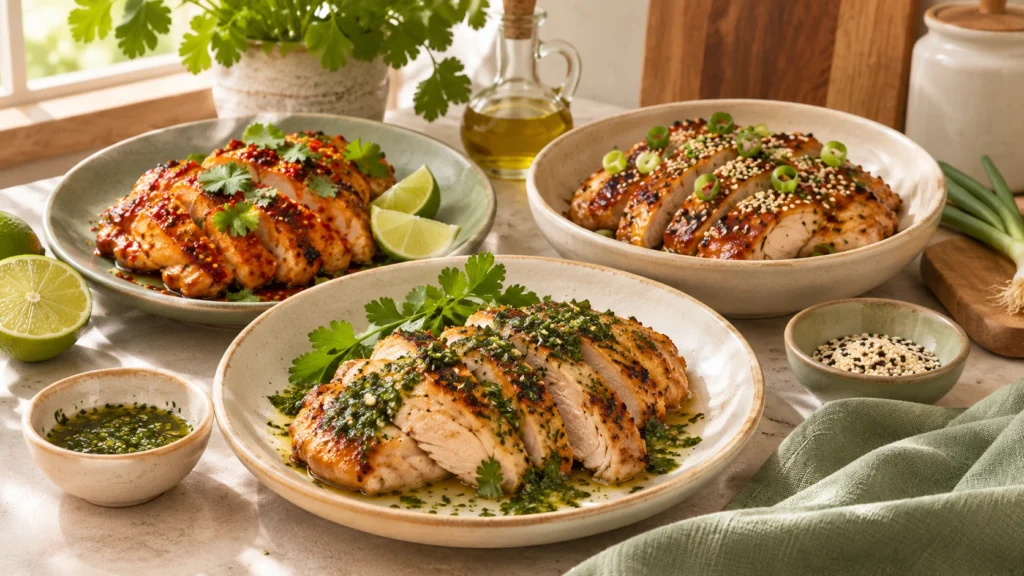
Cook a lightly seasoned chicken base, then give each serving its own finish. Try a bright herb dressing, a chili-lime topping, or a sesame-style sauce with fresh crunch. Keep sauces and crunchy vegetables separate until serving. Refrigerate the portions you will use within three to four days, freeze the later ones promptly, and reheat hot leftovers to 165°F (74°C).
Choose a base that supports several finishes
Start with a recipe that gives you fully cooked plain or gently seasoned chicken. Use the cut that makes sense for your meals. Sliced breast is convenient for cold wraps or plates. Shredded chicken can fit tacos or bowls. Boneless thighs may work well for a richer finish, but choose a recipe written for that cut. Cook the chicken to 165°F (74°C), then divide it before adding a strong dressing or sauce. A distinct finish stays easier to plan when it has not already been mixed into every portion.
Check the ingredients on pre-seasoned chicken, stocks and spice blends. A strongly salted base gives each finish less flexibility. If you will use a prepared sweet sauce, taste it with a cooked bite before adding extra salt. If one meal needs a particular allergen avoided, verify ingredients and separate preparation as appropriate. A light flavor is not a sign that a prepared chicken or sauce is suitable for every diner. Use clean tools for portions that are ready to eat.
| Finish | Best use | Keep separate until serving |
|---|---|---|
| Lemon and herb dressing | Chicken and rice bowl, salad or wrap | Dressing and tender herbs |
| Chili-lime | Tacos with cooked shredded chicken | Chili condiment, lime and crunchy slaw |
| Sesame-style sauce | Warm bowl with sliced or chopped chicken | Sauce, fresh crunch and seeds if suitable |
| Plain reserve | An unplanned meal later | Any optional dressing or garnish |
Finish 1 — Bright herbs and fresh crunch
Use a little lemon and a suitable herb dressing with gently seasoned chicken. For a warm bowl, reheat the cooked chicken and any leftover grain to 165°F (74°C) before adding the finish. Dress the chicken just before serving so you can taste one portion rather than coating the whole batch. Add cold cucumber, cabbage or a compatible ready-to-eat vegetable at the end. Use a clean spoon and refrigerate unused prepared dressings according to their requirements.
For a cold wrap, use properly chilled, safely stored chicken. Slice it thinly on a clean board and add a small amount of dressing, with the greens just before wrapping. If you are packing lunch, carry the components cold and dress the wrap at serving when possible. A wrap can get soggy if it sits against a wet topping. You can use the same herb finish in a bowl when you run out of tortillas.
For a contrasting flavor combination, compare Honey Garlic Chicken Thighs.
Finish 2 — Chili-lime without making the whole batch hot
Heat only the chicken portion you want to serve warm. Choose a clean chili condiment and add a little lime or a recipe-appropriate acid if desired. Put the sauce on your own taco or the side of a bowl. That keeps other servings available for people who prefer less heat. Offer shredded cabbage or a simple slaw as a separate crunchy component. Adjust heat by the amount served rather than seasoning the entire week’s chicken the same way.
A chili sauce can contain salt or sugar. Taste it with cooked chicken before deciding it needs extra seasoning. If someone wants a mild version, serve a clean portion first and use separate utensils for the hot topping. Plan dietary or allergen precautions separately. A shared bowl of chicken that a sauce spoon has touched may not suit a person who needs to avoid its ingredients.
Finish 3 — Sesame-style sauce for a different texture
Use a compatible sauce with toasted aroma or savory depth, depending on the recipe and what the diners can eat. Read ingredient labels for sesame and other allergens, including soy or wheat where relevant. Stir the sauce as directed and apply it after reheating the chicken, or follow an appropriate recipe if the finish is meant to be warmed. Crushed crisp vegetables, seeds or another suitable garnish can change the texture. Keep the wet sauce and crunch separate until serving.
If your meals are usually rice bowls, vary the form of the chicken as well as the sauce. Serve slices over rice for one meal, shredded chicken in tacos for another and chopped chicken with cold greens later if it has been safely chilled. The same mild preparation can support all three. Serving different textures can make a bigger difference than adding another bottle of sauce to a bowl made exactly the same way.
For other compatible finishes, browse Mexican Chicken Recipes.
Tie the finishes to your storage calendar
Use shallow containers and refrigerate or freeze cooked portions promptly. Keep refrigerated leftovers at 40°F (4°C) or below and use them within three to four days. Freeze anything intended for later while it is still safely handled, ideally on prep day. Make a note of which portions stay plain and which receive a finish. Move a planned frozen portion to the refrigerator in time to thaw, accounting for package thickness. When serving hot, follow suitable reheating directions and verify 165°F (74°C). Refreezing or adding a fresh sauce does not make previously mishandled food safe.
The finishes also have their own storage. Use packaged instructions and keep perishable homemade sauces chilled. Avoid mixing late-week chicken into a dressing you made for an earlier meal without first checking its storage. A clean store-bought condiment may reduce work on a busy day. If a topping takes longer to prepare than the main meal, choose a simple finish you can add just before serving.
Plan three different meals before you divide the chicken
Think about the first meal in which you will use each finish. Reserve slices for the herb wrap and cut the remaining breast or thigh into appropriate pieces for bowls. If the chili-lime version is intended for tacos, use a base that can be shredded as the recipe directs. This is easier to do while portioning with clean tools than trying to make every frozen pack change shape on the day you serve it. Keep the seasoning compatible with the most delicate finish. A heavily spiced base can dominate the herb dressing even if the toppings are distinct.
Give each meal a short assembly note. For the herb bowl, keep the dressing in its own container and add it after safely reheating the chicken. For a chili-lime taco, pack a separate clean portion of the spicy finish and a chilled crunchy vegetable. For the sesame-style bowl, identify the sauce and check any allergen information before putting it in a shared container. A clean fresh garnish can be prepared close to serving, especially if you want it crisp. Put the name or date on each pack so you do not accidentally thaw more than one meal.
For a late-week lunch, freeze the chicken portion on prep day and buy or prepare the cold finish closer to when you will use it. If you do not have a refrigerator at work, take the chilled food in an insulated bag with adequate cold sources. Use a refrigerator at work if possible, and keep the finish cool until assembly. If the meal is served hot, heat only the hot parts. Timing matters more to the crunch than a particular storage container does.
Consider serving the same finish at a different temperature as long as ingredients and handling suit it. A lemon and herb dressing can go on chilled chicken in a wrap, or be added to a safely reheated bowl at the table. A chili topping can go on one hot serving while a second portion stays mild. Try one meal from each group before making a repeat batch. Write down the finish that actually works with your schedule and replace a complicated sauce with a suitable simpler choice if necessary.
Keep the hot and cold utensils distinct on the day you finish. Do not move a spoon from a shared dressing into another person’s portion, particularly when it contains an ingredient they avoid. If you prepare more topping than you need, store a clean untouched amount separately according to its directions. Leave your reserve chicken plain so it can suit the next meal.
For more on thermometer use and storing cooked chicken, see the HCCR chicken food safety guide.
Sources and references
Frequently asked questions
How do I avoid seasoning every serving the same way?
Cook a lightly seasoned base, reserve portions and use distinct sauces or garnishes at the end. Refrigerate or freeze portions based on the day you plan to eat them.
When should I add crunchy toppings?
Add them after reheating hot parts or during final assembly for cold dishes. Pack them separately to preserve their texture.
Can I freeze chicken with sauce?
Yes when the recipe, sauce and packaging are suited to freezing. Freeze plain portions when you want to keep the option of using several finishes.
Can the same batch make bowls and tacos?
Yes. Portion fully cooked chicken and decide which pieces to cut or shred. Use separate starches and finishes, and keep the serving and storage directions clear.


