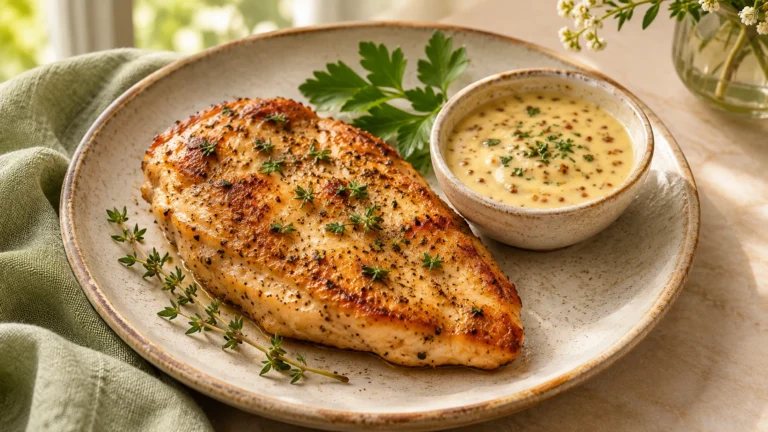
If a chicken dinner is too salty, taste the fully cooked chicken and the sauce separately. Dilute a salty sauce with an unsalted liquid or matching sauce base, and try the change in a spoonful before treating the pan. If the chicken itself is salty, slice or shred it and spread it across unsalted rice, vegetables or another larger dish. A potato will not selectively remove salt.
Find out where the salt is concentrated
Set a little cooked chicken on one plate and a spoonful of sauce on another. Taste a piece from the inside as well as a coated bite. If the inside tastes balanced and the sauce is harsh, work on the sauce. If the center is salty, changing only the sauce may improve the whole bite but leave the meat much as it was. A salty coating can give the same first impression as salt throughout. Remove a small patch of coating from one cooked portion and compare before changing how you serve it.
Look back at the stages that introduced salt. Boxed broth, seasoned crumbs, cured meat, soy sauce, grated cheese, seasoning packets and brined chicken each contribute their own. The sauce may have tasted right early in the cook because there was more water in it. Once it reduces, the same amount of salt is carried in less liquid. If the sauce first seemed harsh after a cheese finish, compare it with a spoonful you set aside before adding the cheese, if available.
| What tastes too salty | Likely leverage | What to try |
|---|---|---|
| Only the sauce | Total sauce volume and concentration | Add unsalted liquid or more unsalted base |
| Mainly the outer coating | How much coating or glaze goes into each bite | Remove some glaze or pair with a plain side |
| Meat all the way through | How much salty chicken goes into each portion | Slice or shred it for a larger unsalted dish |
| Sauce and chicken together | Salt added in more than one place | Use less sauce and serve smaller portions with plain sides |
Test dilution without losing the texture
Start with a spoonful of sauce in a small bowl. Add a little water or unsalted stock, stir and taste it with a bite of what you will serve. Water helps when the sauce already has plenty of flavor and needs only a lower salt concentration. Unsalted stock can suit a chicken gravy or pan sauce when you want to add body or savory character along with liquid. A product described as lower sodium can still add salt, so read its label. If you intend to use dairy or coconut milk, choose one that fits the recipe and test whether it changes the texture.
When the flavor improves but the sauce becomes too thin, consider adding a separately prepared unsalted base in the same style. An unsalted tomato base can add tomato solids and volume to a salty tomato sauce. A new portion of gravy base can supply thickness to an oversalted gravy. If you reduce the diluted sauce back to its original volume, the salt will still be there. Restore body with the recipe’s compatible thickening method or keep the sauce looser and use a smaller amount over the chicken.
Use a measured sample to make the change repeatable
For example, put two tablespoons of fully cooked sauce into a small bowl and add one teaspoon of unsalted stock. If that helps, you can use the trial as a starting reference and add less than the calculated amount to the pan first. The pan may have cooled or concentrated while you were tasting. Check after each addition and stop when a whole bite tastes balanced. There is no universal dilution ratio because sauces differ in their starting concentration and how much sauce each portion carries.
If you cannot make the whole batch work without doubling it, reserve part of the salty sauce and correct only what you need for dinner. Freeze the remainder promptly, if appropriate, as a clearly marked concentrated base to use in small amounts later. When cooking from that base, taste it with the new ingredients before adding any salt. A smaller salvage is often more useful than a very large quantity with a new texture problem.
For a way to plan even portions, see Chicken and Rice Meal Prep Recipes.
Pair or repurpose depending on the cut
A lightly oversalted chicken breast can be sliced thinly over unsalted rice with steamed vegetables. Serve less chicken per bite and leave the table seasoning on the side. A salty thigh may work shredded into a big pot of unsalted soup or mixed into a casserole developed for cooked chicken. Add the meat toward the end if the method calls for already cooked chicken. In a sauce-heavy dish, lift the pieces out with a clean utensil, then return only enough corrected sauce to coat them.
If the chicken was brined or injected, the seasoning may extend through the meat. Soaking or rinsing cooked chicken is a poor way to get a predictable result and can ruin the coating. Pair it with plain food or divide it among more portions. If the largest problem is a glaze, slice a piece and compare a bare bite with a heavily glazed one. Less glaze per portion can deliver the same flavor without the same intensity. Salt you can see on a crust can sometimes be brushed off, but dissolved salt in the meat stays there.
Check the practical limits of sweet, sour and starch
A small amount of acid or sweetness can change how the whole dish tastes, particularly when the recipe already includes that flavor. It leaves the sodium in place. A plain potato cooked in a salty sauce absorbs some of the liquid around it, including its salt. Removing the potato does not selectively extract sodium from the rest of the pan. Keeping additional unsalted potatoes in a stew can lower the salt per serving by adding more food, and the same strategy works with rice or vegetables that fit the recipe.
Prevent a repeat by waiting until the sauce has reduced before making the final salt adjustment. Use ingredients labeled unsalted where possible so you can control the finish. Read raw chicken packaging for any added solution, and record the style or brand of broth and seasoning blend when the result changes. Temperature matters when tasting too. Let a test spoonful cool enough to taste clearly, then judge it with the sides you plan to serve. Chicken should reach 165°F (74°C) and any refrigerated leftovers should be reheated to 165°F (74°C).
For sauces that already include salty cheese, compare Creamy & Cheesy Chicken Recipes.
Check the side dish before you adjust all the sauce
A sauce that seems very salty tasted alone may suit a small portion spooned onto an unsalted starch. Plate a test bite with the same proportions you would actually serve. Use the amount of chicken, sauce and rice that one forkful would hold, then compare it with a bite from the unadjusted plate. If the difference comes mostly from how much sauce went onto it, use a smaller spoon and pass any extra sauce separately. Honey glaze and soy-based reductions are especially easy to overapply because they cling to the food.
If a whole dish is too salty and you are working with a short dinner window, a better option may be to salvage a portion and plan how to use the rest. Divide the cooked chicken into portions before adding it to anything else. Use some in an unsalted meal immediately and refrigerate or freeze suitable leftovers promptly. You can use an unsalted sauce base with the remainder after reheating to the recommended temperature. Add salt to the new meal only after it includes the salty component.
For the next cook, list the ingredients you know already contain salt. You may only need the recipe’s measured finishing salt when the stock, crumbs or chicken are unseasoned. Tasting one fully cooked component at a time helps you make that choice rather than chasing the final flavor after assembly.
For more on thermometer use and storing cooked chicken, see the HCCR chicken food safety guide.
Sources and references
Frequently asked questions
Can potatoes remove salt from a sauce?
They absorb some of the salty liquid, but they do not selectively remove salt. Add unsalted potatoes as part of the finished dish when appropriate, or dilute the sauce directly.
When does unsalted stock help more than water?
Choose unsalted stock when it matches the sauce and you want to maintain a savory chicken flavor. If the sauce is already strongly flavored, water may be enough.
Can I fix chicken that is salty all the way through?
Slice or shred the meat and serve smaller amounts in a larger portion of unsalted rice, vegetables, soup or casserole. That changes the amount of salt in each bite.
Can lemon or sugar remove the extra salt?
They can affect flavor balance, but the sodium remains. Test any flavor adjustment in a spoonful and use dilution or plain sides when the salt concentration is the main problem.