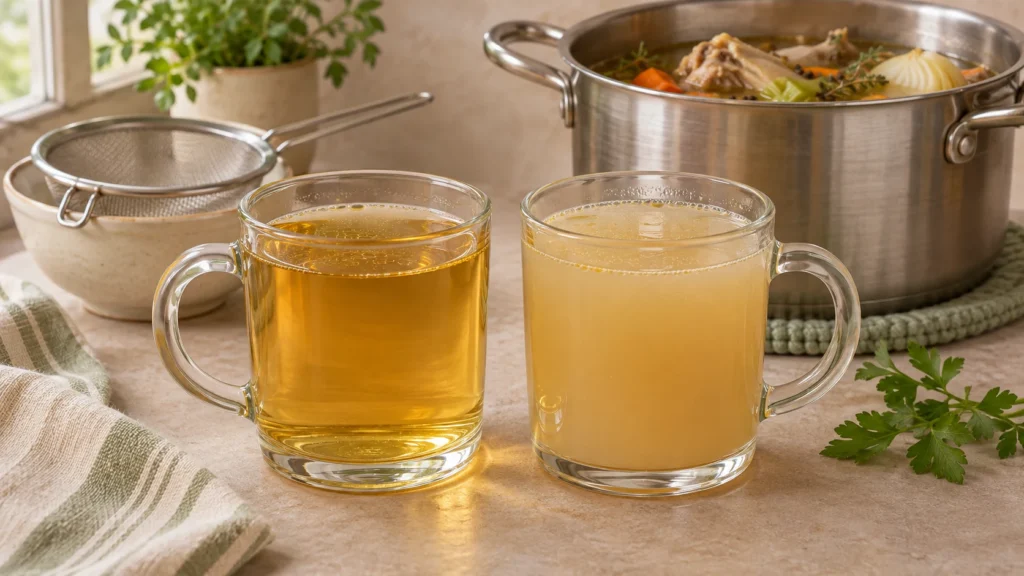
Chicken stock often turns cloudy when a rolling boil disperses fat and tiny solids through the liquid. A gentle simmer, skimming surface foam and straining without pressing the solids help preserve clarity. Cloudy stock can still work in gravy, stews and sauces when it was safely cooked and stored. Strain it into a heatproof vessel and chill it promptly in shallow portions.
Identify what you see in the stockpot
At the beginning of a simmer, foam can collect at the surface. Skim with a shallow spoon if you want a clearer stock. The foam may be easier to lift while it stays together at the top. A strong rolling boil churns the liquid and can scatter particles or disperse fat before you remove them. Moving the bones and vegetables around can add more small pieces to the liquid, especially once they soften.
A film of visible fat on top is different from an even haze. You may be able to spoon off surface fat while warm or lift it in a firmer layer once the stock is safely chilled. A little sediment can settle at the bottom after the liquid rests briefly. A haze spread throughout the stock is harder to remove with an ordinary sieve. Identify the appearance before choosing how much effort to spend on clarity.
Choose a clarity fix that fits the stock
| What you notice | What it means | What to do |
|---|---|---|
| Much of the foam still floats | Particles remain concentrated on the surface. | Skim with a shallow spoon while maintaining a gentle simmer. |
| Stock became hazy during a rolling boil | Small particles or fat may have dispersed. | Strain a test portion, then choose a dish where the remaining haze fits. |
| Pale cap appears after chilling | Rendered fat can solidify separately. | Lift a little cap away if you want a leaner stock. |
| Big pot of finished stock needs storing | Rapid cooling matters more than a perfectly clear pour. | Strain and divide into shallow containers promptly. |
If you need stock for two meals, first ladle off the clearer portion to use in a brothy soup. Set the rest aside only as part of a safe cooling plan. A slightly hazy batch can become the base for gravy and a clear one can show off noodles or vegetables.
Control the simmer rather than constantly stirring
Set the pot over steady heat and bring it gradually toward a gentle simmer as the recipe directs. Look for occasional small bubbles and movement at the surface. Lower the heat if the liquid begins rolling across the entire pot. Use the lid position and pot size specified for the method. A very full vessel can surge and spill if the heat rises, while a shallow pot can concentrate more quickly than expected.
HCCR's soup chicken stock uses a gradual start, skims foam and simmers partly uncovered. The recipe uses a fine sieve and an ice bath for excess stock. Follow the specific amounts and simmer duration in the published method and keep bones submerged as directed. If you intend to save any chicken meat for eating, check that it reaches 165°F (74°C). Make your notes about clarity separately from temperature and cooling.
Strain in a way that suits the intended dish
Set a fine mesh sieve over a stable, heatproof vessel. Use a ladle to transfer small batches if a full stockpot is too heavy to tip safely. Remove large bones or pieces with suitable tools before pouring the remainder. If you want a clearer liquid, let it drain through the sieve without pressing softened vegetables and scraps. Pressing can squeeze fine material back into the stock. A finer sieve or clean food-grade filter can catch more sediment but will not necessarily remove finely dispersed fat.
If the pot already boiled hard, take a small strained sample and see whether there is still a clear difference. For a dark gravy, the remaining haze is often unimportant. Very clear soups benefit more from separate straining and careful transfer. Reserve a clearer portion from a future gently simmered batch if you want visual clarity for a specific dish. Filtration cannot always restore the look of a broth that was deliberately cooked to an opaque style.
Decide whether clarity improves the meal
A clear broth shows its color around noodles, vegetables and pieces of chicken. That can matter for presentation. In chicken and rice, pot pie filling, gravy or an opaque stew, flavor and strength typically matter more than the appearance of the stock alone. Taste a sample once safe to do so and consider what it will become. If it tastes concentrated, dilute appropriately for that recipe before adding salt.
An opaque stock can also be a deliberate choice in dishes that use vigorous boiling to create a fuller-looking broth. A batch that turned hazy accidentally can still go into a suitable meal, provided it was cooked and handled safely. For a thinner, clearer serving, keep the fat away from the pour and leave settled particles behind. If the broth tastes scorched or storage was unsafe, handle that as a separate problem.
Cool promptly instead of waiting for sediment to settle
After straining, divide the finished stock into shallow containers that can cool quickly. An ice bath can help a large quantity chill faster. Keep bath water out of the stock and stir with a clean utensil when appropriate. Refrigerate perishable leftovers within two hours, or one hour when the surrounding temperature is above 90°F (32°C). Keep the refrigerator at 40°F (4°C) or below and use refrigerated leftovers within three to four days or freeze them.
Skim chilled fat only once the stock has been stored safely. Gelatin can make the stock set, so look for a distinct pale fat layer rather than removing the amber stock underneath. When using leftover stock as soup, bring it to a boil as USDA advises. If cooking chicken or reheating pieces in the stock, use a thermometer to verify the appropriate 165°F (74°C) endpoint.
For an opaque finish, browse the chicken Alfredo recipes and use stock where the chosen recipe calls for it.
See the chicken and rice collection for dishes where flavor and liquid strength matter more than stock clarity.
Keep a practical record of the simmer
Choose a steady place in the cook to inspect the surface instead of stirring constantly. Note whether clear areas remain between occasional bubbles or the entire surface is rolling. When you skim, use a light hand and leave what is beneath alone. If stock clouds soon after a period of strong boiling, keep that note for the next batch. If it becomes hazier only when you pour, your straining and handling may deserve more attention than the heat.
For the two finished dishes, keep the amount of dissolved seasoning in mind. A stock that goes into a clear soup often stays close to its current concentration. The same stock reduced into gravy or cooked into rice can taste stronger at the table. Adjust salt once you know whether you are simmering it further. Choosing a destination by consistency and flavor keeps a hazy batch useful when it is safe.
Plan the counter arrangement before the stock is done. Put the clean sieve above a stable heatproof vessel and set the shallow cooling containers within reach. This makes it easier to keep the process moving without leaving the strained stock to cool on the counter.
Avoid disturbing sediment during the final transfer
If a fine layer of sediment remains, ladle the upper stock into its first shallow container and stop before you reach the bottom of the vessel. Use a separate shallow container for the less clear last portion if it is going into an opaque dish. Work promptly while following your cooling plan. You can also skim chilled fat from both portions after they are safely cold. Clear and cloudy stock can therefore come from the same pot without using a long settling period on the counter.
Sources and references
Frequently asked questions
Is cloudy chicken stock safe?
Cloudiness can come from cooking and gives no reliable safety verdict. Use cooking temperature and storage history. Discard stock if it was left out beyond safe limits.
Why did the stock get cloudy after boiling?
A strong boil moves fat and small solids through the liquid. For a clearer batch, simmer gently and skim while the foam is still accessible.
Can a coffee filter make it perfectly clear?
Fine filtration can remove some particles, but dispersed fat and very small material can leave a haze. Test a little instead of filtering the whole batch by default.
Should I squeeze the bones and vegetables after straining?
Let them drain without pressing if clarity matters. Pressing can push softened particles into the stock.
Is a solid layer on refrigerated stock a problem?
A pale layer is often chilled fat, while gelatin-rich stock underneath may set. Check the storage history before deciding whether to reheat it.
Does stock have to be clear for gravy?
Usually no. Seasoning and strength matter more. Use safely cooked and stored stock and adjust the gravy's texture for the meal.