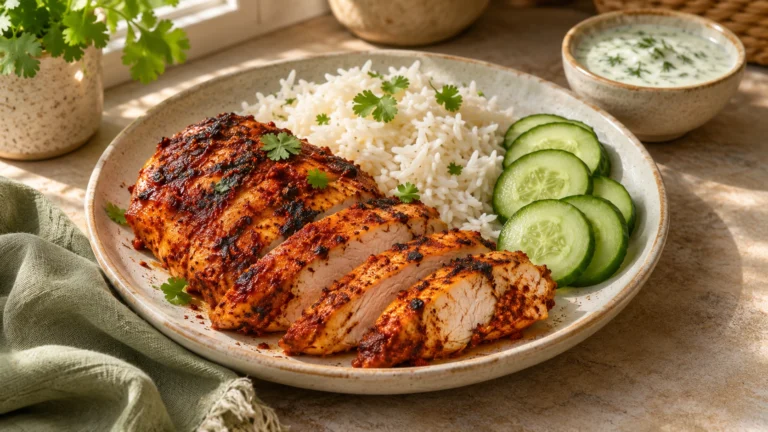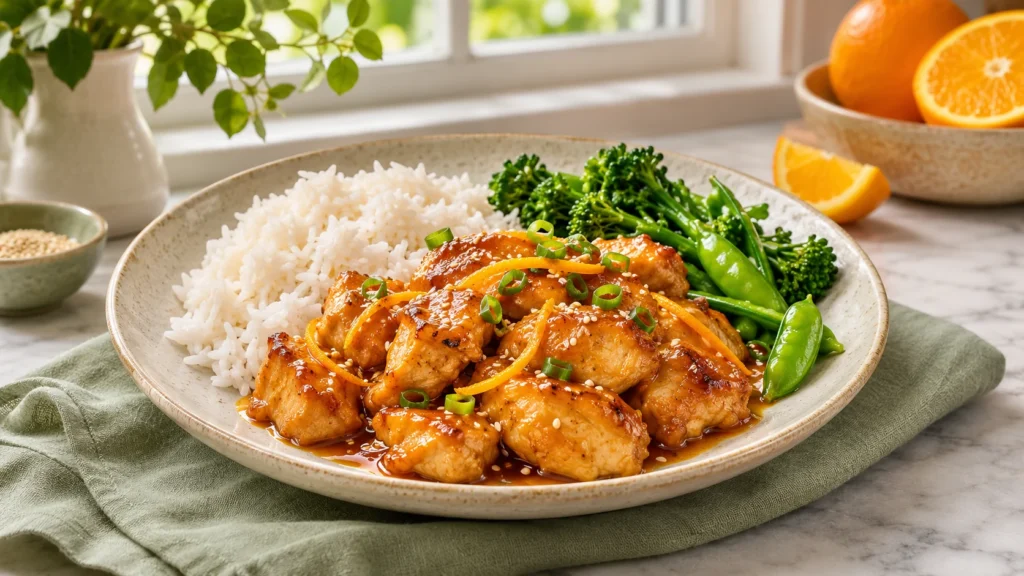
Serve orange chicken with plain steamed rice and a green vegetable with a crisp bite, such as broccoli, snap peas or cucumber. For heavily glazed chicken, keep the sides lightly seasoned. For a drier, crisper version, add a small amount of sauce at the table and keep it off the coating until you are ready to eat.
Identify how much sauce is on the chicken
Orange chicken usually brings sweetness, citrus and a glaze that can soak quickly into fried coating. See whether the sauce just clings to each piece or forms a pool when you tilt a spoonful. A thick layer needs a plain base and a side with enough texture to stay distinct. A lightly coated or drier version can take a mild vegetable dressing or a spoonful of additional sauce served separately. The amount of glaze matters more to the side than whether the chicken was originally cooked in an oven or skillet.
Taste the chicken first. If it is already salty, skip heavily seasoned rice and use little or no salt on the vegetables until you taste the full plate. If the glaze is very sweet, use plain rice and a green side with a small amount of vinegar or citrus. Avoid automatically adding more orange to every part. If you want citrus flavor on the vegetables, try just a little zest and taste before squeezing in more juice.
Choose sides for the orange glaze
| Situation | What to do |
|---|---|
| Thick and sweet | Add steamed rice and simply cooked broccoli. |
| Lightly coated or dry-finished | Serve snap peas and a small amount of sauce separately. |
| Takeaway with soft breading | Serve over rice with a cold cucumber side for crunch. |
Choose a rice that serves the meal
Plain steamed jasmine rice can catch loose glaze and has a fragrance that fits a number of chicken dishes. Regular long-grain white rice is another simple option when you want the flavor of the chicken to lead. Brown rice offers a chewier grain if its cooking time fits. Follow the package directions and separate the rice and chicken until just before serving. You can place them beside one another so some rice stays plain.
If you already have cooked rice, check its original storage and cooling history. Reheat hot leftovers to 165°F (74°C). For fresh rice, start it early enough that you can check the chicken and vegetables during its final minutes. If the rice must wait, keep it safely hot at 140°F (60°C) or above. For leftovers, divide it into shallow portions and refrigerate promptly within two hours, or one hour above 90°F (32°C).
Use broccoli, snap peas or another crisp green side
Steam broccoli until it is tender enough to bite and still holds its shape. Drain it before plating so the extra liquid does not thin the glaze. A small splash of oil or a light squeeze of lemon can help if the chicken is mild. With a strongly flavored chicken, serve the broccoli plainly and let a little sauce reach it at the table. Add cooked vegetables after the chicken is ready if you want the two to stay visually separate.
Snap peas cook quickly and hold a distinct crunch when they are not crowded. Give them a quick sauté or steam while the rice finishes. Cabbage is useful when you want a cold side instead. Shred and toss lightly with rice vinegar and oil. Serve it in its own dish if the dressing runs. For a no-cook option, use cucumber and spring onion, then season at the last moment to avoid a pool of water at the bottom.
Plan for sauced, dry-finished and takeaway versions
For a saucy orange chicken dinner, use rice as the main side and a green vegetable as a separate texture. Spoon only some of the sauce over the rice. For a drier preparation, arrange the chicken beside rice and vegetables with a sauce cup. Diners can dip a piece or spoon on enough to flavor it. Dressing the broccoli heavily before service can make the whole plate taste like sauce, so use a small amount if you dress it at all.
Takeaway orange chicken may already have a softened crust. Build a bowl with plain rice and a fresh cucumber side away from the hot food. If repurposing safely stored leftovers, heat the chicken to 165°F. Use dry heat for a comparatively dry coating if your appliance instructions permit, or warm a sauced portion in suitable cookware and expect a softer texture. Fresh snap peas or cabbage can supply the crunch either way.
Time the last steps around the coating
Set your table and prepare cold sides before cooking or heating the chicken. Start rice first and put the vegetable on when the chicken is nearly ready. If chicken needs to stay crisp for a few minutes, keep it away from loose sauce and wet vegetables until plating. Cook raw chicken to 165°F before saucing or serving, and keep cooked foods and raw poultry tools separate.
Suppose you have a saucepan, a skillet and a rice cooker. Start rice in the cooker, prepare broccoli for the saucepan and finish the chicken in the skillet. Put the sauce on the table in a small pitcher if the preparation allows. If you only have one useful burner and need it for chicken, make a chilled cucumber salad and use the rice cooker or serve a simple side you can prepare earlier. This avoids holding fried chicken while waiting for vegetables.
Let people assemble the plate to taste
Put the chicken, rice and vegetables in separate serving dishes when feeding several people. The approach makes it easy to judge how much sauce accompanies each piece. If the chicken has a thick sweet glaze, place a few neutral bites of rice and a crisp vegetable on each plate before spooning sauce. For a lighter-feeling meal, use a larger vegetable portion and a smaller serving of rice according to appetite.
If the dish seems too sweet after the first bite, try one bite with plain vegetables before changing the sauce. A splash of rice vinegar in a separate slaw may provide the sharpness you want. If the sauce is already quite acidic, a neutral green side and well-drained rice often work better than another sour note.
Choose what to do with extra sauce
If your recipe yields more glaze than the chicken needs, serve only a little of the reserve in a clean cup and refrigerate the rest promptly if safe to keep. Use sauce that was prepared and handled for serving, away from raw poultry. When there are leftovers, put the chicken and vegetables in separate containers and label the original date. Next time, use the loosely coated pieces on a rice bowl and save the green side to add only after warming. A crisp cold cucumber side is especially handy with a drier reheated coating.
Sources
Frequently asked questions
What vegetable goes best with orange chicken?
Broccoli, snap peas or cucumber give a crisp contrast and work with a lightly seasoned plate.
Should I serve fried rice or steamed rice?
Plain steamed rice is an easy choice for a sweet, rich glaze. Use fried rice if you want a more seasoned plate and reduce other rich sides.
How do I make the plate feel less sweet?
Add plain rice and a green vegetable. Try a little vinegar in a separate slaw if it suits the sauce.
What goes with a drier orange chicken?
Serve rice, vegetables and a little orange sauce on the side so the coating can stay crisp longer.
Can I serve a cold vegetable?
Yes. Cucumber or cabbage offers crunch without extra cooking.
Should I mix the rice and chicken in advance?
Keep them separate until serving if you want some plain rice and a firmer coating.