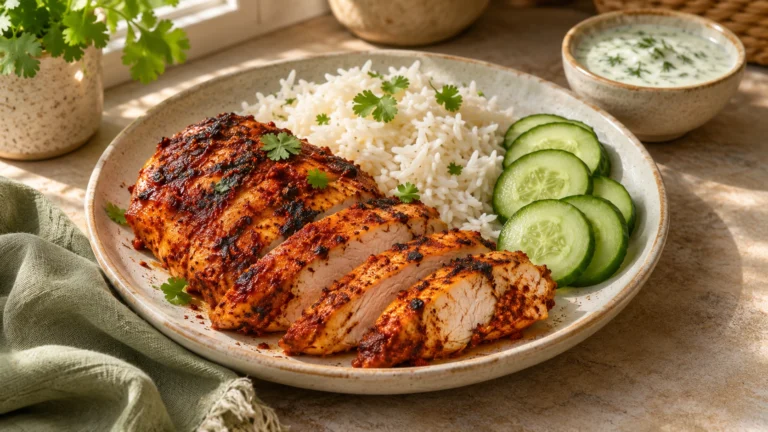
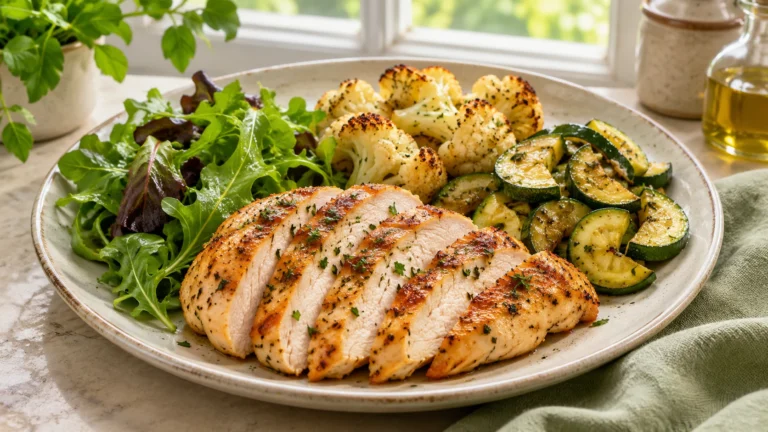
Serve chicken schnitzel with a dry or well-drained side and keep dressed vegetables and sauces off the crust until eating. Boiled parsley potatoes with a small bowl of cucumber salad make a substantial plate, while undressed greens and radishes suit a lighter dinner. Drain the fried cutlet on a rack when possible and give it clear space away from dressing or steam.
Pick sides by where their moisture goes
Schnitzel comes to the table with a broad, crisp surface that readily contacts whatever is underneath. A slice can stay crisp on top while the underside turns damp against a puddle of dressing. Choose sides that hold their moisture, drain loose liquid or use a separate bowl. A potato that is tender inside and dry outside can sit beside the cutlet. A juicy tomato salad needs its own space, and a bowl makes that decision easy.
Plain boiled baby potatoes are a useful partner because you can finish them with a modest amount of butter, parsley or chives without leaving sauce on the plate. Drain the cooking water carefully and let surface steam escape before adding the butter. Roast or air-fried potatoes can also work when that appliance is free. Avoid putting a stack of hot potatoes directly under the cutlet. The potatoes release steam as you serve them.
Raw vegetables can stay pleasantly cool while the schnitzel is hot. Cabbage, radishes, cucumber and sturdier greens hold up to a last-minute toss. If using a vinaigrette, add just enough to coat the vegetables and serve any extra in a cup. If the chosen salad relies on cucumber juice or a generous dressing, keep it in a bowl and bring it to the table with its own spoon.
| Side | How to plate it | What it adds | Best fit |
|---|---|---|---|
| Parsley potatoes | Drain and leave a gap from the crust | A mild starch and a tender center | A filling main plate |
| Cucumber or cabbage salad | Use a small separate bowl | Coolness, acidity and crunch | A sharp contrast to a rich cutlet |
| Buttered green beans | Drain before seasoning | A warm green side without much free liquid | A two-burner dinner |
| Lemon wedge or sauce | Put it to the side for each diner | Control over which bites get moisture | A plate where crispness matters |
Compare the light plate with the filling plate
For a smaller meal, choose the schnitzel and a generous chopped salad. Crisp greens, radishes and celery stay distinct from the breading. Stir a small amount of dressing through the greens just before eating, or offer it on the side. If you want the salad to feel more filling without using another pot, add drained white beans or bring good bread to the table. Put bread separate from the salad plate so it stays firm.
For a heavier plate, choose drained potatoes, a fully cooked schnitzel and a crisp green side. The potatoes can be boiled first and seasoned while the frying oil heats. Give the schnitzel the largest clear area on the plate. Try cooked peas or green beans if you prefer a warm vegetable. Drain them too. A wedge of lemon adds acid in controlled amounts, and a small dish of mustard for the table can be shared without making the crust wet early.
For a large cutlet that covers most of the plate, serve both accompaniments family-style. Small side dishes work particularly well when the cook is frying several servings in a modest pan. They also help late arrivals control their own portions without putting cutlets in contact with dressing while they wait. Put the warm side in a heat-safe dish on a trivet and keep utensils with each serving bowl.
Decide where the sauce belongs
When crispness is the goal, use a shallow side cup for lemon butter, gravy or a creamy sauce. A diner can dip a forkful, or spoon a little onto the cut edge at the moment they eat. If you want to put sauce on the cutlet, start with a narrow stripe just before serving. The rest of the surface can stay dry. A ladle of thin gravy under the entire cutlet changes the texture fastest.
Think about warmth, too. A chilled cucumber dressing can brighten the plate, but it is awkward to spoon from the same dish that holds hot cutlets. Serve cold sauces chilled and handle them with a clean spoon. If the meal includes both a tart salad and a lemon wedge, start with a moderate amount of acidity in the salad. You can always squeeze on more lemon while eating.
For different fried chicken methods, browse Fried & Crispy Chicken Recipes.
Work backward from the last piece of chicken
Get the salad components ready before handling raw chicken. Set out a separate board or clean and sanitize equipment and surfaces between poultry and ready-to-eat vegetables. Start stovetop potatoes early enough that the main pan can have your full attention when frying begins. Have a rack over a tray, or another appropriate draining setup, ready on a stable surface. Use clean tongs for the cooked pieces and a thermometer to confirm 165°F (74°C) in each cutlet. A thin cutlet often needs the probe inserted sideways so the tip reaches the center.
With two burners, your cooking sequence can be simple. Potatoes simmer on one burner, and the frying skillet uses the other. Have a chilled salad ready off the heat. If the potatoes finish early, drain and season them first, then keep them appropriately warm for the brief wait. A meal with two hot sides in addition to the schnitzel may need another burner. If you lack it, keep one vegetable cold.
With one burner, cook the potatoes, drain them and clear the stove before putting the frying pan on. Choose a cool salad and a small sauce cup. Fry as many cutlets as the chosen recipe and pan allow per batch. Avoid piling finished pieces on top of each other. An open rack gives steam more room to escape from the underside. Bring the pieces to the table promptly in batches if a large group would cause a long hold.
Avoid a soggy trip from the kitchen
For a very short carry, keep cutlets in a shallow open serving dish and use a separate dish for salad and sauce. Avoid carrying a dripping salad bowl directly over the schnitzel. If you need to keep the food safely hot over a longer wait, use appropriate hot holding at 140°F (60°C) or above and expect some change in crispness. At home, serving the fried pieces soon after cooking gives the best chance of enjoying the crust at its peak.
A useful test is to plate one serving the way you expect guests will eat it. If a squeeze of lemon runs immediately under the cutlet, turn the wedge outward or put it in a cup. If the potatoes are releasing water, strain them again and use a separate bowl. When cutting a larger schnitzel to share, leave the pieces in a single layer with gaps instead of layering them like sandwich slices.
A small dinner with a single skillet
For two, choose pan-fried cutlets, boiled baby potatoes and cucumber salad. Cut and chill the cucumber first. Start the potatoes, then prepare the chicken with separate equipment. Get out two hot plates or a large dry platter and a small dish for dressing. Cook the schnitzel using the recipe, keeping clear of the hot oil, confirm doneness and let the crust drain briefly before serving. Season the potatoes lightly so they fit with either a wedge of lemon or a dab of mustard.
At the table, use the small side bowl for the cucumber. Direct the cutlets away from drips, and let each diner put lemon on a bite as they go. If a separate starter or dessert is on the menu, a few crisp vegetables and a small potato portion are enough. If this is the whole evening meal, add a larger serving of the side or a second vegetable that does not need to share the frying pan.
For vegetable pairings, browse Chicken and Vegetable Recipes.
For more on thermometer use and storing cooked chicken, see the HCCR chicken food safety guide.
Sources and references
Frequently asked questions
Can I serve schnitzel with a dressed salad?
Yes. Toss the salad just before serving and place it in a separate bowl, or leave a clear gap on the plate to contain the dressing.
Where should sauces go on the plate?
Put sauce in a small cup beside the schnitzel. Add it to individual bites at the table to preserve more of the crisp surface.
Will mashed potatoes soften the crust?
They can where they touch the breading, especially if the mash is wet or covered in gravy. Use a separate scoop or bowl and keep the cutlet on dry plate space.
How can I keep the first cutlet crisp while frying another?
Drain it in one layer on a rack for a short wait. Serve in small rounds if the frying schedule would otherwise keep cooked cutlets waiting a long time.