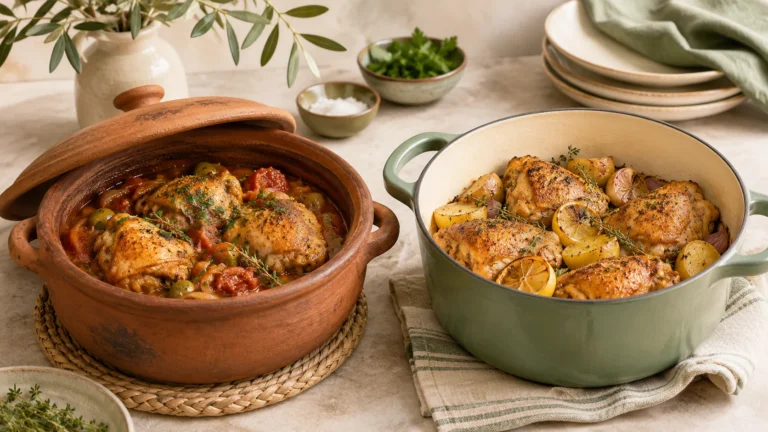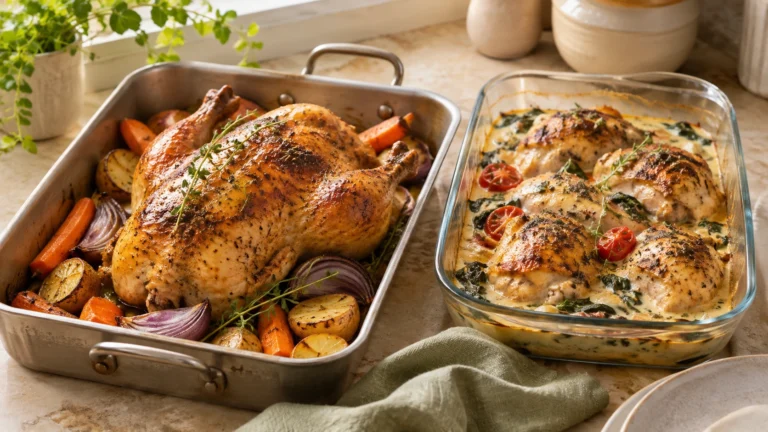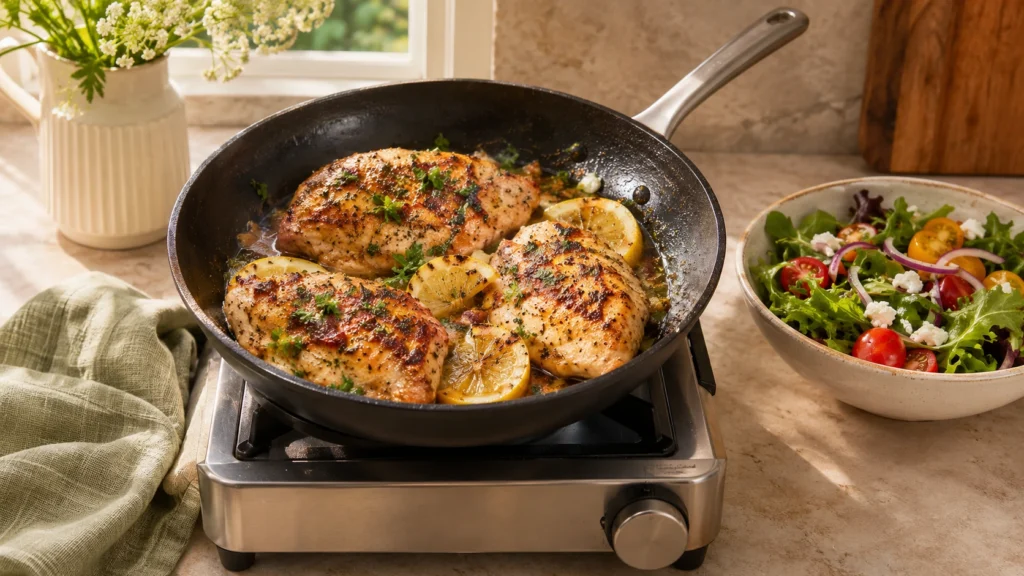
With one burner, write down which steps need heat and which can be done away from the stove. Choose a complete one-pot recipe or cook a side first if it holds well, then finish the chicken in the skillet. A no-cook side can simplify the schedule. Set out a clean place for cooked chicken and check 165°F (74°C) before serving.
Map the burner schedule first
Write down the hot jobs. You might need to boil a grain, sear chicken and finish a sauce. Then note which of those jobs can use the same vessel without changing the recipe. A dish developed for one pot can account for when the chicken goes in and how much liquid the grain needs. Combining a separately developed rice recipe and skillet chicken recipe in the same pot is a different project. Choose one complete method or plan a sequence that gives each component its own time.
Get the cold tasks done before opening raw chicken if you share one work surface. Wash and prepare salad vegetables, measure dressing and clear a clean space for the finished dish. Set up a raw prep board separately and keep clean utensils within reach. With a small stove, the burner may be the obvious constraint, but a cramped landing area can also make switching between cookware slow. Make sure you have a heat-safe place for the pot and a separate clean plate for the chicken.
| Meal format | One-burner order | What to plan |
|---|---|---|
| Tested chicken and grain pot | Follow the recipe’s sequence | Check both grain texture and poultry temperature |
| Skillet chicken with a hot side | Cook the side first if it holds well, then finish the chicken | Keep the side hot safely or use a short, suitable hold |
| Skillet chicken with pan sauce | Cook chicken, move to a clean plate, then finish sauce | Measure sauce ingredients before turning on the heat |
| Skillet chicken with a cold side | Prepare the cold side first or at a separate clean station | Keep raw poultry and ready-to-eat food apart |
Compare a one-pot dinner with two short jobs
A one-pot recipe is useful when the ingredients need the same heat source and its instructions coordinate them. Read the recipe through once. Look for the stage when liquid is added, when the chicken is expected to reach temperature and whether anything needs to be removed. Rice can be tender while chicken needs more time, or chicken can finish when the grain still has a firm center. Check both. If you routinely need more flexibility, use a quick sequential plan instead.
A side that can finish before the chicken makes the burner available for the last high-attention job. For example, prepare a compatible hot side, move it to a suitable holding vessel, then put a clean skillet on the burner for the chicken. Count any cleanup time between stages. Some sides lose their best texture quickly and are better served cold or finished immediately. Choose by the time the side will sit, not just by which item cooks first.
Work through a skillet and salad dinner
Suppose you plan pan-seared chicken with a lemon sauce, a slaw and bread. Make the slaw first using clean equipment, return it to the refrigerator, and measure the sauce additions. Prepare the chicken at the raw station. When it reaches 165°F (74°C), use clean tongs to move it briefly to a clean plate. Build the sauce as directed, then return the chicken or spoon the sauce over it. Bring the clean, chilled slaw out near serving. The burner only needs to support the chicken and its sauce.
For a plan with rice, choose which task owns the burner at dinner time. If a tested one-pot recipe already includes rice, follow its instructions about the cover and simmer. If you use two methods, make the rice before you start the chicken and use a safe plan to hold it. Do not leave cooked sides sitting warm for an extended period. USDA advises keeping hot food at or above 140°F (60°C) if holding it hot and refrigerating leftovers promptly, within two hours or one hour above 90°F (32°C).
For another example with staged use of a pan, see Chicken Fried Rice.
Decide whether the skillet can go to the table
If the skillet also serves the meal, check whether the handle will be hot and what you will set it on. An appropriate trivet protects the surface. Leave room for serving utensils and keep the handle away from table traffic. If the pan is too hot or awkward, transfer the chicken to a clean platter instead. A serving choice can matter when the burner will be needed for another task or when you want to refrigerate leftovers in shallow containers promptly.
On an electric or portable induction burner, verify cookware compatibility, vessel size and the appliance’s instructions for placement and operation. Choose a recipe that works with the actual pan you will use. A pan wider than the heated area may brown unevenly. If you cannot fit all the chicken, cook in batches or reduce the quantity. Include that extra round in the meal plan, and verify the temperature of each size group.
Make the order work with the equipment you really have
Start by listing the vessels you can move safely. A pot that has just cooked a grain may need to stay covered or sit somewhere stable before the skillet can take its place. Set a heat-safe landing surface within reach. If you need the same skillet for two stages, decide whether the first stage leaves fat or residue that changes the second. Use a second suitable vessel or clean and reset safely when the methods demand different conditions. A one-burner plan can still use two vessels in sequence.
If you want a warm vegetable and a pan sauce, check which one has the shortest useful serving window. Some vegetables tolerate a suitable brief hot hold. A delicate sauce is often best finished near serving. When a side cannot wait and there is no other heat source, choose a cold accompaniment or a tested one-pot recipe. Preparing cold food first keeps you from asking the burner to do two jobs at the same time and makes it easier to keep ready-to-eat ingredients away from raw poultry.
Consider a hypothetical timeline with guests arriving in half an hour. Prepare the cold side and measure the sauce before opening the chicken. Bring the skillet to the recipe’s stated heat, cook and verify the meat, then finish the sauce. Set the table before the chicken goes into the pan if the recipe needs frequent attention. A cook who starts measuring stock only after reaching temperature can leave lean cutlets in a hot pan longer than necessary. Arrange the last few steps first so that the actual finish is simple.
For leftovers, make an early decision about what will be served and what will go straight into storage. Move portions you are saving into shallow containers so they can be refrigerated promptly. Do not hold an entire pot warm just so you can use it for lunch tomorrow. Reheat leftovers to 165°F (74°C) when you use them. A no-cook salad can stay chilled while you bring the chicken to the table and can be packed separately when that suits the meal.
When shopping, buy chicken that fits the chosen pan. A package of similar-sized cutlets makes a short skillet recipe easier to manage. An extra-large pack can turn one turn-and-check cycle into two and change the whole dinner schedule. If you have to use a smaller pan, portion the cuts into logical batches before you begin. Reserve enough clean serving space for the finished batch and plan to serve it or hold it safely. The most dependable running order is one that still works when the largest piece needs an extra check.
If your burner is portable, make sure it is approved for the location. Follow the manufacturer’s placement, fuel or power, and clearance instructions. Use outdoor-only fuel-burning equipment outdoors. Test the fit of the empty pan when the unit is off and cool.
For ideas that limit cookware, browse Sheet Pan & One-Pot Chicken Recipes.
For more on thermometer use and storing cooked chicken, see the HCCR chicken food safety guide.
Sources and references
Frequently asked questions
Should I cook the side or chicken first?
Cook the side first when it can safely wait and the chicken is best served last. If they need to finish together, use a compatible one-pot recipe or a no-cook side.
What if the skillet is also my serving pan?
Use a dry heat-resistant trivet and account for the hot handle. When a large pan is awkward, use a clean serving platter.
How do I plan a chicken dinner ahead?
Read the full recipe, measure ingredients, organize clean and raw prep areas, and write down the stages that need the burner. Choose the side and holding plan before cooking.
Can I pause partly cooked chicken while the side cooks?
Plan continuous cooking. Use a method built for the sequence and verify 165°F (74°C), or finish the side before you start the chicken.