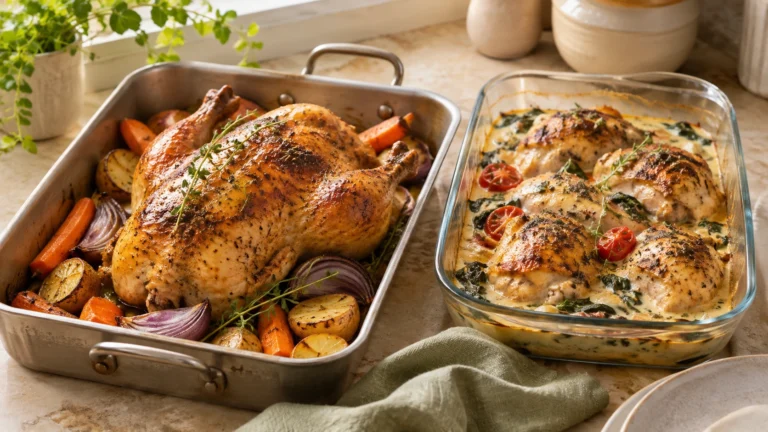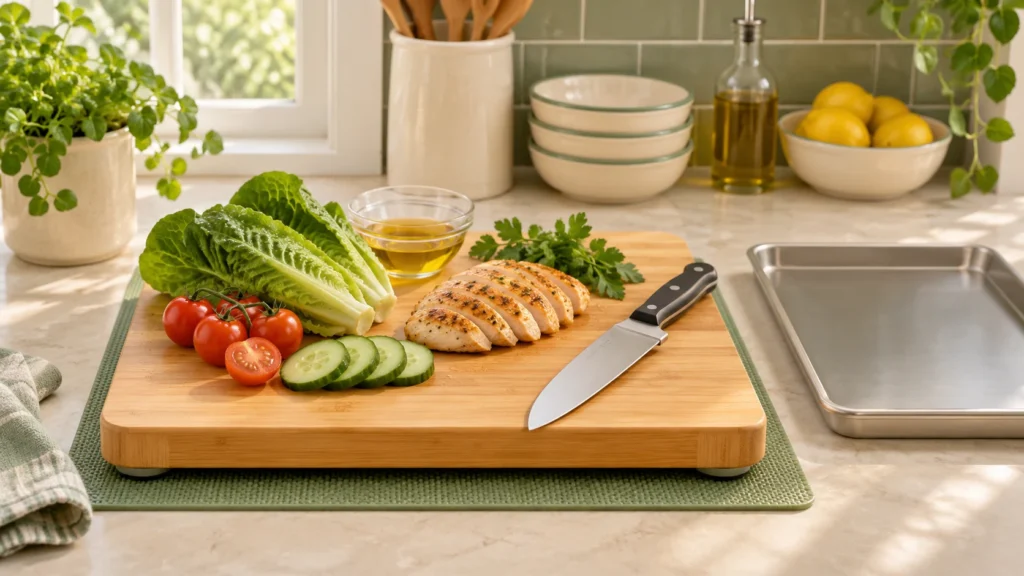
Use a board large enough for the chicken, with intact non-slip feet or a clean suitable anti-slip mat on a flat counter. Test it before raw poultry goes on it. Keep that board, its knife and its juices separate from ready-to-eat food. Put a clean cutting board and serving tools in a different area.
Choose a board that fits the job
Lay out the empty board while the counter is clean. Check whether it can hold the chicken and leave room for your hands and knife. A board that barely fits a whole chicken may be more suitable for individual pieces. If the raw food extends over the edge, choose a larger board or use a meal preparation method that works with smaller portions. Make sure the board itself fits securely on the counter rather than bridging a gap.
Choose a board in sound condition and follow its cleaning instructions. Deep grooves or damage can make washing harder. A juice groove may help contain a small amount of liquid but can overflow. Plan for drips and keep ready-to-eat food away from the area. The groove does not replace separate equipment and thorough washing.
Check the board before picking up the knife
| Situation | What to do |
|---|---|
| Board slides sideways | Put a flat nonslip mat or damp towel underneath. |
| Board rocks under pressure | Reset on a level worktop or switch boards. |
| Chicken package is leaking | Keep it in a rimmed tray away from ready-to-eat ingredients. |
Stabilize the board before opening the package
Put the board flat and check that all its corners are supported. If it has manufacturer-supplied non-slip feet, make sure they are intact and sitting securely. A clean purpose-made anti-slip mat can help on an otherwise smooth counter. Use a stable base that does not wrinkle or bunch. Press gently in the directions you will use while cutting. If the board shifts or rocks, correct that before laying out the raw chicken.
Some kitchen setups use a clean damp towel under a board. If you use one, make it flat, keep it fully under the board and treat it as potentially contaminated after the task. Do not use that towel to dry hands or clean dishes. A non-slip mat can be simpler to wash separately. Follow the care instructions for the board and mat. If a board is warped, avoid forcing it flat by putting pressure on it while cutting.
Create a raw prep area and a clean area
Set the raw package on a rimmed tray or a cleanable surface near the designated board. Put raw-use knives and utensils within reach. Move clean produce, bread and cooked food to another work area. If you have only one usable counter, prepare vegetables first on a separate board and put them away before opening chicken. Then clean the raw work area before using the counter again.
Choose a clean plate and tools for cooked food before you start. Keep them out of reach of raw splashes. A color-coded or labeled board can make the choice obvious when several people cook, but it does not make cross-contact impossible. Check where you put the knife, packaging, hands and any spoon used for seasoning. Those are surfaces that can transfer raw poultry juices even if the board never moves.
Contain drips without rinsing the chicken
Open the package carefully near the board and keep the wrapper contained. Avoid washing or rinsing raw poultry, which can spread bacteria through splashing. If a recipe calls for drying the surface, blot with a clean disposable towel and discard it. Wash hands with soap and water after handling raw chicken and before touching clean containers or food.
Keep waiting raw portions refrigerated at 40°F (4°C) or below. Use the recipe's technique for trimming or slicing and avoid catching a slippery piece by reaching near the knife. If a raw piece begins to move, stop cutting and reposition it. If the whole board moves, remove the raw food to its designated tray and correct the setup before you proceed.
Clean the board and the objects around it
Wash the board, knife and related equipment with hot soapy water as appropriate and follow USDA guidance for sanitizing. Use the cleaning method suitable for the material. Some boards can go in a dishwasher and others cannot. Follow the manufacturer's directions and avoid leaving a mat or towel damp and contaminated beneath it. Clean the counter and any nearby handles or objects contacted with raw hands.
Replace boards with deep grooves or wear that make them difficult to clean. Store dry equipment away from raw drips. Keep a separate clean setup for finished poultry and verify the chicken reaches 165°F (74°C). Chill eligible leftovers promptly in shallow containers. Clean tools should stay on the serving side all the way through the meal.
Try the setup in a small kitchen
Imagine one clear counter and a cutting board that slides on it. First chop ready-to-eat vegetables on their own board and cover them. Then remove that board and place the raw board on a clean appropriate mat. Check stability, open the chicken on its tray and prepare it. Afterward clean the raw equipment, mat and surface before bringing the cooked chicken or salads back. A small space can work well if jobs happen in separate stages.
Set up a second station for the ingredients that stay clean
For a meal with chicken, sliced vegetables and a fresh topping, finish the ready-to-eat topping on its clean board before opening the chicken package. Move it to a serving bowl and cover it. Put the clean knife and board away or well out of reach of the raw poultry station. If you need the same knife for both, clean it thoroughly between tasks. Set the chicken package on a rimmed tray so the juices stay at the raw station when you open it.
Build enough space for the chicken board, the tray and a separate plate for anything ready to cook. If you are cutting multiple portions, put a bowl or tray close to your working hand so you can move finished pieces without reaching across the counter. Keep the trash accessible and put the packaging directly in it. That sequence reduces the times you need to reach for a handle with hands that have touched raw chicken.
The board needs a second stability check after you move it. Press lightly on either end and try to nudge it sideways. A board that feels level in the middle can still pivot around a curled corner or tip on a folded towel. Reset the support before picking up the knife.
Sources
Frequently asked questions
How do I stop a board sliding?
Use intact non-slip feet or a flat clean anti-slip mat and test stability first.
How large should the board be?
Choose a board that supports the chicken, knife work and any drips without food extending over the edge.
Can a juice groove prevent contamination?
It may help contain liquid, but use separate tools and wash the board and nearby surfaces.
Can I wash raw chicken on the board?
Avoid rinsing chicken. It can spread bacteria by splashing.
When should I replace the board?
Replace it when deep grooves or wear make it hard to clean.
Can I use one counter for salad and chicken?
Prepare ready-to-eat foods separately first, put them away and clean the raw area after prep.