
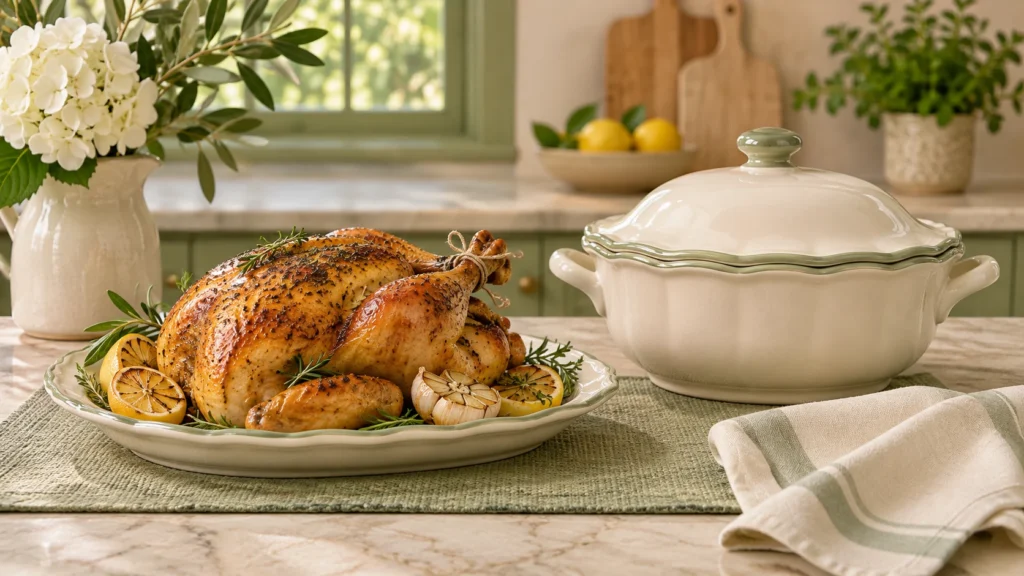
For a short delay, hold cooked chicken at 140°F (60°C) or above in suitable equipment and check the food temperature. Cover saucy chicken loosely or as the dish allows to limit moisture loss. Hold crisp chicken in a dry setup if you can verify the temperature. For a longer delay, chill eligible portions promptly and reheat to 165°F (74°C) near dinner.
Find out how long the delay is likely to be
A few minutes while someone sets the table is a different problem from an uncertain hour waiting for guests. Decide whether the chicken will be ready soon, whether the oven can remain in use and whether a large or small portion will wait. A breast cutlet dries more quickly if it continues to heat, while chicken with a sauce can hold its serving texture a little better. Apply the same safety decision to both.
A suitable food warmer or oven may keep cooked food hot, but the setting alone does not establish the temperature of the chicken. Check with a clean food thermometer. Hot holding at home should keep the food at 140°F or above. If you cannot verify that, track how long the food has been out of temperature control and switch to prompt chilling or serve within the applicable safe limit. A towel or lid can slow cooling, but neither is a temperature check.
Pick a holding plan
| Situation | What to do |
|---|---|
| Sauced chicken | Use a suitable covered dish at a verified 140°F or above. |
| Breaded or crisp chicken | Keep the sauce separate and use verified dry hot holding. |
| Delay of uncertain length | Chill eligible portions promptly and reheat to 165°F later. |
Cover pieces that benefit from protected moisture
For chicken in a braising liquid or sauce, use a suitable covered dish and hold it with compatible equipment. Put enough sauce in contact with the portion to protect the surface without flooding it. Check a thick piece and, if a tray is large, check more than one part. If the sauce thickens as it holds, adjust it at serving according to the recipe. Keep the lid close when you are checking the temperature so you can replace it quickly.
A roast chicken that needs to stay warm a short time may do better left largely intact so fewer cut surfaces are exposed. A loose cover can keep heat in with less trapped condensation than a very tight lid. Expect skin to soften as moisture collects. Carve when you are close to service and use clean tools and a clean board. If you planned a crisp skin to be the main feature, delay cooking it in future or choose a short verified dry hold.
Keep damp and crisp foods on separate routes
Breaded tenders or schnitzel lose crispness if they sit under a wet lid or in their sauce. Use a clean rack or suitable dry oven setup if it maintains holding temperature, and keep sauce separate for serving. Set portions in one layer so steam can move away. When dinner is delayed a long time, expect a loss in texture even with sensible holding. Prepare smaller batches closer to serving when that is practical.
Avoid holding breaded food under a high cooking heat just for the sake of crunch. It may keep browning and dry out even when the kitchen already smells finished. Use a tried setup that maintains the safe food temperature without aggressively continuing to cook the chicken. If you do not have that setup, cool suitable portions promptly and use a safe reheating method later.
Use a chill-and-reheat plan when timing is uncertain
Refrigerate eligible leftovers in shallow containers promptly, within two hours, or one hour above 90°F (32°C). Keep the refrigerator at 40°F (4°C) or below and use most cooked leftovers within three to four days. A large pan of hot food can cool faster if you divide it rather than leaving it assembled on a counter. Use clean containers and record the original date.
Reheat cooked chicken to 165°F throughout when serving hot. Use an appropriate stovetop, oven or microwave method. Do not rely on a slow cooker or chafing dish to heat cold leftovers. They may warm too slowly. Heat the portion in suitable equipment first and then use the holding setup if it can maintain 140°F or above. If reheating a separate leftover sauce or gravy, bring it to a boil following USDA guidance.
Build a delay plan around the side dishes
Suppose the main finishes while the potatoes still need ten minutes. Keep the roast in a verified warm setup and wait to carve. If a breaded dish comes out early, set the hot pieces in a dry holding setup and keep the sauce on the stove or at its intended safe holding temperature. If guests call to say they are an hour away and you cannot verify hot holding, portion and chill what you safely can. Reheat closer to service.
In a small kitchen, choose one side that you can finish quickly after the main. A chilled salad can wait in the refrigerator while you check the chicken. Warm a serving dish only as its material allows and without using it as a substitute for hot holding. If you do not have enough equipment for everything, choose dishes by which can wait safely and which are best finished in the last few minutes.
Track time and temperature at the table
If food has left temperature control, note when that began. Include earlier prep, transport and serving periods. Discard perishables that exceed the applicable time limits. If a home warmer has an unknown setting, do a small appropriate check before relying on it for dinner with guests. The aim is safe chicken with the best texture your meal can preserve, whether you serve straight away, hold briefly or chill and reheat.
Choose an equipment setup for tonight rather than a rule for all chicken
If you can keep a lidded oven-safe dish at the correct temperature, try it for the braise. If your warmer's range is uncertain, check a representative portion before the guests arrive. Know where the thermometer goes and whether the lid can open safely without moving the whole pan. A smaller batch is easier to serve and refill, especially when the chicken has several pieces of different thickness.
When a crisp recipe and a saucy recipe finish together, assign each a separate clean holding dish. Breaded pieces can sit in a dry verified setup, while the saucy portion can remain covered enough to preserve moisture. Have both dishes labeled if different people are helping. Check whether the sides can wait separately. A salad can remain cold until the chicken is ready, and you can finish a fast vegetable at the last moment. Build the service around the part whose texture is hardest to preserve and monitor temperature throughout.
Sources
Frequently asked questions
What temperature should I hold chicken at?
Verify 140°F or above during hot holding.
Should I cover roast chicken while it waits?
A loose cover may protect moisture for a short wait. It can soften skin. Check the holding temperature.
Do I cover breaded chicken?
A dry verified hot setup keeps the crust in better condition. Keep sauce separate until serving.
Can a slow cooker reheat cold chicken?
Use suitable reheating equipment to reach 165°F first. A slow cooker may be appropriate for verified hot holding.
What if I do not know when guests will eat?
Cool eligible portions promptly and reheat when timing is clearer.
Does a lid alone keep chicken safe?
A lid can slow cooling. Verify the food temperature and track time outside temperature control.


