
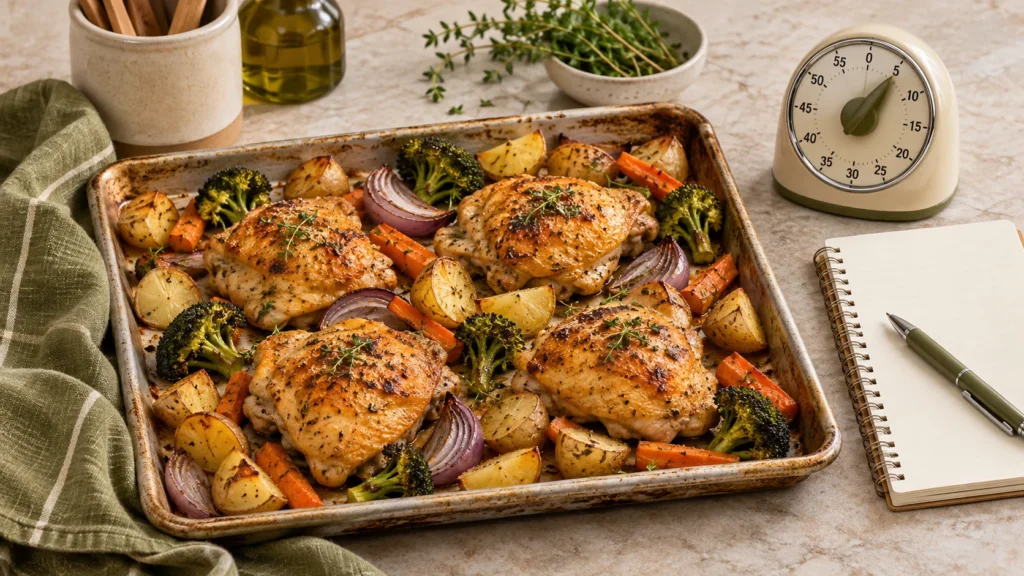
To estimate when a chicken dinner will actually reach the table, count each step you must wait for, then subtract only the tasks you can do at the same time. Start counting from the moment you walk into the kitchen. Include any thawing or advance seasoning, oven or pan preheating, batches, temperature checks, resting and serving. A recipe’s cooking time covers the heat stage. Your dinner estimate should cover the whole sequence and allow a little room to adjust.
Count the steps that affect serving time
| Situation | What to do |
|---|---|
| Unlisted prep | Allow time for thawing, trimming and chopping. |
| Tasks you can overlap | Count only the longer concurrent stage if both can start together. |
| Equipment and finish | Add preheat, extra batches, pressure release and plating. |
Read the recipe with your kitchen in mind
Write down the raw starting state the recipe expects. A line that says “two chicken breasts, thinly sliced” assumes cutting is already finished. A sheet-pan recipe may assume the chicken is fully thawed and that the vegetables are trimmed. Read past the headline time to see whether these tasks appear in the directions. If the recipe expects hours of marinating, choose another recipe for tonight or move that stage earlier on a future day. Use refrigerator thawing when you have time and a USDA-approved rapid thawing method when you need to begin cooking immediately afterward.
Look at the directions for quantities as well as time. Double the servings in a single skillet and you may need two browning batches. The recipe might cook four pieces in one round because its pan is wider. Check your pan’s usable flat area and compare it with the size of the pieces. Decide whether a second pan, a tested oven recipe or cooking in batches fits your evening. Estimate from the equipment you own and can use comfortably.
Put active work and waiting on one timeline
Active work includes trimming, chopping, stirring, flipping, checking several pieces and plating. Waiting includes preheating, the time food spends cooking without attention and any rest. Some waiting can cover other work. Start the oven while you cut vegetables if the recipe calls for a preheated oven. Set the table while a covered braise simmers if you can remain nearby to monitor it. If two tasks both require your full attention or use the only available pan, put them one after the other.
A simple estimate is the length of the longest chain of steps that depend on one another. Suppose the oven takes 12 minutes to heat in your kitchen, and chicken and vegetable prep takes 10 minutes. If you start both together, the first stage takes about 12 minutes. If you start heating after you prep, it takes 22. If same-time prep still takes 16 minutes on a first attempt, use 16 as the starting estimate. This approach also lets you see whether the side dish or the chicken determines when you can eat.
Keep a column for active minutes if you are comparing two dinners for a busy evening. An oven dish may give you a longer total but more time to put away groceries or help someone with another task. A skillet dinner may finish sooner while demanding more hands-on attention. Both numbers matter. If you are cooking for guests, also count any time needed to divide food into bowls, dress a salad, warm plates or clear counter space before bringing the meal out.
Work through a skillet dinner
Imagine a recipe with six minutes of prep after the breast has been sliced, a four-minute pan preheat, two six-minute batches and a five-minute pan sauce. These figures are planning assumptions. You should follow the method and check the chicken directly for doneness. Say that slicing adds four minutes. You can use the last four minutes of the 10-minute prep window to heat the pan if you have a clean area and can watch the burner. Two batches add 12 minutes and the sauce adds five more. Add three minutes for checking and serving and you are at about 30 minutes.
Check the side separately. If rice needs 25 minutes in your cooker, start it near the beginning and it may finish well within your main-dish schedule. If you only remember to start it as the chicken comes out, the rice becomes the final step on the critical path. For a first attempt, give yourself a small buffer. Move a simple salad or ready-to-heat grain into the menu if your schedule is tight. That change can reduce the planning risk with the same main dish.
Keep the raw and cooked stations separate, even when working quickly. Put out the plate for cooked pieces and a clean thermometer before you begin browning. Clean tools after raw chicken contact. Use an instant-read thermometer at the thickest area, away from bone, and check poultry reaches 165°F (74°C). On thin pieces use a side approach if that places the thermometer’s sensing area in the center. If one piece needs longer, give it the time and check it again. Treat the estimate as a tool for planning dinner.
Work through a pressure-cooker dinner
The setting that says eight minutes gives an example of time under pressure. Plug that into a timeline only after you account for ingredient prep and any sauté stage. Once you close the lid, the cooker has to build pressure. At the end, some recipes call for natural release or a combination of natural and quick release. Use the instructions for your recipe and cooker and wait until the lid can be opened safely.
For planning, imagine 10 minutes for prep and sautéing, 12 minutes to reach pressure, eight minutes at pressure, 10 minutes for the specified release and five minutes for checking and finishing the sauce. That makes 45 minutes in this example. Starting temperature, amount of liquid, food quantity and cooker can all change the estimate. Use a timing note you collected on the same model when available and keep any recipe and manual instructions for maximum fill and minimum liquid in place.
Choose a side you can finish while the machine is building or holding pressure. Set the table before release if the recipe allows a hands-off stretch. When the cooker has finished and opened normally, check the thickest chicken piece before serving. If something still needs more cooking, follow a recipe- or appliance-appropriate finishing step and test again.
Learn from the first run
After dinner, record only the details that affected the meal. A note such as “two batches in small skillet; chop salad during rest; rice on first” makes the next plan more useful. If the recipe took much longer, identify the specific stage and give it more time next round. When cooking the same dish with a different cut or quantity, start with a new estimate for the altered steps and carry over your observations about equipment and prep.
Sources
Frequently asked questions
Does recipe prep time include cutting vegetables?
Read the ingredient list and steps. An ingredient listed as already chopped may be assumed ready before the timed steps start.
When does a pressure cooker’s displayed time begin?
On most electric models it starts after pressure is reached. Check your manual and count pressurizing and release separately.
Should I count the side dishes?
Yes. A side that takes longer or uses the same burner can determine the meal’s finish time.
Does doubling chicken always double the cooking time?
It depends on the method. Extra skillet batches add turns, while oven capacity and the recipe determine whether portions can cook together.
How should I estimate timing for a different cut?
Use a method written for the new cut and plan for its thickness, bone and number of pieces. Verify doneness with a thermometer.
Should I add extra time on the first try?
Give yourself a buffer based on unfamiliar prep and equipment steps. Record the actual finish time for the next cook.


