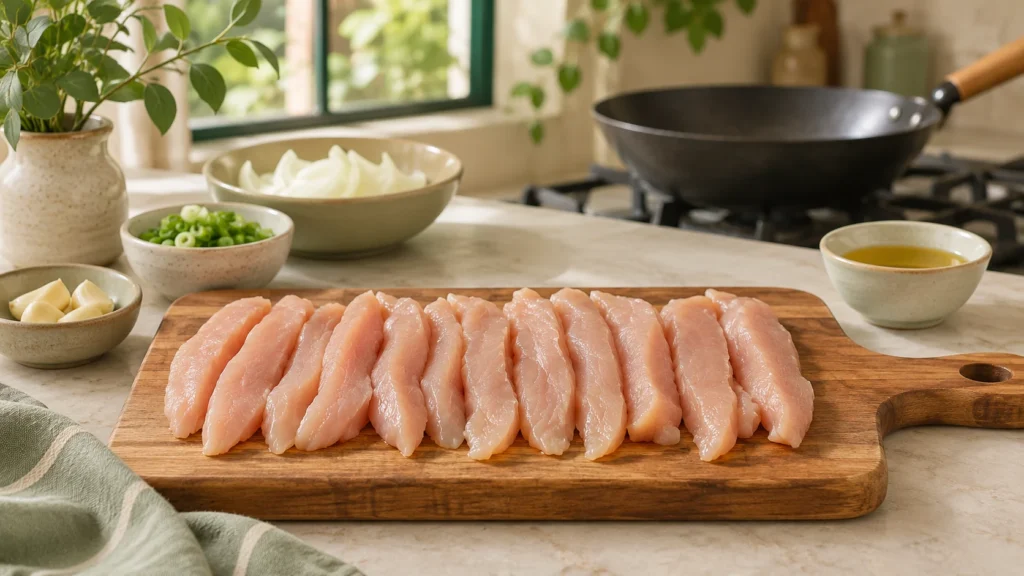
Cut wok chicken into pieces of similar thickness. Use thin slices across the grain for a quick stir-fry, or even cubes for a recipe designed around bite-size chunks. Separate unusually thick or small pieces and work in manageable batches. Cook chicken to 165°F (74°C), checking the thickest pieces rather than judging by browning.
Read the recipe's shape before cutting
Sliced chicken is useful when the dish will cook quickly and the pieces will mix with thin vegetables. Similar slice thickness lets them heat more evenly. Cubes suit dishes with larger pieces and a different cooking rhythm. The relevant dimension is how far heat needs to travel, so a very wide thin strip may cook sooner than a compact cube of similar weight.
Look for the method the recipe uses. A marinade and a brief oil or water pass need a cut that suits that preparation. A recipe that stir-fries all the way in a wok may need a different thickness. Use the dimensions or visual description provided and avoid borrowing a timing from a different style. A change in cut can alter the order of the other ingredients too.
Cut chicken to cook evenly in a wok
| Situation | What to do |
|---|---|
| Breast with a thick end | Split the thick portion first if needed. |
| Fibers visible | Slice across the grain in pieces of even thickness. |
| Thin ends and scraps | Group similar pieces and check thinner batches early. |
Find the grain and use a stable board
Pat the chicken dry if appropriate and keep it cold until prep. Put it on a clean, stable raw-use board. Look at the lines in the muscle and slice across them where practical for shorter fibers in each bite. If a breast is thick, a suitable horizontal slice first can give you a flatter starting piece. Keep fingers clear of the knife path and use a sharp suitable knife.
For cubes, make your initial strips roughly equal in thickness, then cut them to a reasonable length for the recipe. A tapered end will still supply smaller pieces, so put those aside for a separate quick batch. If working with boneless thighs, unfold them and check where thickness varies. Shape and thickness matter more than getting every piece to look exactly like a geometric cube.
Plan batch size as part of the cut
A small wok or pan cannot brown a large mass of wet chicken as efficiently as a manageable layer. Keep the pieces in the shape the recipe needs and split the quantity when there is not enough room to stir or turn them. Thin slices can stack and stick together, while cubes may block access to a center piece. The right batch gives you room to separate the chicken and probe a thick piece safely.
Prepare sauce, vegetables and serving dishes before heating the wok. Keep raw chicken and its tools away from ready-to-eat food. If marinating, keep it refrigerated and reserve any serving sauce before raw contact. Follow the recipe and cook promptly once you start. A short passing step should remain part of continuous cooking, with the intended final cook done immediately. Do not set partly cooked poultry aside for later.
Check when the pieces are actually ready
Use a suitable food thermometer and measure the center of the thickest pieces. For thin slices, use a probe with a sensing area you can place from the side. Check more than one piece when sizes differ. Avoid touching the hot pan with the thermometer. Cook chicken to 165°F throughout, and make sure sauce and vegetables exposed to raw chicken also finish cooking safely.
Do not expect every piece to finish at the same moment when sizes vary. If the recipe supports cooking all the chicken safely before combining with vegetables and sauce, move cooked pieces to a clean dish. Finish the other part as the recipe directs and return the chicken when appropriate. This can protect thin slices from staying in the wok through a lengthy vegetable cook.
Compare two wok dinners
For chicken and string beans, a recipe may call for thin slices that can be served with vegetables of similar scale. Prep the vegetables separately and follow the order the recipe gives you. For a dish with chicken cubes, make them similar in thickness and leave enough pan space to turn and check them. If you switch to smaller pieces, use instructions that fit those rather than assuming they need the same time.
Imagine four people and a wok that can cook only one layer comfortably. Cut the full quantity consistently but keep the waiting portion chilled. Cook rounds as appropriate and use a clean dish for completed chicken. If you cannot safely manage the timing, choose a tested smaller batch recipe and make separate meals. That can preserve the texture without compromising the handling.
Preserve the result from pan to plate
Serve promptly once all ingredients have safely cooked. Do not return the wok chicken to its raw prep board. If you have leftovers, cool eligible portions in shallow containers promptly and reheat hot portions to 165°F. Note the approximate thickness you liked and how much the pan held. You can reproduce an effective cut and batch size more easily than a timing taken from another kitchen.
Lay out the ingredients in cooking order
Set the pieces on the raw side of your prep area, then put vegetables, sauce and any toppings in separate containers. If vegetables take longer to cook than the chicken, follow the recipe's order for cooking and setting portions aside. A wok heats ingredients quickly once they go in, so creating space for those moves ahead of time makes the stir-fry easier to manage.
Two large breasts can produce a crowded bowl even when every strip is thin. Look at the usable cooking area of your wok before deciding how many pieces to add at once. Divide the chicken into batches before cooking if your recipe and pan need it. During the first batch, check whether the pieces lie against the hot surface or mound in the center. Use that observation to size the second batch.
If one group of strips is much smaller, add it only when the recipe allows you to manage the pieces separately or cook it as its own batch. Use a clean plate for cooked chicken. Keep the raw board with any remaining pieces away from the plate, the sauce and the serving bowls.
Sources
Frequently asked questions
Are strips or cubes better?
Use the shape the recipe was developed for. Thin slices suit some quick stir-fries and cubes fit dishes with chunkier pieces.
Should I cut across the grain?
Where practical, yes. Slice across the visible fibers for a shorter bite.
Can I cook the smallest pieces with the biggest ones?
Separate enough of a size difference to check each batch on its own schedule.
What makes wok chicken steam instead of brown?
A wet surface or too large a batch can interfere with a dry finish. Use manageable portions.
Where do I check temperature?
Check the center of thick pieces, entering from the side when useful, and verify 165°F.
Can I partially cook chicken earlier in the day?
Do not refrigerate partially cooked poultry for later finishing. Complete cooking promptly in the same sequence.