
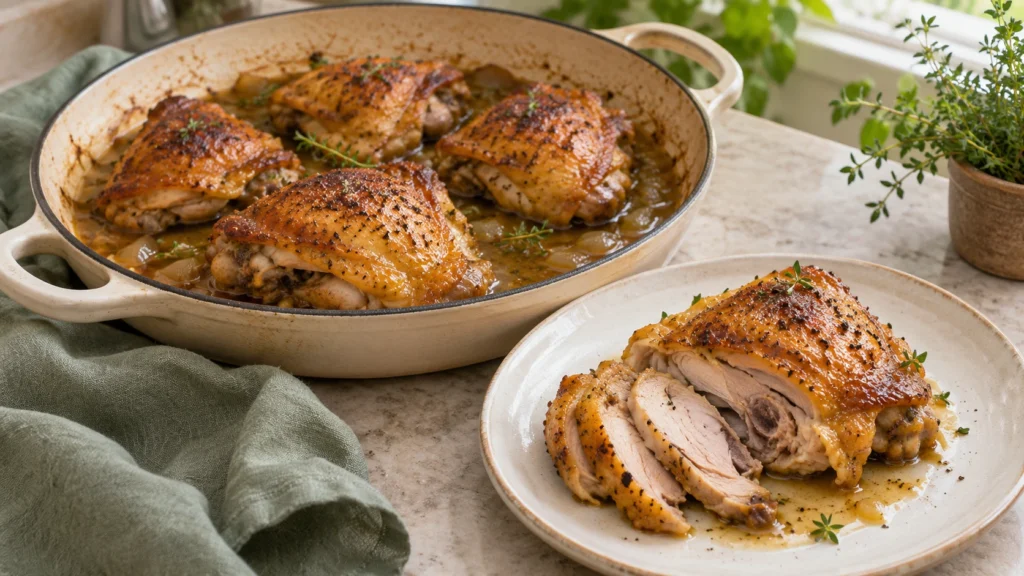
Chicken thighs can be chewy even after reaching 165°F (74°C) because safe doneness does not guarantee tender connective tissue. A firm, elastic seam near a bone may benefit from a longer moist cooking method, whereas meat with dry edges and stringy fibers usually needs sauce rather than additional heat. Check the thickest meat independently of texture before choosing what to do.
Distinguish dry chew from connective tissue
Chicken thighs are not simply breast meat with a darker color. They are working muscles with a different structure, more connective tissue and generally more fat than lean breast. A thigh may have an elastic region near a joint or seam while the surrounding meat tastes juicy. In contrast, meat that has spent too long over intense dry heat can become uniformly dry, especially in exposed thin areas. Treat these two sensations as different problems instead of assuming every form of chewiness means the chicken is undercooked.
Start with a thermometer in the thickest meat, avoiding the bone. If several thighs differ in size, check them individually. Once each is safely cooked, look at the location of the bite that bothers you. A firm band that resists pulling while adjacent meat is succulent suggests connective tissue or a tendon. A hard, dry exterior with fibrous meat below suggests excess cooking or uneven heat exposure. Skin may also be the chewy component even when the flesh is tender. Identify what you are actually chewing before attempting to fix it.
Use the tough and chewy chicken troubleshooter to compare causes based on the cut, cooking method and type of chew.
A tendon or cartilage will not necessarily become pleasant simply because you continue cooking. Remove an objectionable piece at serving when appropriate. If the meat around it is tender, there is no need to put the whole pan back on the stove. If several thighs are still firm in their muscle seams, and there is enough moisture left, a different finishing approach may help. The goal is a texture improvement rather than chasing a particular number beyond the food safety endpoint.
Quick diagnosis: match the symptom to the next step
| What you notice | Likely explanation | Next step |
|---|---|---|
| Elastic band near bone | Tendon or connective tissue | Remove band or consider moist finish |
| Dry edges and fibrous meat | Excess dry heat | Stop cooking; slice and serve with sauce |
| Soft skin, tender meat | Skin texture issue | Use method-appropriate brief crisping |
Compare dry heat with a longer moist method
Roasting: useful when the exterior matters
Roasting or grilling can produce an appealing browned surface, especially on skin-on thighs. Broader thighs with thinner edges may brown unevenly, so position pieces thoughtfully and check each one. If the recipe aims for crisp skin, sustained covered cooking at the end can soften it. That is a texture trade-off worth understanding before trying to rescue a pan you intended to serve as crisp roasted chicken. Keep pieces that are already tender out of additional heat.
Braising: useful when the seam is the problem
A moist braise may be more suitable for thighs that still have substantial resistant connective tissue. With sufficient heat and time, some collagen changes into a softer gelatinous material. The liquid also helps create a pleasant serving sauce. Braise within a suitable recipe rather than adding a random volume of cold water and leaving the chicken on high heat. Make the sauce separately if needed, add the thighs and monitor their texture. A gentle covered environment can be a useful alternative to continued aggressive roasting.
Research on heating and poultry texture shows that increasing heat changes meat proteins and collagen while also increasing the potential for cooking losses. Moist cooking is therefore not an unlimited license to keep thighs cooking. The outside may still become dry and the muscle fibers may become unpleasantly stringy if subjected to excessive heat exposure. Use a method-specific recipe and assess tenderness once the meat is safe; stop when the desired texture has developed.
Boneless thighs and bone-in thighs need different checks
Boneless thighs often unfold into a relatively thin, irregular sheet. Folded sections may hide a thicker center, while thin flaps dry out quickly. Lay out pieces according to the intended recipe and don't rely on the appearance of the thin edge. Bone-in thighs are more three-dimensional. Measure the thick meat without allowing the probe to touch the bone and consider whether the resistant part is cartilage, tendon or meat. If a boneless thigh is dry throughout, additional braising may be a poor choice compared with slicing and serving it with a sauce.
For your next meal, compare the options in our chicken soup & stew recipes collection and select a method that fits the texture you want.
For a complete recipe to compare against your preparation, see Chicken Curry. Follow the recipe’s actual cut, size and cooking directions rather than assuming the same timing applies to a different preparation.
Choose what to do with this batch
If the chicken is safe and only a small elastic piece causes trouble, remove that piece and serve the surrounding meat. If the meat is still moist but several areas remain firm, transfer it to an appropriate moist finishing method without unsafe holding. If dry edges dominate, stop applying heat and serve sliced or chopped meat with a sauce. If the only problem is soft skin, crisp the skin briefly using a recipe-appropriate technique, while avoiding needless heating of an already finished center.
A hypothetical dinner illustrates the decision. Three bone-in thighs are roasted in the same tray. One has a dry edge because it is substantially smaller than the others. Another is tender except for a resistant band beside the joint. The third is moist but has firmer meat around several seams. The first may work best sliced into rice with sauce; the second can be served with the band removed; the third might be suitable for an immediate moist finish. Putting all three in the oven for longer ignores the difference in their symptoms.
Choose a method based on the meal
For a plate of chicken with crisp skin and roasted vegetables, select pieces with comparable thickness and use a method that gives the surface enough time to develop without burning. For curry or stew, bone-in or boneless thighs can suit a sauce-forward approach where tenderness and flavor integration matter more than crispness. In a soup, remove bones and unwanted connective tissue before serving to make the eating experience more comfortable. Use the recipe collection to match the cooking method to the cut instead of applying one method indiscriminately.
Record what actually changed
When trying a different approach, keep the cut type and portion size as similar as practical. Note when each thigh reached the safe internal temperature, how the surface looked, whether the difficult bite came from a seam or an exposed edge and how the meat tasted after any additional cooking. Keep comparisons illustrative rather than claiming a universal result. Your oven, pan, recipe and piece shape affect how long texture takes to change. The purpose is to recognize a recurring pattern so the next recipe choice is informed by evidence from your own kitchen.
If you are cooking for meal prep, consider the intended texture after reheating. A moist thigh dish may tolerate reheating more pleasantly than a crisp-skinned recipe whose skin becomes soft in the refrigerator. Store cooked portions properly, reheat leftovers to 165°F (74°C), and use the recipe's sauce where appropriate. It is better to plan a suitable leftover dish than to repeatedly crisp and soften the same piece of chicken.
For broader method and preparation guidance, use our chicken cooking guide.
Sources and references
- FoodSafety.gov — Safe minimum internal temperatures — Thermometer and poultry / stuffing / leftovers safe endpoint.
- Effect of meat temperature on proteins, texture, and cook loss for ground chicken breast patties — Heating changes texture, protein and cooking loss; formed chicken study, not a universal kitchen protocol.
- Insights into the evaluation, influential factors and improvement strategies for poultry meat quality — Muscle protein structure and water holding capacity.
- FoodSafety.gov — People at risk of food poisoning — Refrigeration time limits, storage and reheating.
Frequently asked questions
Does a safe temperature guarantee a tender thigh?
No. The minimum temperature addresses food safety, while tenderness depends on connective tissue, heat exposure and the nature of the muscle. A correctly cooked thigh can still have a firm seam or tendon.
When should I choose a braise over roasting?
Choose a braise when you want a tender, sauce-oriented dish and connective tissue is a concern. Roasting is generally a more natural fit when a browned or crisp exterior is central to the meal.
Is chewy thigh meat always undercooked?
No. Dry overcooked meat, elastic connective tissue and chewy skin can all feel resistant. Confirm internal temperature before making a texture decision.
Can boneless thighs be overcooked?
Yes. Thin, unfolded portions can dry out over intense heat. Although thighs are often more forgiving than breast meat, excessive heat exposure can still reduce juiciness.
Why is the meat near the bone chewy?
It may contain more connective tissue, tendon or cartilage. Check the thickest meat independently and decide whether the resistant part needs removal or the surrounding muscle could benefit from a moist method.
Can I make chewy thighs tender by adding water to the pan?
A suitable braise can help some firm, connective-tissue-rich pieces. Water alone is not a guarantee, and extending cooking unnecessarily can harm already dry meat. Choose based on the actual symptom.


