
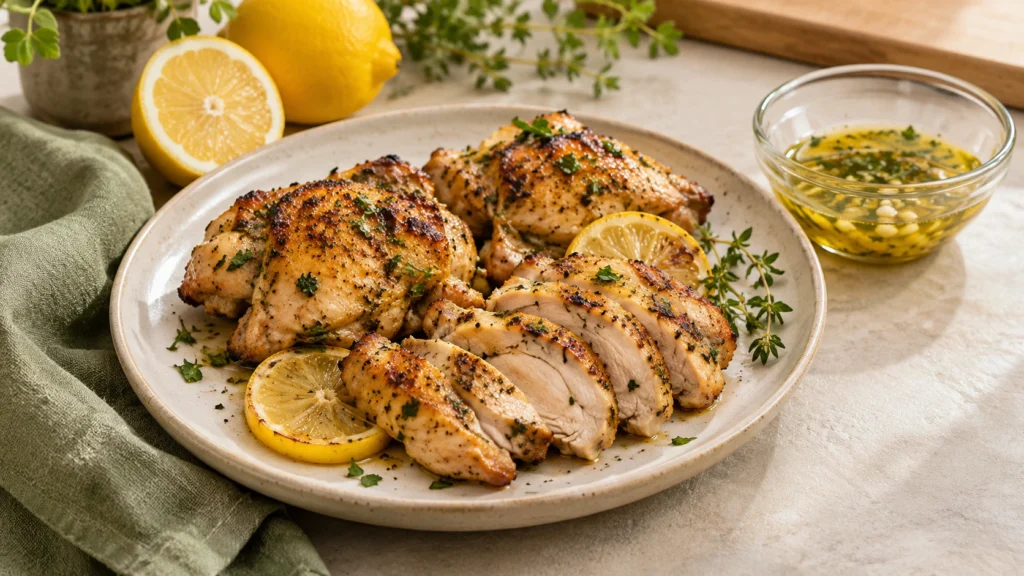
Chicken can become mushy after marinating when strong acids or tenderizing fruit enzymes change the surface proteins, especially on small pieces or with prolonged exposure. Check whether the softness is confined to the exterior, and review the marinade's ingredients, duration and storage. Texture changes cannot establish safety. Keep poultry refrigerated, discard used raw marinade and cook the chicken to 165°F (74°C).
Compare the exterior and interior texture
A lemon-marinated breast that feels oddly soft at the edges after cooking may have experienced a different problem from chicken that is completely dry inside. The surface had direct contact with the marinade, while the center was less exposed. In a small cube, the exposed surface makes up a larger proportion of the piece. This can cause a texture change to be more noticeable in small pieces than in an otherwise comparable whole breast. The first useful question is where the unusual softness occurs, rather than whether all marinades are good or bad for chicken.
When the chicken has been safely cooked, slice a piece and examine the texture from the exterior to the center. A pasty layer surrounding normally structured meat points toward something that affected the surface. If the whole piece disintegrates or has a suspicious storage history, do not automatically attribute that to lemon juice. An unusual texture can have several causes. The visual and tactile observations are clues about quality, not a home test for pathogens or proof that the marinade caused the exact result.
Before cooking, consider the handling record. Did the chicken stay refrigerated? Was it within the recommended raw poultry storage period? Was the marinade cleanly prepared before the meat was added? If the handling was unsafe, discard the chicken even if the marinade smells pleasant. Lemon juice, vinegar and strongly flavored spices do not turn unsafe raw chicken into a safely preserved food. Do not taste a raw marinade that has contacted poultry to decide if it is too acidic.
Quick diagnosis: match the symptom to the next step
| What you notice | Likely explanation | Next step |
|---|---|---|
| Soft exterior, normal center | Surface marinade exposure | Review formulation and contact time |
| Small pieces much softer | Higher exposed area relative to size | Match recipe cut dimensions |
| Questionable storage history | Possible safety problem | Discard if unsafe; do not rely on acid |
Review acid strength, exposure and cut size
Acid changes the way proteins behave
Citrus juice and vinegar are useful flavoring ingredients, but an acid-rich environment can change the properties of proteins at the meat's surface. Depending on the concentration, ingredients and duration, the result may be different from the pleasantly tender texture you expected. A surface that becomes soft or mealy is not necessarily evidence that the interior has become tender. The purpose of a marinade is commonly flavor and the intended eating quality, not unlimited structural breakdown.
Research examining vinegar marinades in spent hen meat found changes in structural and textural properties under the study's particular conditions. Such studies are useful evidence that marinade formulation affects meat structure, but they are not a universal household schedule for all chicken. Different cuts, types of acid, quantities and temperatures can produce different results. Use the HCCR marinade guide for complete recipe-oriented guidance and avoid extrapolating a laboratory protocol directly to your dinner.
Fruit enzymes are not interchangeable with citrus acidity
Fresh pineapple contains bromelain, an enzyme that can break down proteins. Research on pineapple extracts and chicken has reported measurable changes in tenderness under controlled conditions. That does not mean that the longer you marinate with fresh pineapple, the better the chicken will taste. An aggressive enzyme-containing mixture can change the mouthfeel substantially. A recipe developed around pineapple should be followed as written rather than treating the fruit like a simple substitute for lemon juice or oil.
Also distinguish between an ingredient's flavor and its functional effect. A sauce flavored with pineapple may not behave in the same way as a preparation using concentrated fresh fruit extract; processing affects enzyme activity. Do not use this distinction to assume an unverified product is inactive. Check the actual ingredient and the recipe's directions. When unsure, select a recipe specifically designed for that ingredient rather than introducing it into an overnight marinade without evidence.
Exposure depends on the size and shape of the meat
Small kebab cubes, thin cutlets and chicken tenders have substantial exposed area relative to their volume. A whole breast has a different surface-to-center relationship. A marinade schedule that suits one shape might be less suitable for another. Keep portions consistent and avoid cutting the chicken much smaller without considering whether the recipe still fits. A batch of tiny cubes can develop a surface texture that dominates the bite, while the same effect on a large fillet may be concentrated at the edge.
Look at exposure time as well as composition. If a dish worked when marinated shortly before dinner but became mealy after sitting much longer, duration is a variable worth reviewing. If the time stayed the same but you replaced a mild mixture with concentrated citrus or fresh pineapple, the formulation is a more useful suspect. Change one factor next time, using an appropriate tested recipe, so you know which difference mattered.
For your next meal, compare the options in our indian & pakistani chicken recipes collection and select a method that fits the texture you want.
For a complete recipe to compare against your preparation, see Chicken Kabob Recipes. Follow the recipe’s actual cut, size and cooking directions rather than assuming the same timing applies to a different preparation.
Choose a gentler schedule and avoid reusing raw marinade as sauce
If today's chicken is already marinated
First verify its handling. If the raw chicken has been kept safely refrigerated and is within safe storage limits, remove it from the marinade according to the recipe and discard the used mixture. Avoid rinsing under running water, which can spread raw juices. Patting off excess surface liquid with disposable paper towel when suitable can help with browning, but it does not reverse an existing structural change. Cook promptly using the method appropriate to the cut and confirm the safe center temperature.
If the safely cooked meat has only a mild surface problem, serving in a sliced or chopped format with complementary ingredients may improve the overall bite. A severely mushy exterior cannot reliably be returned to normal by adding more acid or cooking until the surface becomes hard. Additional heat may dry the normal interior while doing little to correct the damaged structure. Decide whether the quality is acceptable after safe cooking rather than promising that every piece can be restored.
If you need to prepare dinner earlier
Prepare clean marinade ingredients separately and refrigerate them when needed. Keep raw poultry refrigerated in an appropriate container until the recipe calls for combining them. When a recipe is intended for a shorter exposure, separating preparation from marination allows you to do some work in advance without extending the meat's contact with the acid. For ordinary home handling, USDA advises storing poultry in marinade in the refrigerator for no more than two days; this is a safety ceiling, not a suggested texture target for every recipe.
Use the chicken marinade problem solver to compare how marinade ingredients and contact time may have affected the texture.
A fresh serving sauce is best made from a portion set aside before any marinade touches raw meat. If raw-used marinade is to be used in a sauce, USDA requires boiling first; do not save or reuse leftover raw marinade. The simplest practice is to make a separate clean portion for brushing at the end or serving at the table. Wash the container, knife and surfaces that held the raw poultry and use clean utensils for the finished chicken.
A one-variable comparison for your next meal
Imagine a kebab recipe prepared with larger cubes on one occasion and much smaller cubes on another. The spice mixture and duration were unchanged, but the smaller pieces developed a soft outer texture that dominated each bite. On the next attempt, return to the original piece size and follow the recipe's instructions, checking the center independently. If the problem remains, review whether a different acidic ingredient or longer exposure was introduced. Keep a short record of the cut, ingredient amounts, timing, storage and finished texture, so the result informs the next decision.
For broader method and preparation guidance, use our chicken marinade guide.
Sources and references
- FoodSafety.gov — Safe minimum internal temperatures — Thermometer and poultry / stuffing / leftovers safe endpoint.
- USDA FSIS — What is the safe way to marinate poultry? — Refrigerated marinade up to two days; discard or boil raw-used sauce.
- Technological and textural properties of spent chicken meats as affected by pineapple fruit juice — Pineapple juice affects texture in a controlled spent-hen study; not an all-purpose time schedule.
- Assessment of the impact of fruit vinegars on spent hen meat — Acidic marinade can change structural and textural properties; study specific.
Frequently asked questions
Can an acidic marinade make only the surface soft?
Yes. Direct contact with a strong acidic mixture can affect the exterior more than the center. The extent depends on the formulation, exposure and piece size. Surface texture is not a safety indicator.
What should I change if I prep the chicken earlier?
Prepare the ingredients or clean marinade separately, then combine with refrigerated raw chicken at the time specified by the recipe. Avoid unnecessarily extending exposure and stay within USDA refrigeration guidance.
Can pineapple make chicken mushy?
Yes, pineapple contains protein-degrading enzymes that can affect texture. Follow a recipe specifically designed for pineapple rather than extrapolating from a different marinade or extending the contact time arbitrarily.
Can I fix meat after over-marinating?
Not reliably. Remove the used marinade, cook safely if handling was appropriate, and evaluate whether the texture is acceptable. Trying to reverse the softness with more acid or prolonged cooking may produce a worse result.
Does a citrus marinade kill bacteria on raw chicken?
No marinade should be relied on to make raw poultry safe to eat. Prevent cross-contamination, refrigerate properly and check that the thickest part reaches 165°F (74°C).
Can I serve the used marinade with cooked chicken?
Do not serve uncooked marinade that touched raw poultry. Set aside a clean portion before marinating, or boil the used marinade before using it as a sauce, following USDA guidance.


