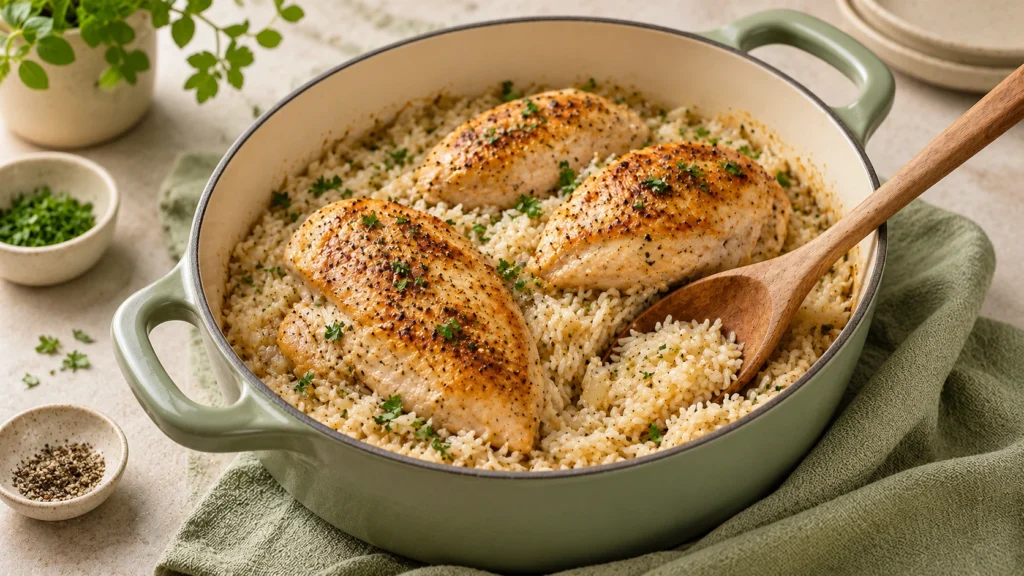
If the chicken has reached 165°F (74°C) but the rice is hard, move the chicken to a clean plate and check the bottom of the pot. When liquid remains, cover and continue cooking the rice gently. If the pot is dry, add a little hot water or unsalted broth and cover it again. Check the grains separately before returning the chicken to the dish.
Check how much cooking liquid remains
Chicken and rice reach their finishing points by different routes. A thermometer can show that the thickest part of a chicken piece has reached a safe temperature while the rice still needs water and time. Lift a few grains from the center and edge once the pot is safe to sample. Rice that is tender outside but has a crunchy, chalky center still needs cooking. If the grains are uniformly tender but packed together, the issue is texture or stirring, and additional liquid may make the pot pasty.
Use a spoon to open a small channel at the edge and look for free liquid. Check more than one spot if the pot is large, since a puddle can collect on the low side. If the rice is hard and loose liquid flows back into the channel, retain that moisture. If the channel stays dry and there is no steam left under the lid, a little liquid can help restart cooking. If there is a burnt smell or a dark layer on the bottom, gently transfer the unburnt rice to a fresh pot before trying to finish it.
| Rice and pot condition | What to do | What to avoid |
|---|---|---|
| Crunchy rice with liquid still visible | Cover and continue at a gentle simmer | Adding broth before the remaining liquid has a chance to work |
| Crunchy rice and a dry bottom | Add a little hot liquid and cover promptly | Flooding the pot in one pour |
| Hard grains above a scorched layer | Transfer the unburnt portion to a clean pan | Scraping the scorched bottom into the rice |
| Tender but wet rice | Let excess moisture escape briefly or rest as appropriate | Treating tenderness as a cue for more liquid |
Use a covered finish that fits the pan
For a stovetop absorption recipe, use the lid that fits the pan tightly. USA Rice notes that the lid seal affects how much water is retained and how much escapes as steam. Return a damp pot to a gentle simmer, cover it, and leave it undisturbed long enough to build steam. Recheck after a short interval. Look for progress in the center of grains from different parts of the pan. When they are nearly tender and visible liquid is gone, use the recipe’s covered rest if appropriate. A brief rest can distribute remaining moisture but will do little for very hard grains in a dry pot.
If the rice needs additional moisture, drizzle a small amount of hot water or unsalted broth over the driest areas and around the edge. Start with an amount that moistens the bottom without leaving rice swimming. How much that takes depends on the amount of rice, the size of the vessel and how dry the grains are. Bring the pot back to a gentle simmer, cover and reassess before adding more. If the base is already salty, warm water is usually a simpler choice than seasoned stock.
Decide when to move the rice
A separate pan can be useful when the cooking vessel has a broad scorched layer or when you want a smaller vessel with a better lid seal. Transfer only the portion that lifts away easily and continue cooking it immediately. Avoid treating a pressure cooker like a stovetop pan. Follow the manufacturer’s instructions for safe release and opening, and use an appropriate stovetop vessel for a manual finish after the cooker is safely opened. Liquid requirements for pressure cooking are equipment- and recipe-specific.
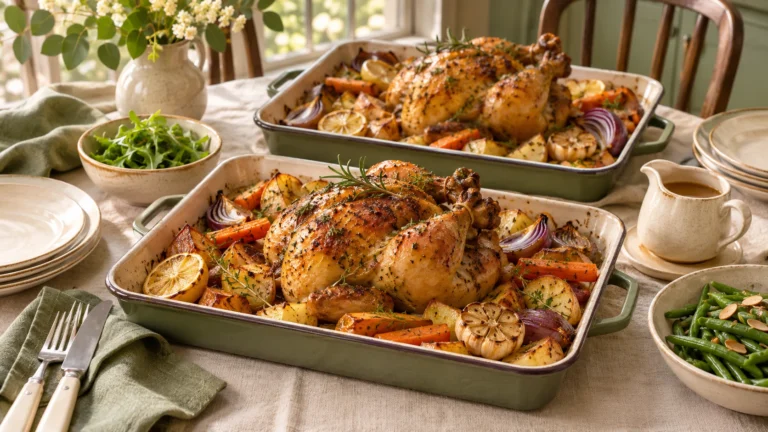
In a chicken and rice bake, the foil or lid serves a similar purpose during the covered stage. Replace any torn foil if the recipe calls for a sealed bake. If one corner of a large dish remains underdone, compare it with the center before adding more broth. Uneven depth or a foil gap may explain why part of the pan needs more time. Stick to an oven-safe dish and avoid sudden heating or adding hot liquid to a fragile dish in a way its manufacturer prohibits.
For a different vessel and cooking schedule, see Instant Pot Chicken and Rice Recipes.
Work backward to the original cause
Imagine a Dutch oven recipe designed for long-grain white rice. You use a skillet because it offers more room for the chicken, then cover it with an ill-fitting lid. Toward the end, the chicken is fully cooked and the rice crunches, but the bottom looks dry. A little hot liquid and a snug lid can get the grains cooking again. On the next attempt, use the specified Dutch oven and watch for steam leaking around the sides. Moving the same ingredients back into the intended pot tests the most likely cause.
A change in rice type can create a different mismatch. Brown rice commonly needs a longer cooking window than white rice, and instant and parboiled rice behave differently as well. Use the exact variety the recipe specifies, or choose a recipe built for the variety you have. Read the package and the recipe together. A package ratio sets expectations for plain rice, while a chicken recipe may already count juices, stock or liquid from other ingredients. Adding the full package amount on top of the recipe’s liquid can leave the next attempt wet.
Avoid changing several variables at once
When doubling a dish, pot depth, exposed surface area and the time it takes to reach a simmer may all change. Two pots or two oven dishes can preserve the original depth and cover. Record the rice type, actual measured liquid, covered time and any ingredient substitutions. If the same mismatch recurs with the correct equipment and grain, a recipe that starts the rice earlier or adds cooked chicken near the finish may fit your schedule better. A one-pot meal can still have staggered ingredient timing.
Check safety and serve the components together
Verify chicken at 165°F (74°C) with a food thermometer in the thickest part, avoiding bone. Move fully cooked chicken only to a clean plate, and return it promptly when the rice is ready. If chicken is still under temperature, finish cooking it promptly before using it in a ready-to-serve dish. Refrigerate leftover chicken and rice promptly in shallow containers. Reheat leftovers to 165°F (74°C).
For other one-pot cooking techniques, browse Sheet Pan & One-Pot Chicken Recipes.
Check for an uneven cook across the pot
If the rice is hard in only one area, compare thickness and moisture in that area with the rest of the pot. Chicken pieces may press some rice further down while leaving a shallow exposed patch elsewhere. A pot sitting slightly off center on the burner can also make the edge closest to the heat progress differently. Check a few grains and the liquid in each area before stirring everything together. A small addition to a dry patch can be more effective than watering down the whole pan.
When one side is noticeably browner, lower the heat and center the pan before finishing. If the grain is partly cooked and tends to break apart, avoid vigorous stirring. Spread the rice into a more even layer with a spoon where practical, add moisture where it is missing and replace the lid.
Once the rice is tender, bring the chicken back with any juices that collected on its clean plate if they suit the dish. If the rice is already properly moist, slice the chicken over each serving instead. That makes it easier to portion the two components without disturbing the grain.
For more on thermometer use and storing cooked chicken, see the HCCR chicken food safety guide.
Sources and references
Frequently asked questions
What if the pot is dry but the rice is hard?
Add a little hot water or unsalted broth, cover tightly, and bring it back to a gentle simmer. Check tenderness before adding more. If the bottom has burned, transfer the unburnt rice to a fresh pan.
Can I finish the rice separately?
Yes. A smaller pot with a snug lid can give you better control over the steam and liquid. Transfer the rice and any usable cooking liquid and finish promptly.
Can brown rice replace white rice directly?
Choose a method developed for brown rice. Its longer cooking window changes when the chicken needs to go in and how much liquid the dish needs.
Why does doubling change how the pot cooks?
More depth and a different ratio of surface area to contents alter heating and evaporation. Using two matching vessels can preserve the original geometry and lid fit.
Why is my rice undercooked when the chicken is done?
The grain and meat cook at different rates. A loose lid, a quick-cooking chicken cut, too little liquid, or a slower rice variety can leave the rice behind. Check free liquid in the pot and finish the rice separately if necessary.