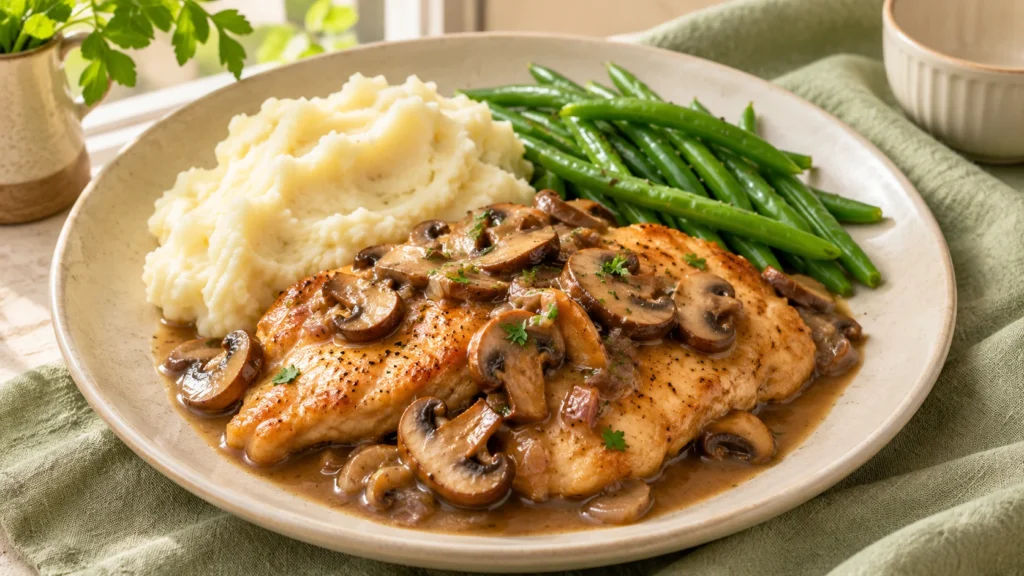
Serve chicken Marsala with a mild starch and a simply seasoned green vegetable. Mashed potatoes, plain noodles or polenta can catch the mushroom sauce. Green beans, broccoli or leafy greens add contrast without bringing a second strong sauce. Check how much liquid your recipe produces and put the starch beside or below the chicken where it can catch a spoonful. Keep crisp greens and strongly dressed sides separate until serving.
Match the side to the Marsala sauce
| Situation | What to do |
|---|---|
| Mild starch | Set it within reach of the sauce. |
| Green side | Keep its seasoning simple. |
| Last-minute plating | Serve greens away from pooled sauce. |
Start by tasting the sauce you are actually making
Marsala recipes vary. Some use a lighter pan sauce with mushrooms and wine, while some add cream or reduce to a thicker finish. Before buying sides, read the recipe and see whether the sauce is meant to coat the chicken or provide a generous amount for the plate. Check how much it makes at your serving count. A good starch should work with that amount rather than requiring you to stretch the sauce.
Taste sauce only after any raw-contact ingredients have been cooked as the recipe directs and the chicken reaches 165°F (74°C). Judge the sauce with a small bite of the starch you plan to serve. A thick or salty sauce may need a plain side. A lightly seasoned sauce may pair well with a modest amount of butter or herbs. Choose seasoning after tasting the finished plate rather than making every component as strongly flavored as the main.
Look for the reason you are adding a side. You might need something to catch sauce, a vegetable with a firm bite or a larger meal for several diners. If the sauce already includes lots of mushrooms, a simple mild vegetable provides another texture. If a guest wants less sauce, give the chicken and starch separate space and offer a small clean sauce spoon at the table.
Compare mild starches by how they serve
Mashed potatoes work when you want a soft base. Make them with light seasoning so they can take a little Marsala sauce. They can fill a center area beneath the chicken or sit in a mound beside it. If you want the potatoes to stay separate, make a small hollow for sauce rather than pouring across the whole plate. Use a stovetop method or an appropriate reheating method for safely stored leftovers. Reheat leftovers to 165°F when serving hot.
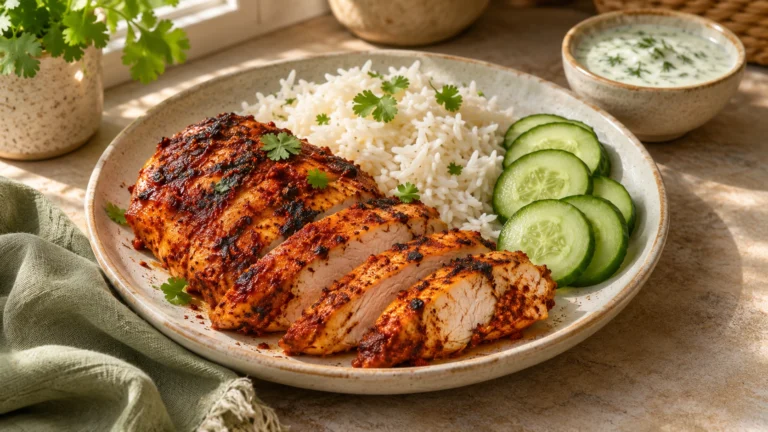
Plain noodles work when you want the meal a little lighter and can spare a burner. Start them so they can be drained close to service. A small amount of pasta set beside the chicken is easier to sauce than a large tangle below it. Skip a second cheese or tomato sauce on the pasta when you want Marsala to lead. Plain rice can serve the same practical purpose if that is what you already planned. Follow rice-specific storage and cooling guidance for anything saved.
Soft polenta is another option when you have a burner and time to stir. Choose the recipe and decide whether you can manage it while finishing the chicken. If the pan sauce needs your full attention, a prepared starch or simple bread may be easier. Bread works best beside the plate when there is only a small amount of sauce, so diners can dip as they go.
Add a green side with its own texture
Green beans can be prepared in advance and cooked near the end. A simple steamed or sautéed version keeps their flavor distinct. Drain them before plating. Broccoli can work with the same logic, especially if you have a separate oven tray and want browned edges. If the stove is busy and the oven is free, choose a vegetable recipe that fits the time you have.
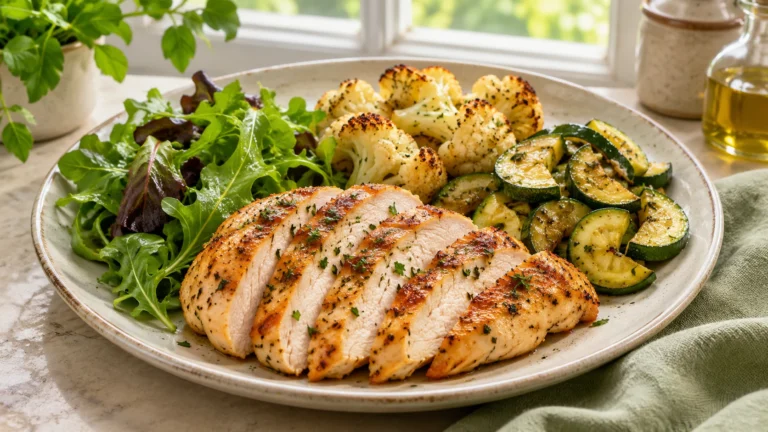
Leafy greens can work as a warm sauté or a separate cold side. If the chicken sauce is rich, a lightly dressed salad can bring freshness. Keep it in a separate bowl so the hot sauce does not wilt the whole salad. Taste before adding much vinegar or lemon. A side with a strong competing dressing can make the sauce harder to taste.
Make the green side on clean equipment and keep it away from raw poultry and its tools. If a warm vegetable is done first, serve promptly or verify safe hot holding at 140°F (60°C) or above when needed. A chilled side can wait in the fridge until the chicken is ready.
Build one easy plate and one larger dinner
For an easy weeknight plate, cook plain noodles on one burner and chicken Marsala on another. Prep a chilled green salad first and dress it when the sauce is finished. If you have only one usable burner, choose bread and cold greens, or make a starch by another suitable appliance. Put the chicken beside a modest serving of noodles and spoon sauce over both only where you want it. Serve salad separately.
For a larger dinner, serve chicken Marsala with mashed potatoes and green beans. Start potatoes first, then begin the chicken at the time its recipe calls for. Trim beans before handling raw chicken and set them aside. Finish them on a third burner or use a suitable oven method if your stove is full. Verify chicken is done and let the sauce reach the right thickness before plating. Have clean platters ready.
Cornell Cooperative Extension’s chicken Marsala is a documented example of chicken served with mushrooms and a Marsala pan sauce. For a different version, use the HCCR recipe linked in this guide and follow its specific sauce and cooking order. A side built for that timing may need adjustment if your version calls for a longer reduction or uses a different cut. For guests, set the starch near the main and put greens at the end of the line. Put a separate spoon with the finished sauce. The simple layout helps people serve the amount they want without flooding vegetables or revisiting the hot pan.
Use the serving spoons to control the sauce
For plated dinner, place the green side away from the edge of the chicken where the sauce is likely to pool. Set the starch close enough that a guest can drag a bite through the sauce. When serving from the pan, give the sauce its own clean spoon and add a little at a time. If the main already carries a thick sauce, keep the remainder in a small vessel so the vegetables do not get covered. If there is very little sauce, give each cutlet a spoonful and leave the bread or starch optional.
For a dinner with several people, make the greens the flexible piece. Prep a chilled salad as a backup if the beans will have to wait for a burner. If the chicken finishes earlier than the starch, decide whether to serve the chicken with bread or maintain verified hot holding. For a recipe with a longer sauce reduction, delay dressing greens and keep a serving plate ready. That makes it possible to plate the main and starch together without turning the green side into another wet dish.
Sources
Frequently asked questions
What should I check first when choosing a Marsala side?
Check sauce quantity, salt, thickness and appliance space. Match a starch or green side to the result you want.
What if my version uses cream?
Choose a simply seasoned side, such as green beans alongside a modest portion of plain starch.
Does pasta need its own sauce?
Plain noodles can catch a little Marsala sauce. Use a separate sauce only if that is the flavor you want.
What works when I have one burner?
Plan chilled greens and bread or a starch prepared in another appliance so the chicken and sauce can use the burner.
Should I put chicken over the potatoes?
That works if you want the sauce to reach the mash. Put them beside each other if you want more control.
What is a good side for a large meal?
Try lightly seasoned mashed potatoes and green beans. Set out the sauce, starch and greens in separate serving areas.