Pack cold chicken with sides that hold their texture and fit the way you will eat lunch. Try a whole apple, crisp carrot sticks or a chilled grain salad, with dressing and juicy ingredients separate. Keep safely cooked chicken and other perishable foods at 40°F (4°C) or below during transport. Use an insulated bag with at least two cold sources and refrigerate it at your destination when possible.
Pack cold chicken and sides
| Situation | What to do |
|---|---|
| Sturdy fruit | Pack a whole apple or keep cut fruit chilled. |
| Crunchy vegetables | Drain well and store dressing separately. |
| Perishable sides | Use two cold sources and keep foods at 40°F or below. |
Start with the chicken and the lunch setup
Check the chicken’s original cook date and storage history. USDA generally recommends using properly handled cooked chicken within three to four days at 40°F or below. The chicken should have been chilled within two hours out of temperature control, or one hour when the air was above 90°F (32°C). If its history is uncertain, use another protein for the lunch. Adding a fresh side does not extend the chicken’s window.
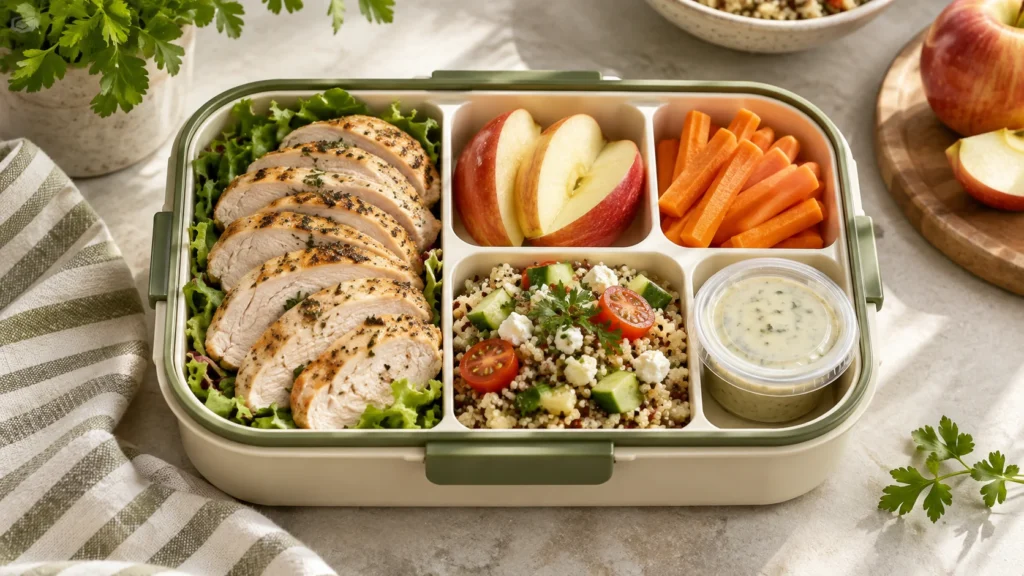
Look at where you will eat, whether you have a refrigerator or clean work surface and how long the chicken must travel. A fork-friendly box with chicken and vegetables suits a short office break. A grain salad can be useful if you want a larger meal and have enough cold storage. If you cannot keep perishable ingredients cold until lunch, choose a meal that does not need refrigeration.
Decide the size of the chicken portion before adding sides. A few slices can go with a grain or bean dish and a vegetable. A fuller portion may need just fruit and cut vegetables. Choose a menu you can assemble with clean utensils and a suitable container, rather than packing several items that spill or need attention at lunch.
Choose fruit and vegetables that hold up
A whole apple, pear or orange can travel apart from chilled food, depending on whether it requires refrigeration and how it was prepared. Cut fruit goes into a clean sealed compartment and should be kept cold. Choose firm pieces if you want them to stay easy to eat. Keep juicy fruit away from dry crackers, bread and the chicken’s seasoning.
For vegetables, wash and dry produce before cutting unless it is a product intended to be used as sold. Carrots, peppers and cucumber can bring crunch. Drain cucumber and other watery ingredients, and put dressing in a separate cup. If a vegetable bruises or softens quickly, choose a sturdier one or pack it in a hard-sided container. Keep fresh cut vegetables away from any raw poultry prep.
Choose the cut based on how you will eat at work or school. A small piece for a fork can go beside chicken in a bento-style box. Larger sticks can travel separately if you plan to dip them. Pack dips that require refrigeration with the chilled components. If your break is short, choose a fruit you can wash before packing and eat without peeling or cutting it at the table.
Add a grain or bean side if you need more food
Use a thoroughly chilled grain or bean salad and a modest dressing. A separate container keeps its moisture away from the chicken and crisp vegetables. Test the texture at home first if you have never used the recipe cold. Firm grains can suit a lemon dressing, while a softer base can use a small chopped vegetable for contrast.
If choosing a cooked rice side, follow rice-specific cooling and storage guidance. The UK Food Standards Agency advises chilling rice quickly, ideally within one hour, refrigerating for up to 24 hours and reheating only once. Keep prepared grain or bean sides cold during transport and apply the earliest appropriate deadline if you combine them with chicken. A container of mixed leftovers has the handling history of all its ingredients.
Canned beans can offer a filling side without cooking that morning. Drain as the recipe directs and keep prepared portions chilled. Use a clean spoon and season lightly if the chicken is already salty or strongly flavored. If you want an easier box, pack bread or crackers dry and keep the chicken and cut produce cold in separate containers.
Pack wet ingredients separately
Put dressing or dip in a sealed small cup. Keep tomatoes, pickles and juicy fruit away from crunchy items. Use separate compartments with secure lids if the bag will be tipped or carried sideways. Cold chicken can go into its own small section so you can toss it with grain salad at lunch or serve it beside the other foods.
Set out utensils and any dry snacks before taking perishables from the refrigerator. Pack them last from a chilled starting temperature. Place one cold source above and one below the perishable food when practical. USDA recommends at least two cold sources for packed perishables. Put the lunch in a refrigerator as soon as you can when you arrive and keep it at 40°F or below until serving.
Put together two easy lunch boxes
For a light lunch, choose chilled sliced chicken, carrot sticks and a whole apple. Pack a dip separately if you want it. For a more filling lunch, choose chicken, cooked grain or drained beans, cucumber and a little dressing. The first can suit a short break, while the second gives you a full plate you can mix with one fork. Keep both cold and use only portions whose storage you can verify.
Check how the lunch will be eaten before you seal it
A lunch with a firm grain salad, chilled chicken and crunchy vegetables can become a single bowl at the table. Put the grain in the container you will eat from and pack the meat alongside it. Keep dressing in a tightly closed cup. Add the dressing just before eating so you can stop when the grain is coated. If there is fruit too, give it a separate section so the flavor stays distinct.
For a lunch with few utensils, choose ready-to-eat items that can be handled easily. A whole fruit, carrot sticks and chilled sliced chicken need very little assembly. Pack dip only if you have room to keep it cold and the container will seal. If the bag has no flat base, put heavier containers underneath and use a separate pouch for dry crackers. Check how the previous lunch traveled and adjust the next pack before buying more containers. The goal is a lunch you can keep cold and open without leaking or needing to wash extra dishes at work.
Sources
Frequently asked questions
What fruit travels well with cold chicken?
A whole apple or orange can be easy to pack. Keep cut fruit chilled in a separate container.
What vegetables keep their crunch?
Try carrots, peppers or drained cucumber. Add dressing just before eating.
Can I pack a grain salad with chicken?
Yes, use a safely chilled portion and keep it cold. Follow specific guidance if it contains cooked rice.
How do I keep the lunch cold in transit?
Use an insulated bag with at least two cold sources and refrigerate it when you arrive if possible.
What if I have no fridge at work?
Use a cooler setup that can maintain 40°F or below until lunch, or choose a different meal.
Should I mix dressing in at home?
Pack it separately if you want vegetables or bread to stay crisp.