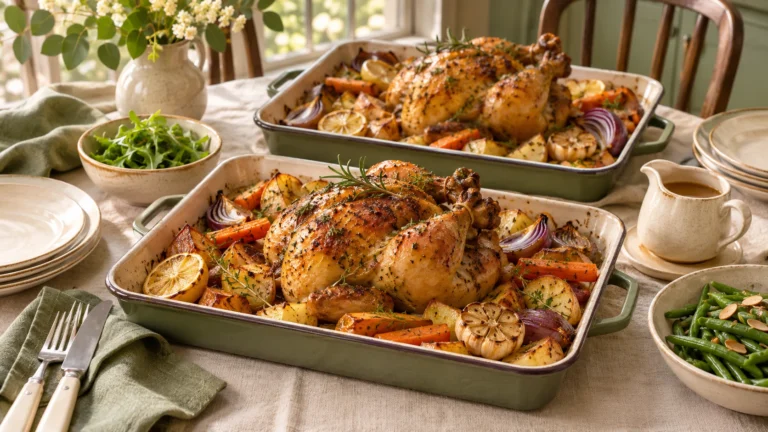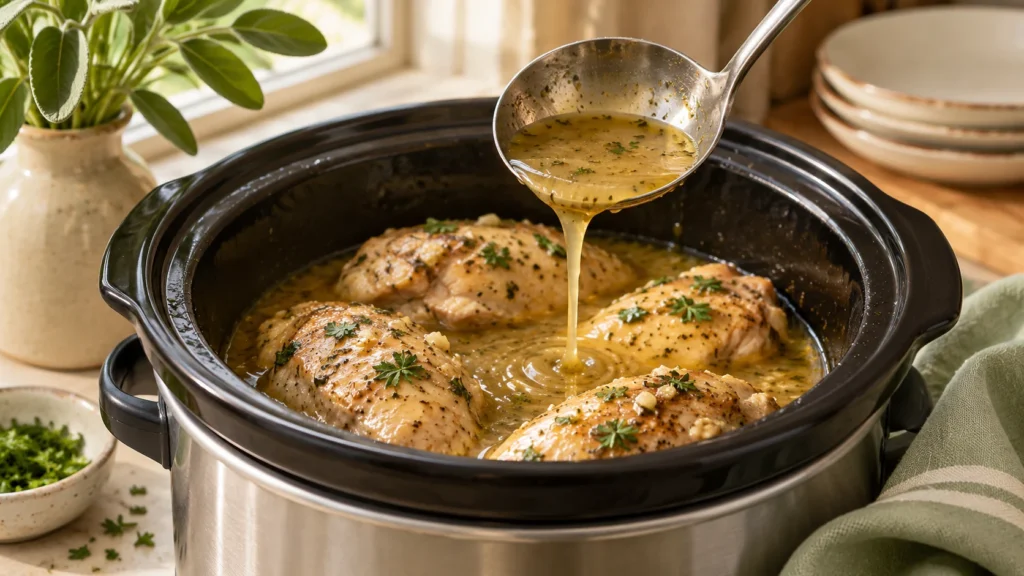
Slow cooker chicken sauce often stays thin because a covered cooker loses less water than an uncovered pan and chicken and vegetables release liquid. Finish the chicken safely using the recipe's intended lid and settings. Once it reaches 165°F (74°C), hold it safely and reduce or thicken the sauce separately as appropriate.
Expect the covered cooker to keep water in the dish
Moisture rises and condenses on the lid. Much of it can fall back into the pot instead of evaporating into the room. A sauce that would become concentrated in an uncovered skillet may stay loose over hours in the slow cooker. The cooking time is doing a different job. It gives the ingredients time to cook while the lid helps maintain the intended conditions.
If a stovetop recipe was converted without a tested adaptation, it may bring more starting liquid than the slow-cooker version needs. Review the amount called for by a recipe designed for your appliance and cooker's capacity. Do not lower the liquid arbitrarily or lift the lid repeatedly to try to fix texture during cooking. The manufacturer and recipe account for liquid, load and heat as part of safe cooking.
Choose an adjustment after cooking
| Situation | What to do |
|---|---|
| Thin and underseasoned | Reduce a safely cooked portion in a separate pan. |
| Thin but flavorful | Use a compatible measured thickener or a side that catches liquid. |
| Chicken not ready | Keep cooking as directed and verify 165°F before changing the sauce. |
Identify what the ingredients contributed
Chicken, onions, spinach and other vegetables add moisture as they heat. Their amounts and preparation matter. Adding a much larger portion of vegetables or a frozen ingredient contrary to the recipe can shift both the liquid and the timing. USDA recommends thawing raw poultry before using a slow cooker. Follow the recipe and manufacturer for any other ingredients and for the cooker fill.
The original sauce may also have been thinner than you realized. A carton of broth and tomato paste have different effects from a prepared sauce. Read the amount after any dilution. If you substituted a larger chicken cut or included pan-deglazing liquid after searing, account for that in the recipe's total. Keep one note about what changed, so the next batch is easier to evaluate.
Finish the chicken before adjusting the sauce
Use a food thermometer in the thickest meat and check 165°F. When the chicken reaches that point and is where you want it for texture, move it to a clean heat-safe dish if you need to adjust the sauce separately. Keep it at 140°F (60°C) or above in verified hot holding if there is a delay. Do not treat a cooking or warm setting as a guarantee of food temperature without checking.
If the poultry is not yet safe, continue cooking immediately as directed. Avoid tasting any liquid that contacted raw chicken until it has cooked safely. A watery appearance gives no indication of whether the center is ready. Once the food is safe, decide whether to concentrate flavor, add body or just serve it as a looser sauce.
Reduce when the sauce can take more concentration
Transfer a manageable amount of safely cooked sauce to a suitable saucepan. Simmer it as the recipe allows, watching how it coats a spoon. A shallow wide pan may reduce more quickly than a deep one. Taste only a safely cooked spoonful and check salt before going much further. Reduction may make a very salty or sweet mixture less balanced.
If the sauce is already strongly flavored, use a compatible thickening method instead. A small measured slurry may be suitable for a recipe that calls for it. Mix it in cool liquid, stir and heat as directed by the chosen thickener. A blended portion of cooked vegetables can work when added flavor and opacity suit the recipe. Keep chicken out of the hot pan until the sauce is ready for it.
Decide whether the meal needs all the sauce
Sometimes a thin cooking liquid is fine when it is served over rice, bread or potatoes. Use a slotted spoon to serve chicken and put a little sauce beside it. Save the safely handled remainder in a shallow clean container or use some of it in an appropriate finished dish. Adding a topping or a separate seasoning can work when the original liquid is too mild to carry the full meal.
If you want a thick coating, test one portion rather than adding too much thickener to a large pot. Spoon it over the chicken and look at how quickly it spreads. At serving temperature, a sauce can seem looser than it does after a few minutes. Stop once it does the job you need and return the chicken only as appropriate.
Plan the next cook using the same variables
Make the recipe once as written with thawed poultry, the stated load and its specified covered time. Record any vegetables that released liquid and how the sauce felt just after cooking. Then choose whether you want a separate planned reduction. Do not turn an untested lid-off change into the normal cooking method. A predictable final saucepan step can be easier than trying to get simultaneous doneness and thickening in a covered cooker.
Read the consistency after the entire batch is safe
Ladle a little sauce into a clean heat-safe cup. If your main issue is weak flavor, concentrate a small sample and see whether the seasoning improves. If you like the taste but want it to stay on the chicken, select a compatible thickener and test that separately. If a sample leaves an oily layer along the edge, skim the free fat before you decide whether you want it thicker. A brief test lets you find which property of the sauce is bothering you and avoid changing the whole batch prematurely.
Choose a side that makes a thinner sauce useful
If you need dinner quickly, serve the safely cooked chicken over mashed potatoes or rice and spoon some liquid around it. Keep the extra separately if it has a safe handling history. If serving chicken on a roll, use a slotted spoon and add sauce at the table to avoid soaking the bread. For a future meal, measure the liquid you reserve and record what the original recipe yielded. Do not leave a deep cooker insert full of leftovers to cool. Divide eligible food into clean shallow containers and chill promptly. When reheating, bring the leftover sauce to a boil and verify hot chicken reaches 165°F.
Sources
Frequently asked questions
Why does the sauce stay thin after hours?
A lid limits evaporation and ingredients release moisture into the cooking liquid.
Can I take the lid off while the chicken cooks?
Keep it as the recipe and appliance instruct. Finish excess liquid separately after safe doneness.
Should I use less liquid next time?
Choose a tested slow-cooker recipe suited to the cut and capacity rather than reducing required liquid by guesswork.
Can I reduce the sauce without the chicken?
Yes. Hold fully cooked chicken safely and concentrate the sauce separately if its seasoning allows.
Does a slurry always help?
It can add body when suitable. Use a tested amount and follow its cooking directions.
What if I like the flavor but it is thin?
Serve a little with a side that catches liquid, or use a measured thickener rather than reducing further.