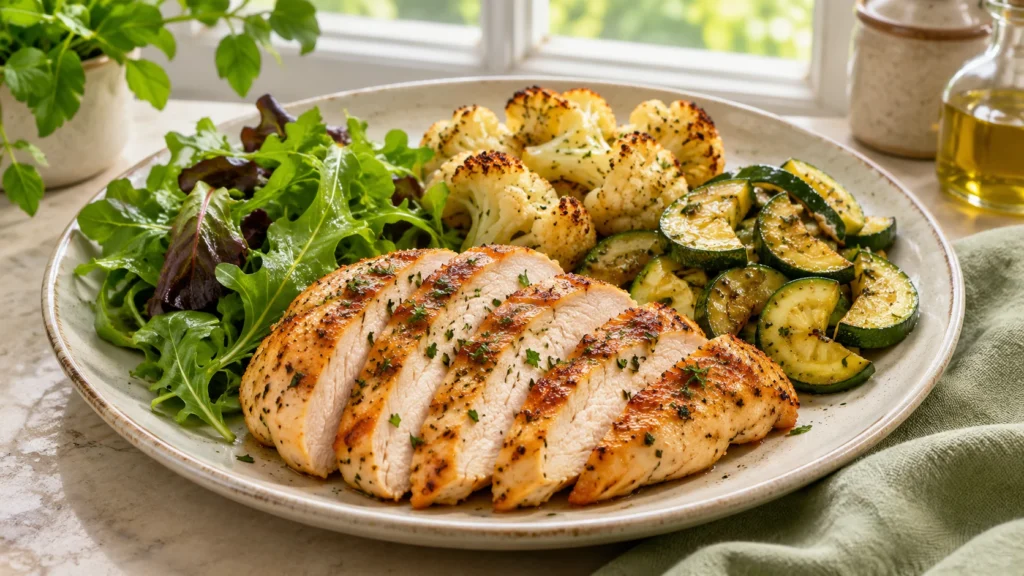
Serve leafy salads with creamy chicken, roast cauliflower or broccoli with juicy chicken thighs, or cook zucchini, mushrooms or cabbage in a skillet when the oven is full. Choose a vegetable side by texture and sauce first. If you track carbohydrates, compare actual portions and include added ingredients such as glazes or sweetened dressings.
Make a clear comparison when choosing a side
Here, lower-carb means a vegetable side that can replace a more starch-heavy side in the same meal. A serving of cabbage slaw or roasted cauliflower can take the place of potatoes, bread or rice when that is the dinner you want. Portion size and preparation matter. A large dressed serving and a small plain serving differ, even if both start with the same vegetable. Use the amount you plan to eat when comparing ingredient labels or nutrition data.
Think about how satisfying the meal will be for the people eating. A raw salad and a thin piece of chicken may feel light after a long day. A larger warm vegetable portion or another side of your choice can make dinner work better. Offer starches separately if people want different plates. The pairing starts with the meal and the way you serve it.
Match a vegetable to the chicken dinner
| Situation | What to do |
|---|---|
| Creamy or strongly spiced | Serve a cool leafy salad or cucumber. |
| Juicy roast thighs | Choose roasted broccoli or cauliflower if the oven has room. |
| Oven full or pan sauce ready | Sauté zucchini, mushrooms or cabbage on a spare burner. |
Choose leafy and fresh sides for rich chicken
A salad of romaine, cucumber and herbs adds a cool crunch to creamy chicken. Dry the leaves well and toss them with a little dressing at the last minute. Use lemon or vinegar when the chicken sauce is mild. If the main is already sharp, use less acid and add fresh herbs. Keep the salad in its own bowl if the chicken sauce could run into it.
Thinly sliced cabbage with pepper or radish can hold its shape longer than tender leaves. Toss lightly and keep any wet toppings separate until serving. A fresh cucumber side also works with spicy chicken, especially when you have little time and no spare burner. If you add a packaged dressing, check the serving size and ingredients when exact carbohydrate amounts matter. A heavily sweetened dressing can change the comparison.
Roast vegetables when the oven has room
Cauliflower, broccoli and Brussels sprouts brown at the edges when cut evenly and spread out on a rimmed tray. Give them room so moisture escapes. Choose oven conditions that fit the vegetables or prepare them in a separate stage. When roasting chicken and vegetables at the same time, prevent raw juices from dripping onto vegetables that are ready to eat. Use separate utensils and clean serving plates. Cook poultry to 165°F (74°C).
Try roasted cauliflower with garlic chicken thighs and a spoonful of fresh herbs. With a bright lemon roast chicken, roast broccoli and taste before adding more lemon. If the chicken already has a dark sweet glaze, add simply roasted vegetables rather than a second glaze. Finish the vegetables with black pepper or chopped parsley. These additions can change the flavor without asking you to prepare another sauce.
Keep a fast skillet side ready for one-oven dinners
Zucchini, mushrooms and cabbage can all cook on the stovetop while the oven is occupied. Slice zucchini thickly enough that it stays intact. Use a broad pan and a light layer of oil so some surfaces brown. Let mushrooms release moisture and brown before you add a wet sauce. Sauté cabbage until the edges soften but some bite remains. A quick side is easier to time if it uses the burner only during the last part of cooking.
For skillet chicken in a warm cream sauce, use the oven for vegetables or make a raw salad if the stove is full. For roast chicken with a packed oven, a quick pan of zucchini and mushrooms leaves the roasting timetable alone. For grilled chicken, serve chilled cucumber or choose a separate pan of green beans indoors. Pick the method by the space you actually have.
Match the side to the sauce and the portion
A lightly sauced chicken breast can sit over a bed of skillet cabbage or cooked zucchini. If the main has a lot of sauce, spoon it over only part of the vegetable and leave some dry. Roast cauliflower can pick up pan drippings, but soft leaves generally benefit from separate serving. If the chicken has crisp breading, keep wet vegetables and dressings away from the crust until service.
A complete menu might be grilled lemon chicken, sautéed zucchini and a small bowl of salad. Another might be creamy chicken breast with a cabbage and cucumber side. If you make a spicy glazed thigh, try broccoli or cauliflower for a mild surface beside it. These examples use different vegetables because there is a practical job for each, whether it is cooling the meal, adding crunch or catching sauce.
Plan leftovers and compare a repeat serving
Refrigerate perishables promptly within two hours, or within one hour if temperatures exceed 90°F (32°C). Use shallow containers and keep the refrigerator at 40°F (4°C) or below. Pack greens and dressing separately. For a meal that will be reheated, warm the chicken and any hot leftover sides to 165°F. Add a cold crisp side just before eating.
If you want to compare two portions, pick a side you normally make and weigh the portion you actually serve. Do the same for a replacement vegetable side, including any oil, coating, dressing or sauce that changes the recipe. Look up the data for the same preparation and units. The comparison is most useful when it reflects the plate rather than a raw ingredient amount alone.
Choose from fresh or frozen vegetables
Frozen broccoli or cauliflower can be practical when you need a second tray or a quick steam. Follow package directions and drain excess water before serving. For skillet vegetables, choose a pan large enough to let some of the moisture escape. If the vegetables are wet and the chicken coating is crisp, use separate dishes. When comparing plain vegetables with a pre-sauced bag, read the label for the actual prepared serving you plan to use. A little fresh lemon, pepper or chopped herbs can give a plain side a clear finish without another packaged sauce.
Sources
Frequently asked questions
What is an easy lower-carb vegetable side for chicken?
Try sautéed zucchini, roasted cauliflower or a cucumber salad. Choose the method that fits your cooking space.
What goes with creamy chicken?
Romaine, cabbage or cucumber can provide a crisp and cool bite beside a creamy sauce.
Can I serve the vegetables under the chicken?
Yes. Sturdy sautéed cabbage or roasted cauliflower can take some sauce. Serve leafy salads separately if you want them crisp.
Can a dressing change the carbohydrate count?
Yes. Compare the actual amount used and the label or ingredients when exact values matter.
What can cook while the chicken is in the oven?
Sauté zucchini, cabbage or mushrooms while the oven is occupied. A chilled salad also needs no burner.
Can I offer rice as well?
Yes. Serve it in a separate bowl so people can choose which sides or portions they want.