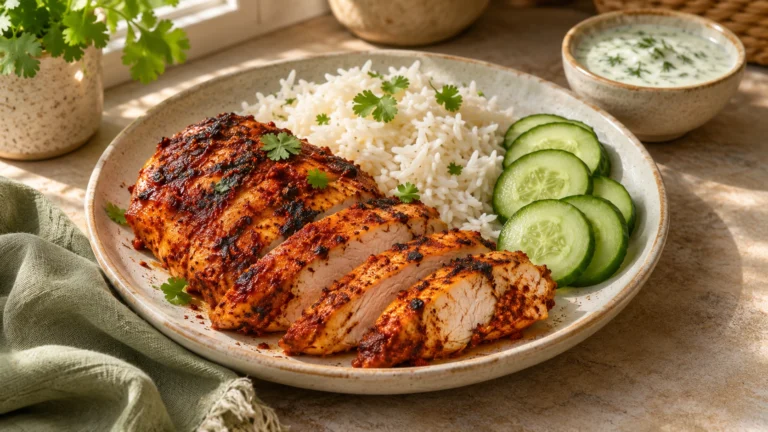
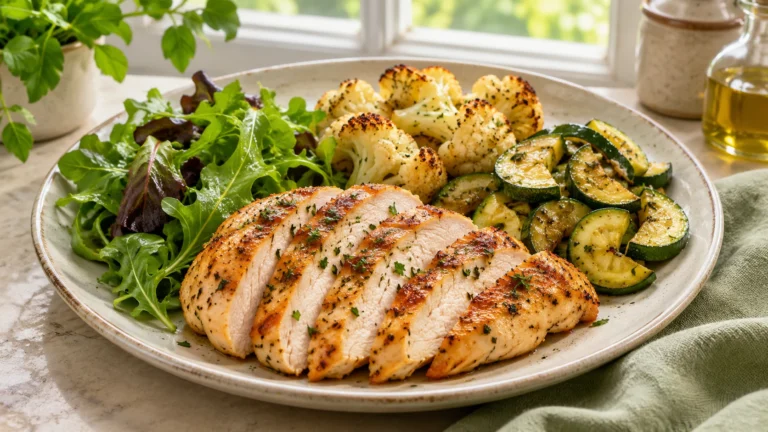
Serve roasted chicken thighs with browned roots and a green vegetable, grilled thighs with charred or raw crunchy vegetables, and braised thighs with greens that can take a little sauce. Choose the vegetable by the chicken's finish and the equipment you have free. When the oven or grill is already full, a skillet or no-cook salad is the better fit.
Match the vegetable to the surface of the chicken
Dry-roasted thighs often have browned skin and concentrated pan juices. Carrots or cauliflower suit that roasted flavor, while green beans or a sharp cabbage salad keep the rest of the plate vivid. Grilled thighs bring smoke and char. Give them a juicy side, such as grilled zucchini or a cucumber salad, so the whole plate does not have the same dry edges. Braised thighs already bring tender meat and plenty of liquid. Choose a vegetable that stays distinct in the sauce, such as lightly wilted greens, steamed green beans or sautéed cabbage.
Taste the chicken's sauce or seasoning when deciding how to finish the side. A lemon-heavy marinade may need only salt and oil on the vegetables. A mild braise often benefits from parsley or a little vinegar on the greens. For sweet barbecue chicken, choose a less sweet vegetable preparation. Raw cabbage dressed with vinegar serves a different role from glazed carrots even though either can sit next to the same thigh.
Match vegetables to the thigh method
| Situation | What to do |
|---|---|
| Roasted thighs | Roast roots and use a fast green side if the oven is full. |
| Grilled thighs | Use peppers or zucchini when the grate has room. Make a chilled salad on a small grill. |
| Braised thighs | Pair with green beans, cabbage or greens that can take some sauce. |
Roast roots on their own tray when space allows
Carrots, parsnips and cauliflower brown best when they have room. Cut pieces to a broadly consistent size and spread them in one layer. Use the chicken recipe's oven setting as the starting point and choose vegetables that work at that setting. If the chicken is on the upper rack and the vegetables are below it, use separate rimmed pans so juices cannot drip onto the vegetables. Check the vegetables for tenderness and color on their own timetable.
When you have only one oven rack, open a second cooking route. Roast the thighs and sauté green beans while the chicken finishes, or serve the roasted chicken with raw shredded cabbage. If you want to use a reliable one-pan recipe, follow its order and timing so the vegetables have enough space and anything exposed to raw poultry juices cooks safely. Chicken thighs should reach 165°F (74°C) when checked in the thickest meat away from the bone. Keep ready-to-eat vegetables and their utensils away from raw chicken and its juices.
Fit grilled sides around the occupied grate
Thick pieces of zucchini, peppers cut into broad panels and halved spring onions are easy to move around a grill. Choose cuts big enough for the grate or use a suitable vegetable basket. Toss vegetables lightly with oil and keep seasoning simple. Slice the vegetables after cooking if smaller pieces suit the plate. Use a clean tray and utensils for cooked food and dedicated tools for raw poultry.
On a small grill, cook vegetables before the chicken and serve them warm or at room temperature within safe holding limits. Alternatively, use all the grate space for thighs and bring a cold cucumber side to the table. If the grill has separate zones, keep raw poultry and ready-to-eat foods apart and prevent drips or shared utensils. A grill that can barely hold the main benefits from a cold side or a grass-green sauté that can be done indoors.
Give a braise a vegetable with a clear texture
Braised thighs often share the plate with soft onions and a deep sauce. Lightly steamed green beans, wilted spinach or skillet cabbage add a texture that reads clearly through the braise. For a tomato braise, try sturdy greens with garlic and finish with black pepper. For a rich creamy braise, put a small portion of crisp salad next to the chicken and keep it out of the sauce until you eat. If the braise is very salty, cook the vegetables simply and taste the assembled plate before seasoning again.
When the vegetables have been cooked in the braise, you can still add a separate vegetable. Think about what's already on the plate. If there are tender carrots in the sauce, a green vegetable or raw slaw brings more contrast than another soft root. If the braise is brothy, a broad serving bowl can hold the liquid while a crisp side sits on a separate plate.
Work out the last fifteen minutes before starting
For a roast dinner with a second tray, start any slower roots early enough to brown without depending on the chicken timing exactly. Use the end of cooking to prepare a fast stovetop vegetable and arrange serving plates. If the chicken is nearly ready but the roots are pale, check tenderness and finish them as appropriate separately. If the vegetables finish first, put them on a clean plate and keep them safely hot or serve promptly.
For grilled thighs, wash and chop a salad before handling the raw chicken. Refrigerate it, get sauces ready and put two clearly separate sets of serving tools by the grill. Grill the chicken and verify doneness, then add the cold salad at the table. That order lets you cook on a crowded grate without asking a fast vegetable to finish at the same time as a thick thigh.
Build a plate from the ingredients on hand
Imagine you have carrots, green beans and half a head of cabbage. With roasted thighs and a second tray, roast the carrots and steam the beans. With grilled thighs on a small grate, dress the cabbage lightly and skip extra grill time. With braised thighs, sauté the cabbage until tender at the edges and keep the beans for a later meal. You can often use two vegetables from the same shopping bag in very different ways depending on which appliance is free.
A family platter can hold chicken in the center with vegetables placed around it just before serving. If the vegetables are crisp and the braise has a lot of liquid, use separate bowls. A serving spoon that can lift vegetables without collecting too much sauce makes the dinner easier to portion. For leftovers, refrigerate promptly within two hours, or within one hour above 90°F (32°C), and use most cooked leftovers within three to four days.
Finish the vegetables with the plate in mind
Set aside any clean vegetable garnish before cooking. If the thighs are roasted with rosemary, plain beans with chopped parsley give the plate a distinct fresh layer. If the meat is grilled and finished with lemon, try sea salt and olive oil on the zucchini. If your braise leaves a rich sauce, let people spoon it over the greens after tasting. Serving a little sauce in a separate cup can prevent crisp accompaniments from softening while people come to the table.
Sources
Frequently asked questions
What vegetable goes with roasted chicken thighs?
Try carrots or cauliflower for browned flavor, with green beans or cabbage for a different texture.
What vegetables should I grill with thighs?
Choose zucchini, peppers or onions cut large enough for the grate. Cook vegetables separately when the grill is crowded.
What side works with braised thighs?
Steamed beans, sautéed cabbage and wilted greens can take a little sauce while keeping their own texture.
Can I roast chicken and vegetables together?
Use a recipe written for that layout, prevent contact with ready-to-eat garnishes and verify the chicken reaches 165°F.
What if my oven is full?
Cook green beans or greens on the stove, or make a cold cucumber salad or slaw.
How many vegetable sides should I make?
One side is enough if it adds the texture you want. A second makes sense when it uses free space and brings something different.